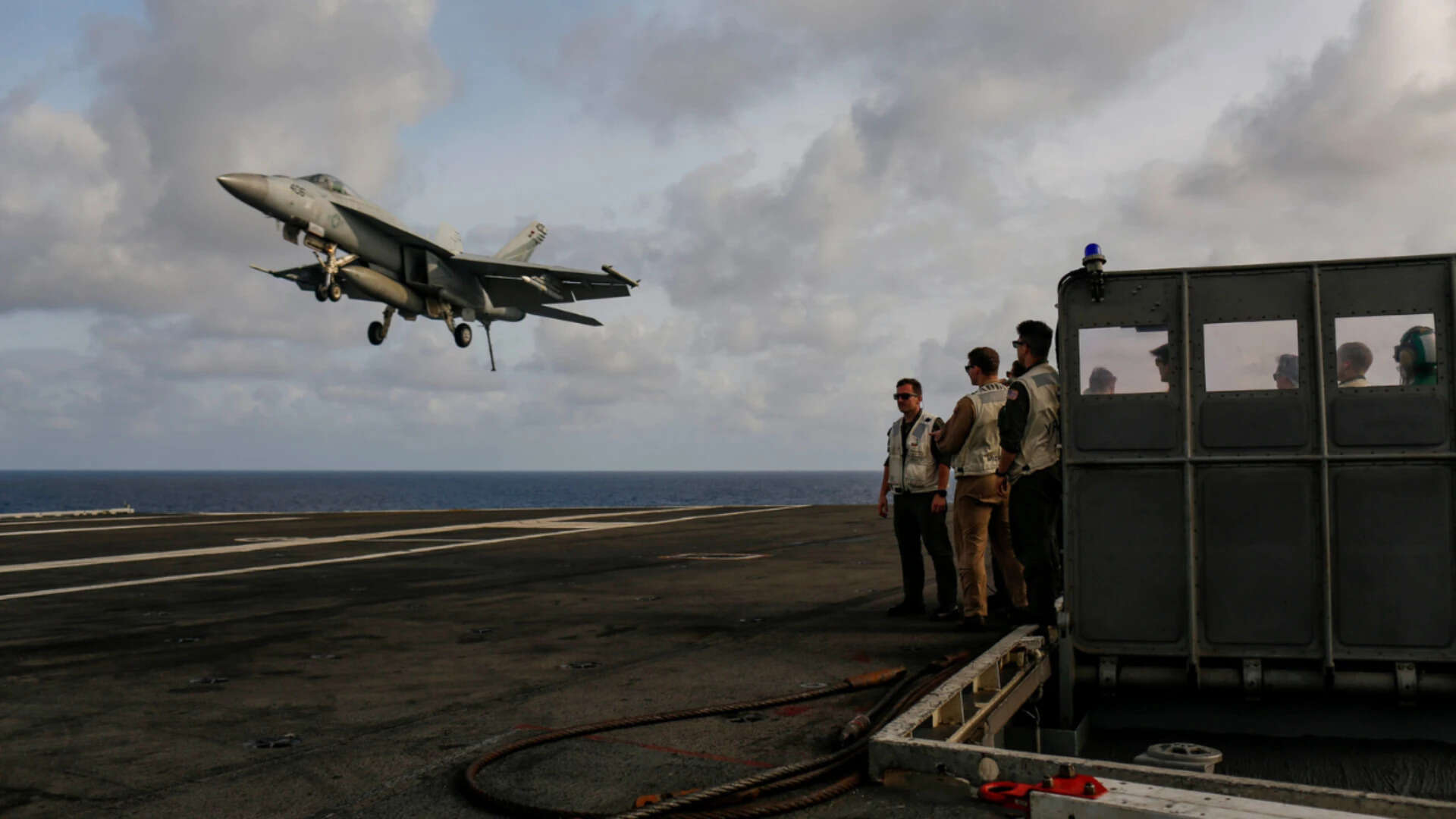
From Barak-8 to the US SM-6, modern warships utilize sophisticated layered defense systems to intercept incoming missile salvos. Recent tensions in the Middle East highlight the critical importance of maritime security.
Key Takeaways
- Modern warships employ 'Layered Defense' strategies to counter multi-directional aerial and anti-ship threats.
- The US Standard Missile family (SM-3, SM-6) has proven effective in intercepting massive missile salvos, such as those launched by Iran.
- India utilizes the advanced Barak-8 missile system and CIWS for robust maritime protection.
- Controlling sea lines of communication is vital for national food and fuel security.
In the high-stakes arena of modern naval warfare, the difference between a successful mission and a catastrophic loss often lies in a ship's ability to defend itself. Recent geopolitical developments have brought this to the forefront. US President Donald Trump highlighted a staggering statistic during a recent summit, noting that out of 111 missiles launched by Iran toward the USS Abraham Lincoln, not a single one achieved a hit. This feat is a testament to the sophisticated 'layered defense' systems that define modern naval supremacy.
The Strategic Value of Maritime Dominance
Naval power is no longer just about territorial waters; it is about securing the global arteries of trade. As the world grows more interdependent, the ability to control or disrupt Sea Lines of Communication (SLOCs) has become a primary lever of geopolitical pressure. Historically, as seen during World War II with Winston Churchill's fears of German U-boats, a naval blockade can effectively strangle a nation by cutting off essential food and fuel supplies. Today, the US utilizes maritime pressure against Iran to exert strategic influence.
The Anatomy of Defense: From Long-Range to Point Defense
A modern warship is a floating fortress, designed for both offensive strikes and defensive survival. Offensively, vessels deploy surface-to-surface weapons like Tomahawk missiles and torpedoes. Defensively, they utilize a tiered approach. The outer layer consists of long-range interceptors like the SM-3 and SM-6, which engage threats far from the vessel. The middle layer often involves systems like the Rolling Airframe Missile (RAM).
Close-In Protection and the Indian Context
If a missile penetrates the outer layers, the final line of defense is the Close-In Weapon System (CIWS). These rapid-fire gun systems can discharge 20–30 mm rounds at rates of up to 5,000 rounds per minute, shredding incoming projectiles in mid-air. In the Indian context, the Barak-8 missile system serves as a cornerstone of naval defense, protecting ships from missile-armed aircraft and anti-ship missiles. As global tensions rise, the integration of these multi-layered technologies remains the ultimate insurance policy for naval assets.