Reports suggest Iran has moved critical nuclear components 300 feet beneath solid granite to safeguard them from potential military strikes.
Key Takeaways
- Iran has relocated nuclear centrifuges to 'Pickaxe Mountain'.
- The facility is reportedly buried over 300 feet deep in solid granite.
- The move follows the June 2025 conflict involving US and Israeli strikes.
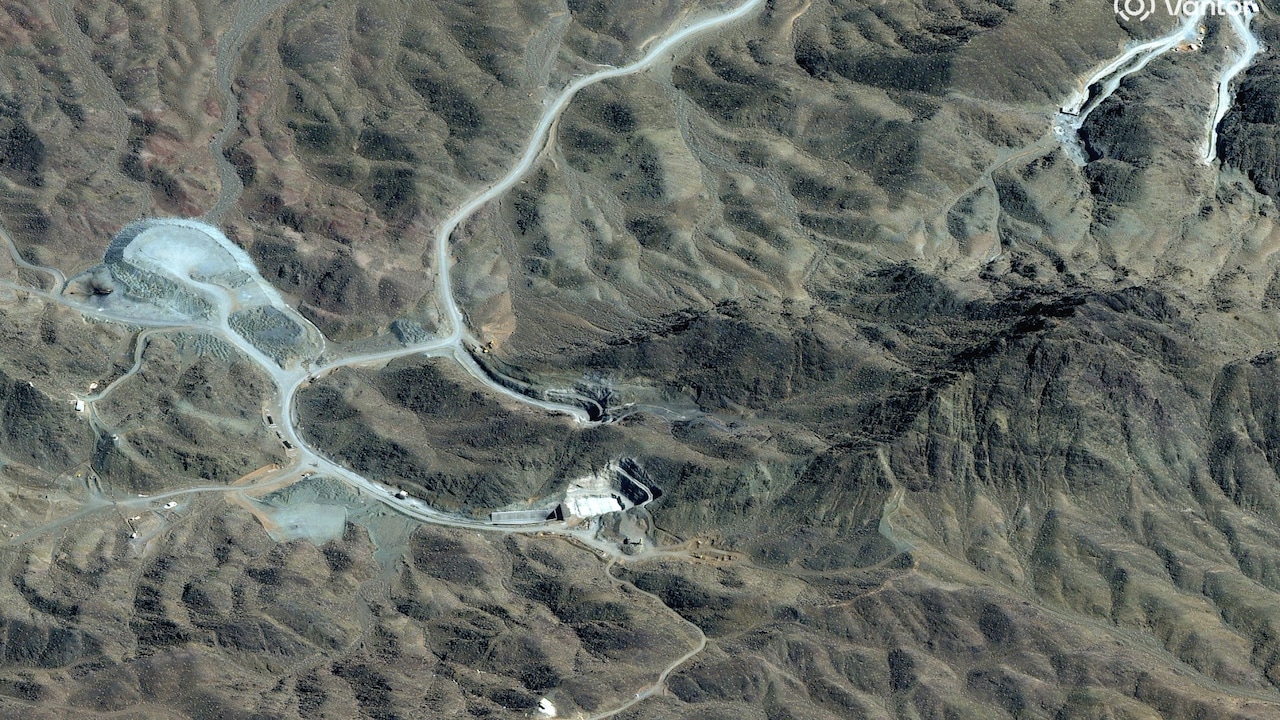
In a move that has sent shockwaves through the international intelligence community, Iran has reportedly undertaken a massive relocation of its nuclear assets. According to a high-profile report by the Wall Street Journal, citing US and Israeli officials, the Iranian regime has transferred its highly sensitive nuclear centrifuges to a location known as 'Pickaxe Mountain'.
The strategic relocation is believed to have occurred last autumn, following the intense 12-day conflict in June 2025. During that period, US and Israeli forces conducted targeted strikes on several of Iran's nuclear-related facilities. In response, Tehran appears to have shifted its most vital components to an almost impenetrable location, buried more than 300 feet beneath solid granite rock.
Why This Matters (इसके मायने क्या हैं)
BozokMedia analysis shows that this escalation represents a fundamental shift in the geography of nuclear warfare. By moving assets deep underground, Iran is effectively neutralizing the effectiveness of conventional precision-guided munitions. This makes any future diplomatic or military intervention significantly more complex and potentially more destructive.
For the global economy and political stability, this news signals a prolonged period of uncertainty. The increased difficulty in monitoring and potentially striking these sites could lead to a renewed arms race in the Middle East, impacting global energy markets and forcing a realignment of international security alliances.
The transition from surface-level facilities to deep granite bunkers changes the calculus of deterrence in the Middle East.
Historical Background
The tension between Iran and the West regarding its nuclear ambitions has been a cornerstone of Middle Eastern geopolitics for decades. The June 2025 conflict was a watershed moment, marking a direct military confrontation over nuclear proliferation concerns. This recent move to 'Pickaxe Mountain' is a direct consequence of the vulnerability exposed during those strikes.
| Feature | Previous Facilities | New Underground Facilities |
|---|---|---|
| Depth/Protection | Surface or semi-subterranean | 300+ feet under solid granite |
| Vulnerability | Susceptible to precision airstrikes | Resistant to most conventional bombs |
| Monitoring Ease | Relatively easier for satellites/IAEA | Extremely difficult to monitor |
Frequently Asked Questions (अक्सर पूछे जाने वाले प्रश्न)
1. Why is the depth of 300 feet significant?
At this depth, the granite acts as a natural shield that can absorb the kinetic energy of most standard bunker-busting bombs.
2. How did intelligence agencies find out about this?
US and Israeli intelligence agencies use advanced satellite imagery and signal intelligence to track movements and structural changes.