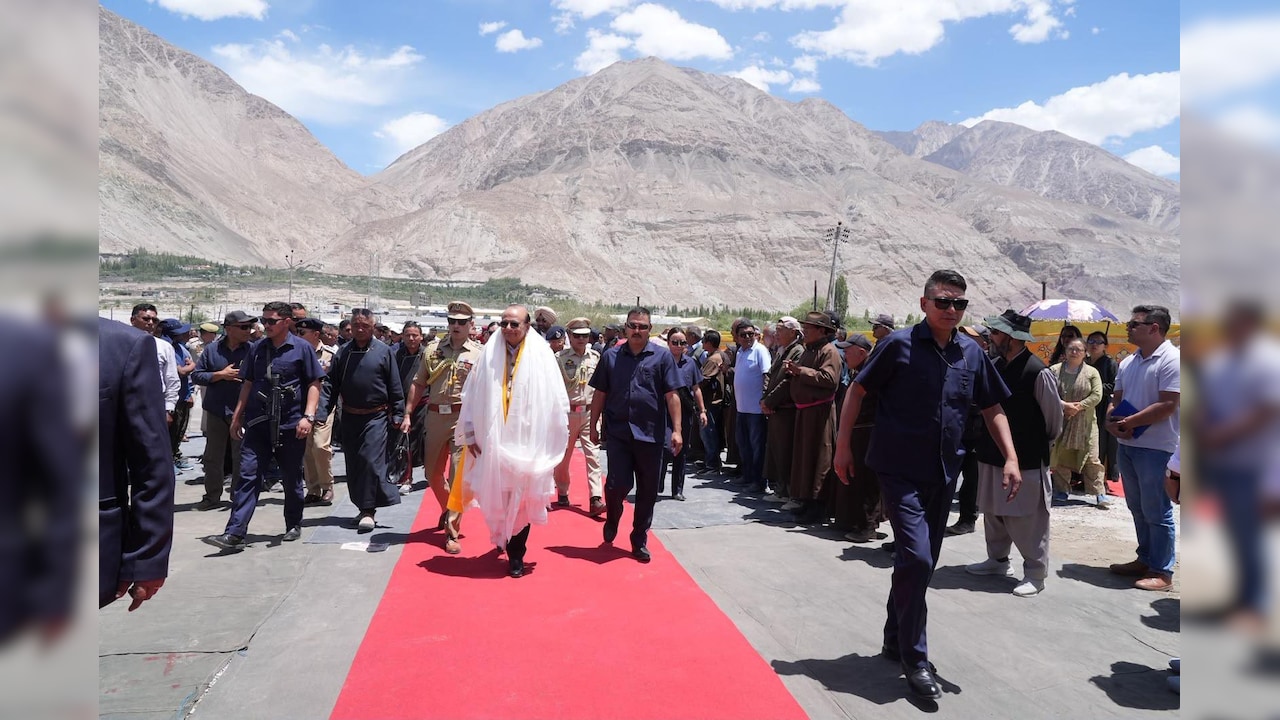
Two new motorable bridges in Ladakh's Nubra Valley, sanctioned at ₹83.39 crore, will transform a 70-km detour into a mere 500-meter crossing, boosting border tourism.
In a massive boost to infrastructure in the high-altitude region of Ladakh, the government has sanctioned the construction of two new motorable bridges in the Nubra Valley. This strategic project, sanctioned at a combined cost of ₹83.39 crore, is set to redefine travel dynamics in one of India's most rugged terrains.
Currently, commuters and tourists face a grueling 70-kilometer detour to navigate around natural obstacles. Once these bridges are operational, this arduous journey will be reduced to a quick 500-meter crossing. This drastic reduction in distance will not only save significant time but also reduce vehicle wear and tear and fuel consumption for locals and travelers alike.
Why This Matters (इसके मायने क्या हैं)
BozokMedia analysis shows that this infrastructure leap serves a dual purpose: strategic security and economic revitalization. By enhancing connectivity in the Nubra Valley, the government is ensuring faster movement for defense logistics while simultaneously opening up remote border villages to the world. Improved access acts as a lifeline for local residents, providing them with better access to healthcare, education, and markets.
From a commercial perspective, this is a masterstroke for Border Tourism. As the barrier of distance falls, more travelers will venture into the deeper reaches of Ladakh, creating a surge in demand for local homestays, eco-tourism, and traditional handicrafts. This investment is expected to create a multiplier effect on the local economy, turning remote settlements into thriving tourist hubs.
"Reducing a 70km detour to a 500m crossing is not just an engineering feat; it is an economic catalyst for the entire Ladakh region."
Historical Background
Ladakh has historically been one of the most challenging terrains in the world due to its extreme altitude, freezing temperatures, and unpredictable weather. For decades, the isolation of border villages was a major hurdle for both administrative governance and economic growth. However, in recent years, there has been a paradigm shift in how the Indian government approaches border infrastructure. Through various strategic initiatives, there has been an intensive focus on building all-weather roads, tunnels, and bridges to ensure that the remote corners of Ladakh remain connected to the mainland, regardless of the harsh Himalayan winters.
| Feature | Current Situation | Post-Bridge Construction |
|---|---|---|
| Travel Distance | Approx. 70 Kilometers | Approx. 500 Meters |
| Travel Time | Hours of travel | A few minutes |
| Accessibility | Difficult & Time-consuming | Seamless & Efficient |
| Economic Impact | Stagnant local growth | Rapid tourism expansion |
Frequently Asked Questions (अक्सर पूछे जाने वाले प्रश्न)
1. What is the total cost of the new bridge projects in Ladakh?
The two bridge projects have been sanctioned at a combined total cost of ₹83.39 crore.
2. How will this project benefit the local population?
It will drastically reduce travel time to remote villages, making healthcare, supplies, and markets much more accessible.