Yemen's Houthi rebels have launched missile and drone attacks on two Saudi oil tankers, threatening critical global energy transit routes in the Red Sea.
Key Takeaways
- Houthi rebels targeted Saudi tankers 'ENCELA' and 'LAYLIA'.
- The attack involved ballistic missiles, cruise missiles, and drones.
- UKMTO confirmed reports of a tanker being struck and catching fire.
- The incident follows a maritime blockade imposed by the Houthis on Saudi vessels.
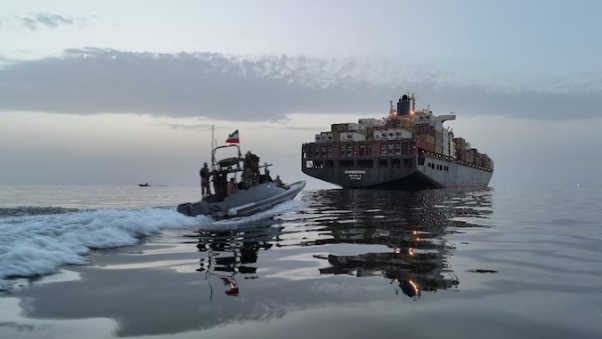
The Iran-aligned Houthi rebels in Yemen have claimed responsibility for an attack on two Saudi oil tankers transiting through the volatile Red Sea. Houthi military spokesperson Yahya Saree announced on Wednesday that the vessels, identified as 'ENCELA' and 'LAYLIA', were targeted for allegedly violating a maritime blockade issued by their forces.
According to Saree, the operation was executed using a sophisticated combination of ballistic missiles, cruise missiles, and unmanned aerial vehicles (drones). While Saudi Arabia has refrained from making an official statement regarding the claims, the United Kingdom Maritime Trade Operations (UKMTO) has acknowledged receiving reports of a strike. The UKMTO noted that the master of one tanker reported being hit by an unknown projectile, resulting in an onboard fire that the crew is currently struggling to contain.
Why This Matters (इसके मायने क्या हैं)
BozokMedia analysis shows that this escalation in the Red Sea is far more than a localized conflict; it is a direct threat to the stability of the global energy market. The Bab al-Mandeb Strait is a vital artery for international trade. Any sustained disruption here could trigger a massive spike in crude oil prices, leading to increased inflation and economic instability for consumers worldwide.
Furthermore, the geopolitical stakes are rising. With the Strait of Hormuz already facing disruptions due to regional tensions, the potential closure or high-risk status of the Bab al-Mandeb could block up to 25% of the world's oil and gas supply. This creates a precarious situation for global supply chains and energy security.
The instability in the Red Sea is no longer just a regional skirmish; it is a strategic chokehold on the global economy.
Historical Background
The Bab al-Mandeb Strait is one of the world's most critical maritime chokepoints, connecting the Red Sea to the Gulf of Aden. At its narrowest, it is only 29km wide. In 2024, approximately 4.1 billion barrels of crude oil and petroleum products passed through this strait, representing about 5% of total global maritime oil transit. Since the onset of the conflict in Gaza in October 2023, Houthi attacks in this region have significantly disrupted global commerce, forcing shipping companies to seek longer, more expensive alternative routes.
| Aspect | Houthi Claim | UKMTO/Saudi Status |
|---|---|---|
| Targeted Vessels | ENCELA and LAYLIA | One tanker confirmed struck |
| Weaponry Used | Missiles and Drones | Unknown projectile reported |
| Primary Motive | Blockade Violation | Regional Conflict Escalation |
Frequently Asked Questions (अक्सर पूछे जाने वाले प्रश्न)
Question 1: Why did the Houthis target these specific tankers?
Answer: The Houthis claim the tankers violated a maritime blockade they had imposed on Saudi Arabian vessels.
Question 2: How will this impact fuel prices?
Answer: Increased risk in the Red Sea forces ships to take longer routes, raising shipping costs and potentially driving up global oil prices.