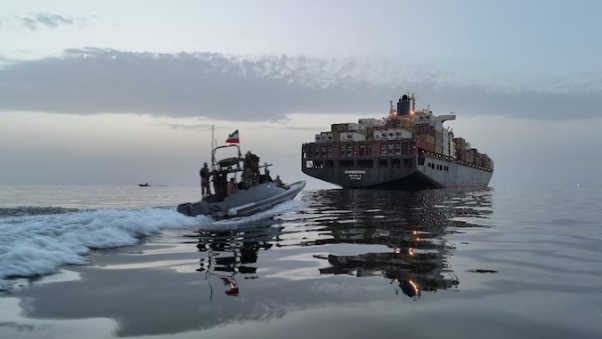
US Secretary of State Marco Rubio met Chinese Foreign Minister Wang Yi at the ASEAN summit to discuss managing tensions ahead of President Xi Jinping's upcoming US visit.
On the sidelines of the ASEAN foreign ministers' meeting in Manila, US Secretary of State Marco Rubio held a pivotal bilateral meeting with China's Foreign Minister Wang Yi. The dialogue focused on navigating the complex bilateral relationship in anticipation of the high-stakes summit between US President Donald Trump and Chinese President Xi Jinping.
Rubio acknowledged that profound differences between the two superpowers are likely to persist for the foreseeable future. However, he emphasized the necessity of managing these disagreements to ensure that President Xi's scheduled visit to the United States in September is productive and positive. Conversely, Beijing has demanded that Washington respect China's 'core interests' and address its legitimate concerns effectively.
Why This Matters (इसके मायने क्या हैं)
BozokMedia analysis shows that the outcome of these high-level engagements will dictate the stability of global maritime trade. The South China Sea is a critical artery for international commerce; any escalation into kinetic conflict could trigger massive disruptions in global supply chains, affecting everything from fuel prices to consumer electronics.
Furthermore, the strengthening of US-Philippine defense ties signals a strategic shift in the Indo-Pacific. For the global economy, a stable US-China relationship is not just a diplomatic preference but a financial necessity to prevent market volatility and ensure geopolitical predictability.
"I believe very much that the future and the story of the 21st century will be written in this region." - Marco Rubio
Historical Background
The territorial disputes in the South China Sea have been a flashpoint for decades. China's 'nine-dash line' claim overlaps significantly with the Exclusive Economic Zones (EEZ) of several Southeast Asian nations, including the Philippines, Vietnam, and Malaysia. The US, while not a claimant, maintains a significant presence to ensure 'freedom of navigation' and has recently increased military financing to the Philippines to bolster its maritime capabilities.
| Key Issue | United States Position | China Position |
|---|---|---|
| South China Sea | Supports freedom of navigation and Philippine sovereignty. | Claims sovereignty over most of the sea via the nine-dash line. |
| Diplomatic Goal | Manage differences to ensure a successful Xi visit. | Demand respect for core interests and legitimate concerns. |
Frequently Asked Questions (अक्सर पूछे जाने वाले प्रश्न)
Question 1: What is the significance of President Xi's upcoming visit?
Answer: It serves as a critical opportunity to de-escalate tensions and establish a framework for managing superpower competition.
Question 2: Why is the South China Sea dispute causing tension?
Answer: Overlapping territorial claims between China and ASEAN nations have led to maritime confrontations and increased military presence.