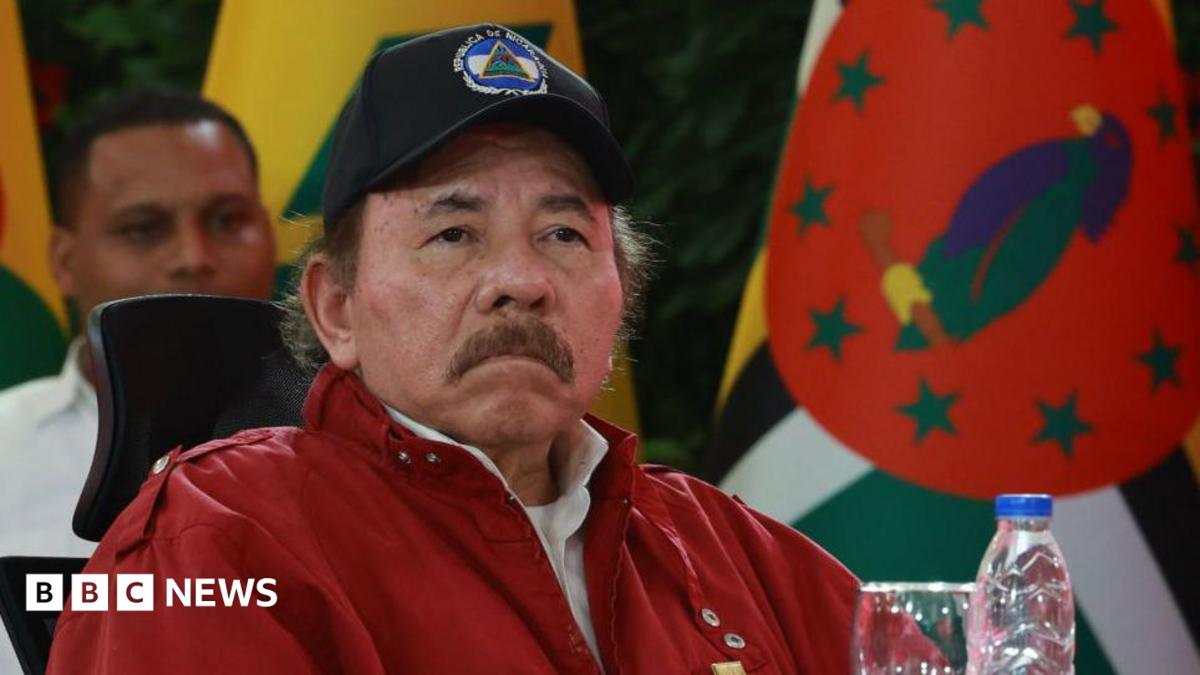
Nicaraguan President Daniel Ortega has proposed extending his presidential term by an additional year, signaling a further tightening of his long-standing authoritarian grip.
Key Takeaways
- President Daniel Ortega has proposed a one-year extension to his current term.
- The constitutional reform aims to bar opposition members labeled as 'traitors' from running for office.
- Approval from the government-controlled National Assembly is expected in September.
- Ortega has held power since 2007, marked by increasing political repression.
Nicaraguan President Daniel Ortega, who has commanded the nation since 2007, has formally proposed extending the presidential term by another year. The government-controlled National Assembly is widely expected to ratify this extension during its upcoming session in September.
This proposal is part of a broader package of constitutional reforms. Notably, the reforms include provisions to disqualify opposition candidates whom the government deems to be "traitors" or "coup plotters." Under Ortega's 19-year rule, the political landscape has become increasingly authoritarian, characterized by the imprisonment, exile, and stripping of citizenship from political opponents.
Why This Matters
BozokMedia analysis shows that these moves are part of a systematic effort to institutionalize dynastic rule. Beyond mere term extensions, the legislative body has already paved the way for Ortega's wife, Rosario Murillo, to serve as "co-president," ensuring a seamless transition of power should Ortega, whose health is reportedly declining, become unable to serve.
The erosion of term limits and the disqualification of rivals are classic hallmarks of a regime transitioning from autocracy to absolute dictatorship.
The human rights implications are severe. United Nations human rights chief Volker Türk has expressed grave concerns regarding the deepening repression in Nicaragua, noting the steady erosion of the rule of law and the escalating persecution of dissidents.
Historical Context of Power Consolidation
Ortega's path to prolonged power has been paved with multiple constitutional amendments. In 2014, the National Assembly scrapped presidential term limits entirely, and in 2024, the term was recently extended from five to six years.
Frequently Asked Questions
Question 1: How has the opposition been affected in Nicaragua?
Answer: Many opposition leaders have been jailed, forced into exile, or stripped of their citizenship to prevent them from competing in elections.
Question 2: What is the role of Rosario Murillo?
Answer: She has been named "co-president," positioning her as the successor to the presidency.