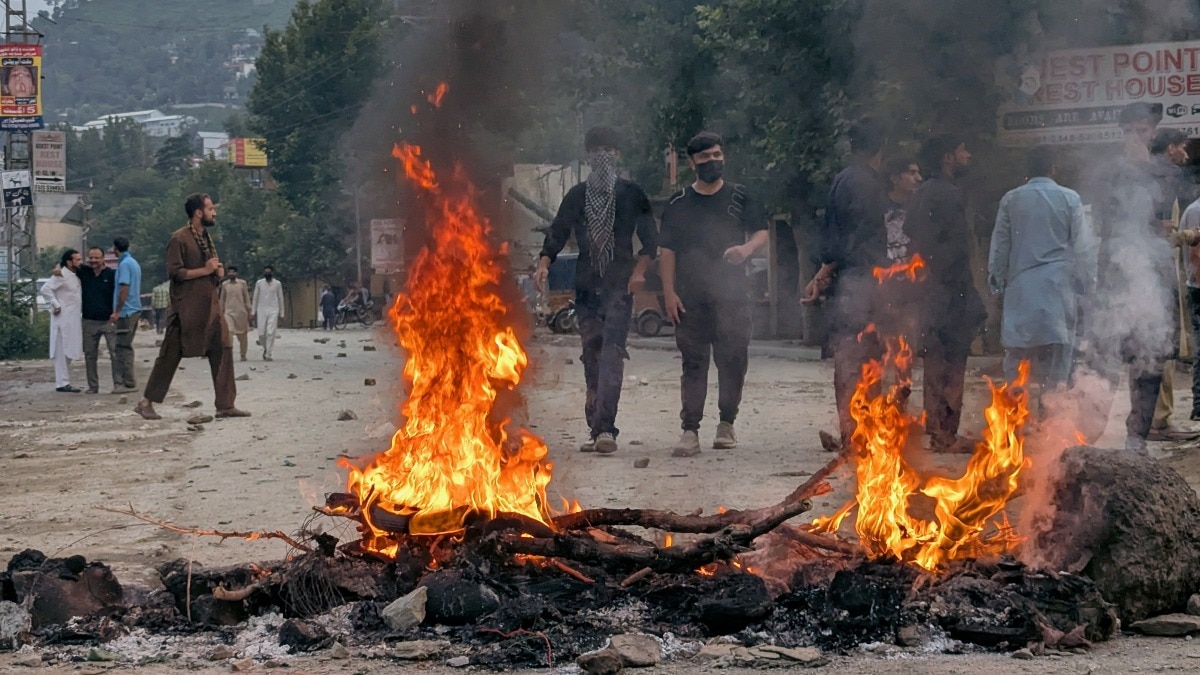
Pakistan has introduced stringent new regulations requiring foreign journalists to obtain government approval for reporting across most of the country. The move follows intense international criticism regarding the government's crackdown in Pakistan-occupied Kashmir (POK).
Key Takeaways
- Foreign journalists are now restricted to operating freely only in Islamabad, Lahore, and Karachi.
- Prior government approval (NOC) is mandatory for reporting in all other regions.
- The move follows global outcry over human rights violations and internet blackouts in POK.
- The rules also extend to freelancers, production houses, and Pakistani journalists working for foreign outlets.
ISLAMABAD: In a significant move to tighten state control, Pakistan has introduced the Foreign Media Facilitation Guidelines, 2026. These new rules mandate that foreign journalists must secure prior government approval before reporting from most parts of the country. This aggressive crackdown comes as Islamabad faces mounting international scrutiny over its handling of protests and civil unrest in Pakistan-occupied Kashmir (POK).
Restricting the Scope of Reporting
Under the newly implemented framework, the operational freedom of foreign correspondents has been drastically curtailed. Journalists will now only be permitted to operate freely within the major urban hubs of Islamabad, Lahore, and Karachi. For any assignment outside these zones—including news reports, documentaries, or even social media content—journalists must obtain a No-Objection Certificate (NOC) from the Ministry of Information and Broadcasting's External Publicity (EP) Wing.
Why This Matters
BozokMedia analysis shows that this move is a strategic attempt to insulate the Pakistani government from international scrutiny. By formalizing these controls, the state aims to prevent independent reporting on sensitive issues such as the POK unrest, economic instability, and allegations of human rights abuses.
The implementation of these guidelines signals a regressive shift in press freedom, aiming to create a controlled information vacuum.
The guidelines grant sweeping discretionary powers to the EP Wing. Accreditation can be revoked if a journalist is deemed to have acted against the "ideology, sovereignty, or security" of Pakistan—terms that remain dangerously ill-defined. Furthermore, even private travel to locations like Abbottabad or Murree now requires official clearance.
Historical Background
For several months, international human rights organizations, including Amnesty International and the Committee to Protect Journalists, have raised alarms regarding the suppression of dissent in POK. The region has seen widespread protests over governance and economic issues, often met with internet shutdowns and excessive force. Previously, media outlets like Al Jazeera faced bans for their coverage, which the state labeled as "anti-state propaganda."
Frequently Asked Questions
1. Where can foreign journalists report without an NOC?
Foreign journalists can only operate without prior permission in Islamabad, Lahore, and Karachi.
2. What happens if a journalist violates these new rules?
Authorities hold the power to revoke accreditation and cancel visas for alleged misuse or failure to comply with administrative requirements.