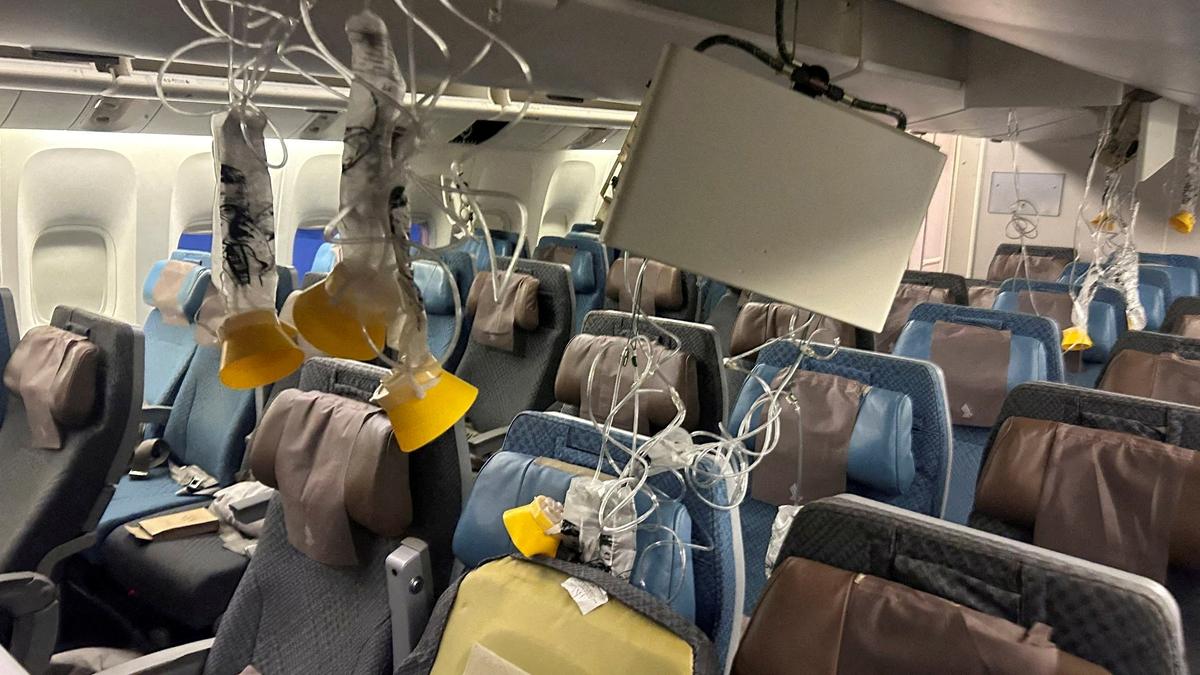
Singapore Airlines flight SQ321 encountered extreme turbulence over the Andaman Sea, leading to one fatality and multiple injuries. Experts link the rise in turbulence to climate‑driven jet‑stream changes and outline airline safety measures.
Key Takeaways
- Singapore Airlines flight SQ321 experienced 62 seconds of severe turbulence
- One passenger died while dozens sustained spinal and head injuries
- Climate change is likely amplifying clear‑air turbulence worldwide
On May 20‑21, Singapore Airlines flight SQ321, en route from London Heathrow to Singapore, descended abruptly from 37,000 ft to 31,000 ft after encountering severe turbulence over the Andaman Sea near Myanmar’s Irrawaddy Basin. The Boeing 777‑312ER was carrying 211 passengers and 18 crew members.
Flight‑data recorders revealed a rapid altitude drop followed by a controlled descent, prompting the crew to divert the aircraft to Bangkok’s Suvarnabhumi Airport. The U.S. National Transportation Safety Board (NTSB) is assisting Singapore’s investigation because the aircraft is a Boeing jet.
Why This Matters
BozokMedia analysis shows that turbulence is no longer a rare meteorological hiccup but a growing safety concern tied to climate change. Professor Guy Gratton explains that clear‑air turbulence (CAT) around jet streams intensifies as temperature gradients steepen, making high‑speed aircraft more vulnerable.
"If climate trends continue, severe turbulence in jet streams could double or even triple within the next few decades," warns Professor Paul Williams.
Airlines are responding by reinforcing seat‑belt policies, improving real‑time weather monitoring, and revising flight‑path planning. Singapore Airlines has announced a more cautious in‑flight turbulence management strategy, aiming to reduce injury risk.
Frequently Asked Questions
Q1: Are turbulence‑related accidents becoming more common?
A: Fatalities remain rare, but injury reports are rising as turbulence intensifies.
Q2: What should passengers do during turbulence?
A: Keep seat belts fastened at all times and follow crew instructions immediately.