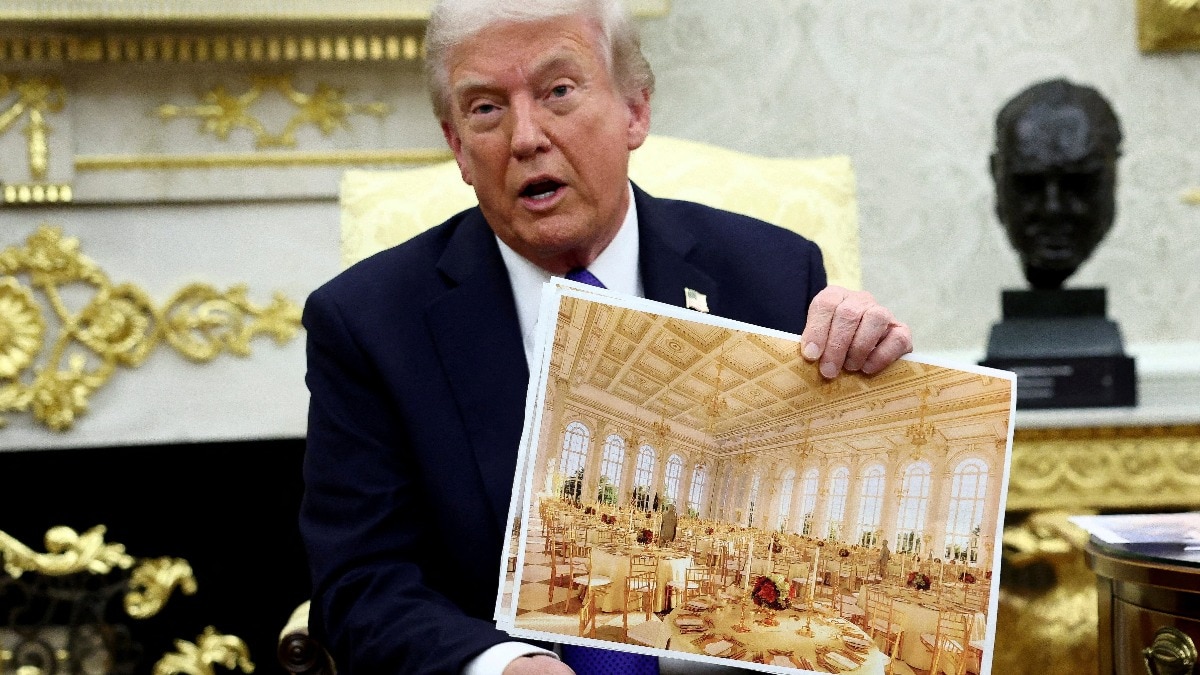
A US federal appeals court has halted Donald Trump's ambitious $400 million White House ballroom project, ruling that presidents are merely temporary tenants of the historic residence.
Key Takeaways
- US Appeals Court blocked the $400M White House ballroom construction.
- The court ruled that the President is a 'tenant,' not the 'owner' of the White House.
- Congressional approval is mandatory for major structural changes to the residence.
- The Trump administration plans to appeal the decision to the Supreme Court.
In a landmark decision, a US federal appeals court has blocked President Donald Trump's ambitious and controversial $400 million White House ballroom project. The 'U.S. Court of Appeals for the District of Columbia Circuit' issued a 2-1 ruling that serves as a significant legal setback for the Trump administration.
The Core of the Dispute
The controversy stems from the administration's plan to demolish parts of the 'East Wing' to construct a massive 90,000-square-foot ballroom. The project, estimated to cost approximately $400 million (₹3,500 crore), was challenged by the 'National Trust for Historic Preservation,' which argued that such massive alterations to a historic landmark cannot be undertaken without legislative oversight.
'You Are a Tenant, Not an Owner'
During the proceedings, the court delivered a stinging rebuke to the executive branch, stating, "Every President is a temporary tenant of the White House, not the owner." The judicial panel emphasized that the authority to decide on such massive structural transformations lies with Congress, not the Executive branch acting unilaterally.
Why This Matters
BozokMedia analysis shows that this case is a critical test of the Separation of Powers in the United States. It reinforces the principle that even the highest office in the land is subject to the checks and balances provided by the legislative branch, especially regarding the management of national historic assets.
This ruling reinforces the constitutional boundary between executive ambition and legislative authority.
Donald Trump has vehemently criticized the decision on his platform, 'Truth Social,' labeling it 'politically motivated.' He argued that the project is essential for national security, citing the need for bomb shelters, medical facilities, and advanced missile defense systems. The administration is now preparing to escalate the battle by appealing to the U.S. Supreme Court.
Frequently Asked Questions
1. Why did the court stop the project?
The court ruled that the President lacks the unilateral authority to make major structural changes to the White House without prior approval from Congress.
2. What is Trump's defense for the project?
Trump claims the ballroom is a security necessity, designed to include bomb shelters and advanced protection against drone and missile threats.