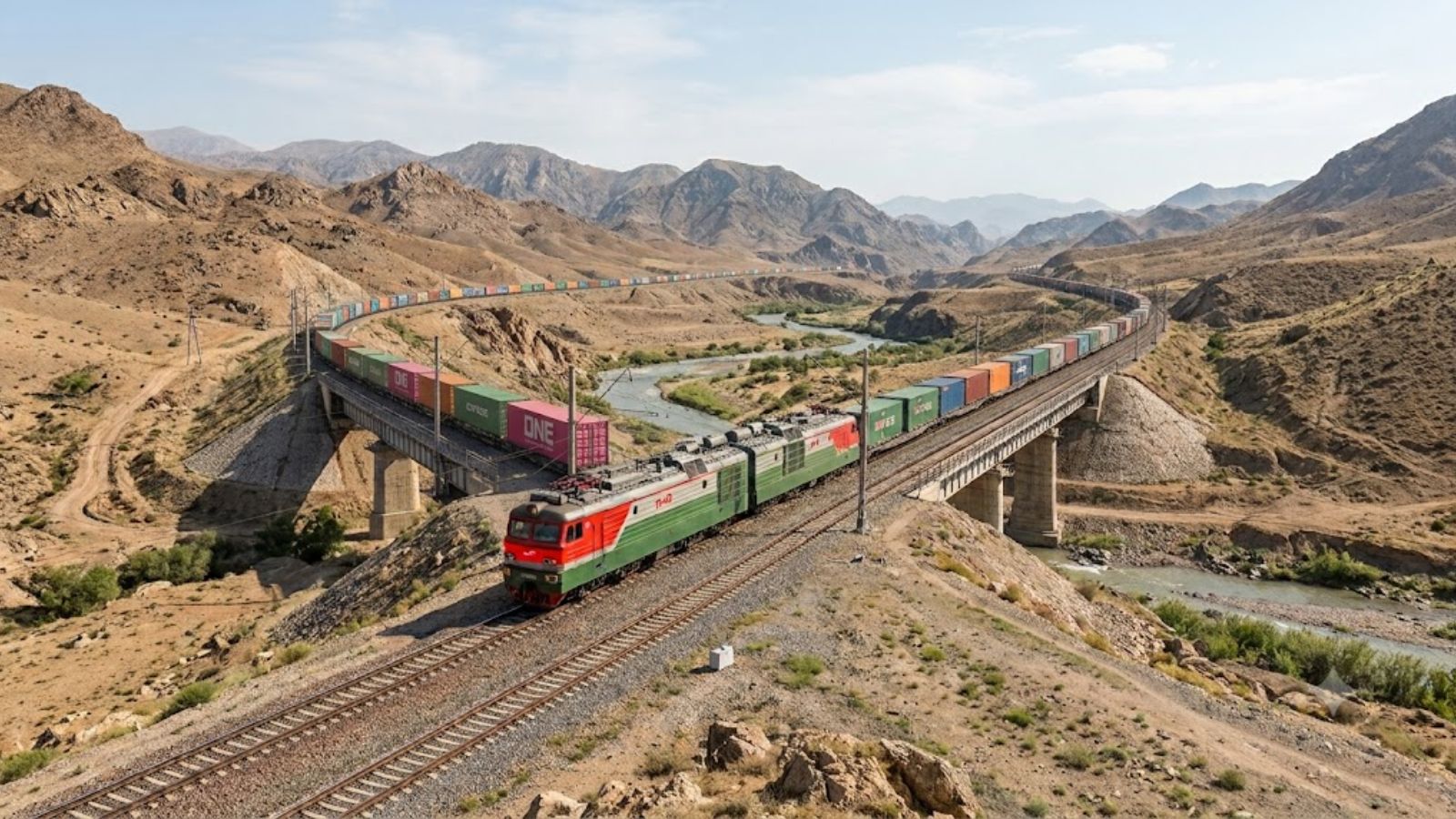
Russian Deputy Prime Minister Marat Khusnullin has revealed that Russia is actively exploring a direct rail link to the Indian Ocean to secure trade routes to India. The proposed corridors through Central and South Asia aim to bypass volatile maritime chokepoints like the Strait of Hormuz and the Bosphorus. This strategic move highlights the growing economic and logistical alignment between Moscow and New Delhi amid rising global geopolitical tensions.
Key Takeaways
- Russia is planning a direct rail connection to the Indian Ocean with access to India.
- The route aims to bypass geopolitical risks associated with the Strait of Hormuz and the Bosphorus.
- Possible transit routes under consideration include Turkmenistan, Iran, Afghanistan, and Pakistan.
Moscow is looking to revolutionize its trade logistics by exploring a direct railway route to the Indian Ocean, offering secure access to India. Russian Deputy Prime Minister Marat Khusnullin confirmed that Russia is evaluating multiple transit paths, emphasizing that "any options providing access to India are acceptable." This ambitious project comes as geopolitical conflicts threaten traditional maritime routes, pushing Russia to seek land-based alternatives.
The primary driver behind this initiative is the vulnerability of critical maritime chokepoints. The Strait of Hormuz, which handles roughly 25% of global oil trade and 20% of liquefied natural gas (LNG) shipments, has become increasingly volatile due to ongoing tensions between the United States and Iran. Similarly, the Bosphorus Strait, controlled by Turkey, remains a point of concern despite remaining open. By establishing a continental rail network through countries like Turkmenistan, Iran, Afghanistan, and Pakistan, Russia hopes to insulate its trade from maritime blockades.
Why This Matters
A BozokMedia analysis shows that this proposed rail corridor is not merely a transport project, but a massive geopolitical realignment. By connecting the Eurasian heartland directly to the Indian Ocean, Russia and India are creating a parallel trade architecture that is immune to Western naval dominance and economic sanctions. This land-based corridor could fundamentally alter South Asian trade dynamics, integrating isolated economies like Afghanistan and Pakistan into a massive Eurasian transit network.
"This rail corridor represents a paradigm shift in Eurasian logistics, transforming landlocked Central Asia into a bustling transit hub while securing India's energy and resource supply lines from Western disruption."
| Feature | Traditional Maritime Route (via Hormuz/Suez) | Proposed Continental Rail Route |
|---|---|---|
| Transit Security | High risk of blockade, piracy, and military conflict in chokepoints. | Highly secure, overland transit through sovereign allied territories. |
| Geopolitical Control | Subject to Western naval patrol and international maritime laws. | Controlled entirely by Eurasian regional partners (Russia, Iran, India). |
| Environmental & Logistical Predictability | Vulnerable to weather delays and maritime congestion. | Highly predictable scheduling, though subject to cross-border rail standardizations. |
Historical Background: The Evolution of North-South Connectivity
The concept of connecting Russia to India via a land corridor is not entirely new. It builds upon the foundation of the International North-South Transport Corridor (INSTC), a 7,200-kilometer multi-mode network of ship, rail, and road routes established in 2000 by India, Russia, and Iran. Historically, the expansion of this corridor has been slowed by financial constraints, regional instability, and complex customs procedures. However, the escalation of Western sanctions on Russia and growing instability in the Middle East have injected unprecedented urgency into making this continental bypass a fully operational reality.
Frequently Asked Questions
Q1: Which countries would the proposed Russian rail route transit through?
A1: The proposed routes under consideration would transit through Turkmenistan, Iran, Afghanistan, and Pakistan to reach the Indian Ocean and establish access to India.
Q2: Why is Russia trying to bypass the Strait of Hormuz?
A2: The Strait of Hormuz is a major global oil and gas chokepoint heavily affected by US-Iran tensions, making maritime shipping highly vulnerable to disruptions, blockades, and rising insurance costs.