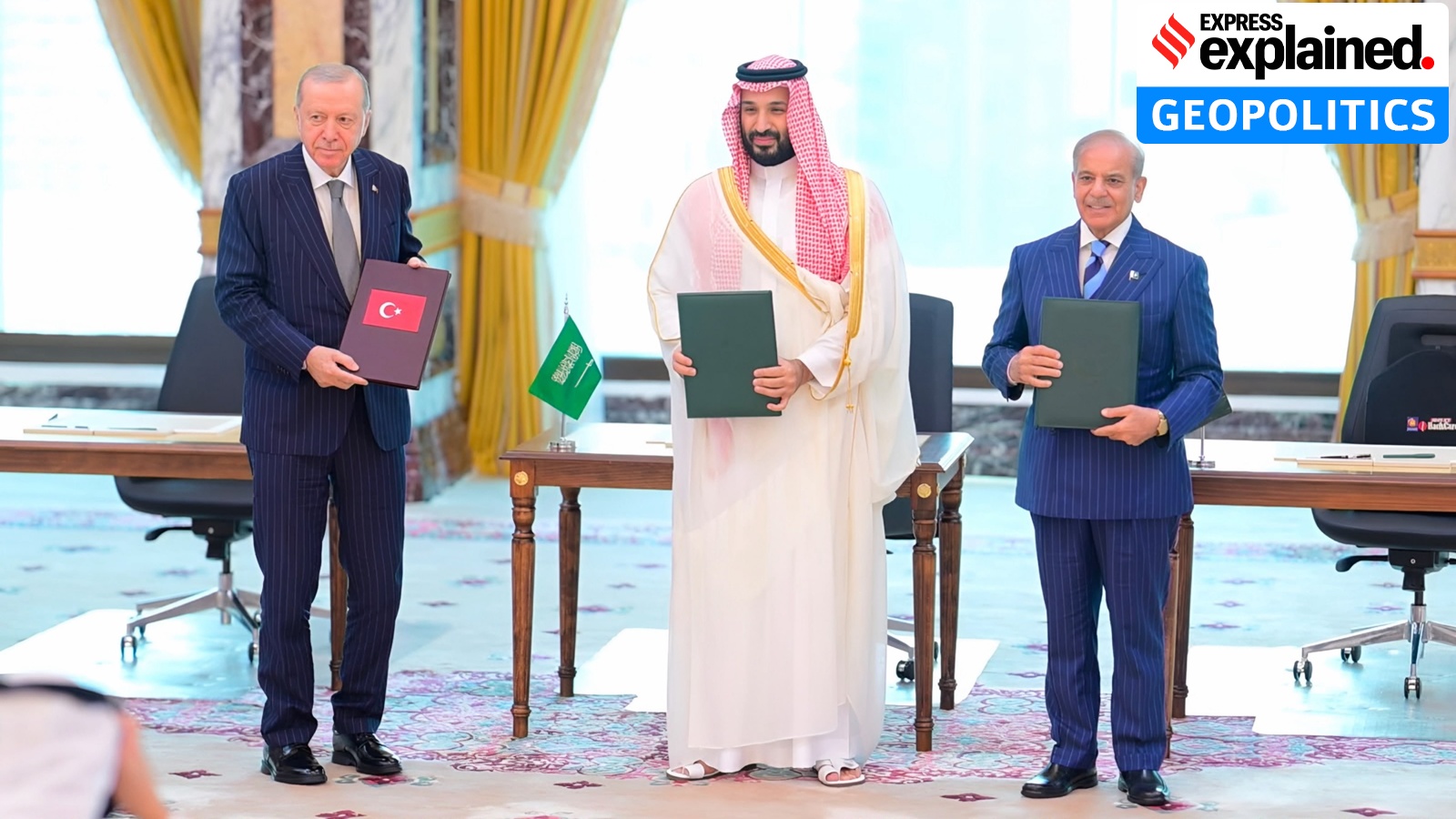
A landmark defense pact, known as the Mecca Agreement, has been signed by Pakistan, Saudi Arabia, and Turkey, establishing a mutual defense clause that could reshape regional security.
Key Takeaways
- Pakistan, Saudi Arabia, and Turkey signed the 'Mecca Agreement' on August 7.
- The pact stipulates that an attack on one member is considered an attack on all.
- The agreement aims to enhance collective deterrence and defense cooperation.
- It serves as a strategic move to boost Saudi Arabia's military industrial capacity.
In a move that has sent ripples through global diplomatic circles, Pakistan Prime Minister Shehbaz Sharif, Saudi Arabia's Crown Prince Mohammed bin Salman, and Turkey's President Recep Tayyip Erdoğan signed the Mecca Agreement on August 7. This pact unites the Islamic world's sole nuclear power, one of NATO's Muslim-majority members, and the Gulf's economic powerhouse.
The core of the agreement is a mutual defense clause: any armed attack against one of the three states shall be regarded as an attack against them all. While the full text remains classified—similar to the 2025 Saudi-Pakistan Strategic Mutual Defense Agreement (SMDA)—the subtext suggests a massive shift in regional power dynamics.
Why This Matters
BozokMedia analysis shows that this agreement is less about immediate battlefield intervention and more about long-term strategic autonomy. Saudi Arabia has faced significant vulnerabilities, such as the depletion of its Patriot missile stockpiles during recent conflicts. By partnering with Turkey and Pakistan, Riyadh is looking to move away from its heavy reliance on US arms and toward a more integrated, locally produced military industrial complex.
The Mecca Agreement represents a strategic pivot where Turkish manufacturing and Pakistani tactical experience meet Saudi financial might to create a self-sustaining defense ecosystem.
The involvement of Turkey and Pakistan provides a technological bridge. Turkey is already collaborating with both nations on advanced platforms like the KAAN fifth-generation fighter and Bayraktar drones. This partnership allows Saudi Arabia to diversify its security providers amidst shifting US priorities.
Historical Context and Strategic Rivals
Historically, mutual defense treaties like NATO's Article 5 are public to ensure deterrence. The non-public nature of the Mecca Agreement creates a layer of strategic ambiguity. While the pact is likely a deterrent against Iran, many analysts believe the primary subtext is directed toward the growing military dominance of Israel in the region.
Frequently Asked Questions
1. What is the 'Mecca Agreement'?
It is a tripartite defense pact between Pakistan, Saudi Arabia, and Turkey that establishes a collective defense mechanism.
2. Does this pact target any specific country?
While not explicitly named, the agreement is widely viewed as a strategic move to balance the influence of Iran and Israel in the Middle East.