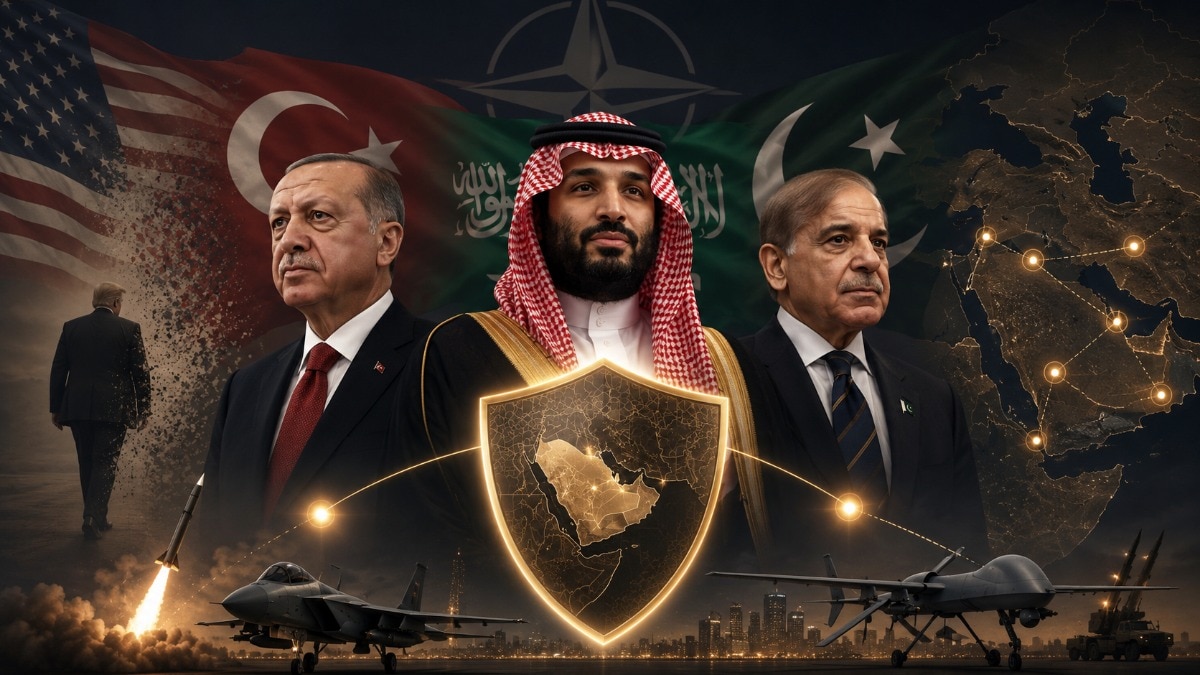
Pakistan is navigating a high-stakes diplomatic tightrope. While strengthening ties with Saudi Arabia and Turkey through a 'Sunni NATO' pact, it is simultaneously attempting to mediate between the US and Iran.
Key Takeaways
- Pakistan is a key partner in the new 'Mecca Defense Pact' with Saudi Arabia and Turkey.
- Islamabad aims to revive its role as a mediator in the US-Iran conflict.
- The strategic challenge lies in balancing Sunni military alliances with Shia Iran.
- Previous mediation attempts, like the Islamabad Agreement, ended in failure.
Pakistan finds itself at a critical geopolitical crossroads. The recent visit of Interior Minister Mohsin Naqvi to Tehran is a calculated move to keep the doors of diplomacy open between Washington and Tehran. However, Islamabad faces a massive credibility gap as it attempts to play the peacemaker while being a core member of a burgeoning Sunni military alliance.
The Rise of the 'Sunni NATO'
Security experts are increasingly referring to the recent defense agreement between Pakistan, Saudi Arabia, and Turkey as a 'Sunni NATO.' This pact is built on the principle of collective defense, meaning an attack on one member is considered an attack on all. This creates a significant trust deficit with Iran, a Shia powerhouse that views such alliances with deep suspicion.
Why This Matters: BozokMedia Analysis
BozokMedia analysis shows that Pakistan's foreign policy is currently pulling in two opposite directions. On one hand, it seeks deep strategic integration with Sunni powers to bolster its economy and security; on the other, it must manage a 900km border with Iran and cater to its own massive Shia population. The success of Pakistan's mediation depends entirely on whether Tehran perceives Islamabad as a neutral bridge or a biased participant in a Sunni bloc.
Pakistan's ability to act as a credible mediator hinges on its capacity to decouple its regional defense commitments from its diplomatic mediation efforts.
History is a harsh teacher for Islamabad. The previous attempt at mediation, which led to the 'Islamabad Agreement,' collapsed within weeks. As tensions rise in the Middle East and the Strait of Hormuz remains a flashpoint, Pakistan's renewed attempt to act as a guarantor faces uphill battles.
Frequently Asked Questions
1. What is the 'Mecca Pact'?
It is a collective defense agreement between Pakistan, Saudi Arabia, and Turkey, often termed a 'Sunni NATO' by analysts.
2. Why is Pakistan's mediation difficult?
It is difficult because Pakistan is simultaneously strengthening military ties with Iran's rivals, making its neutrality questionable.