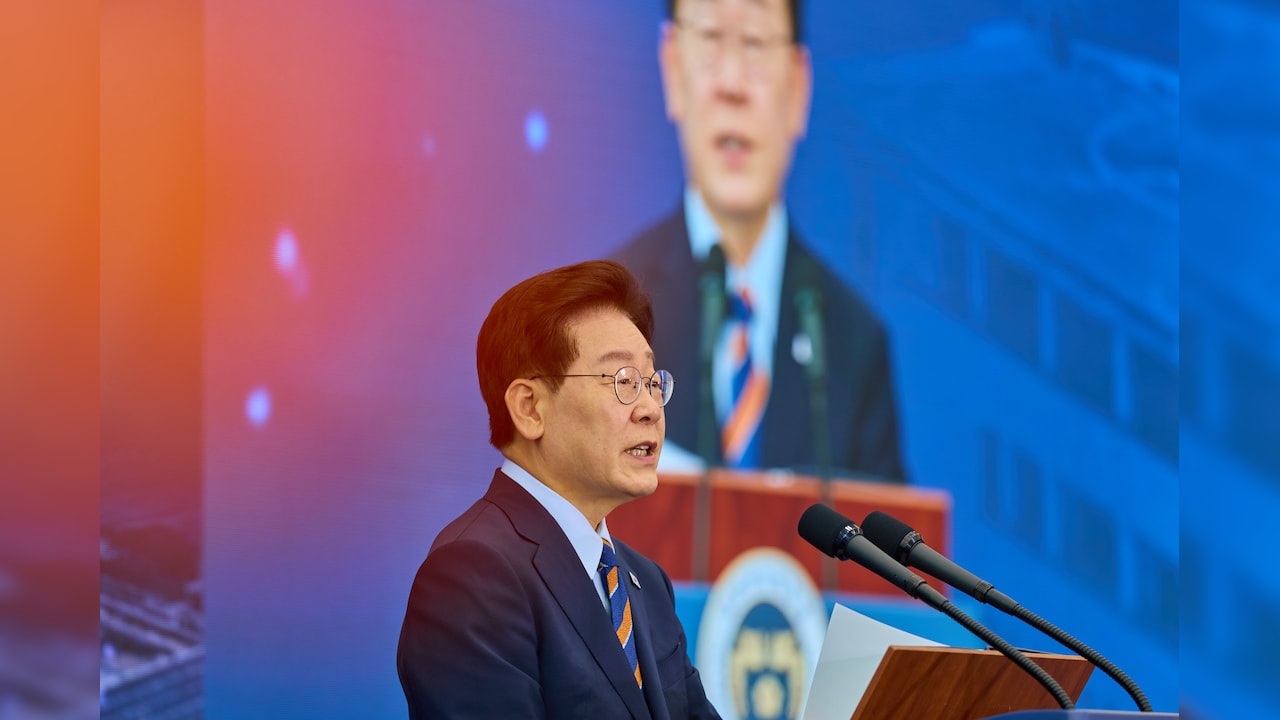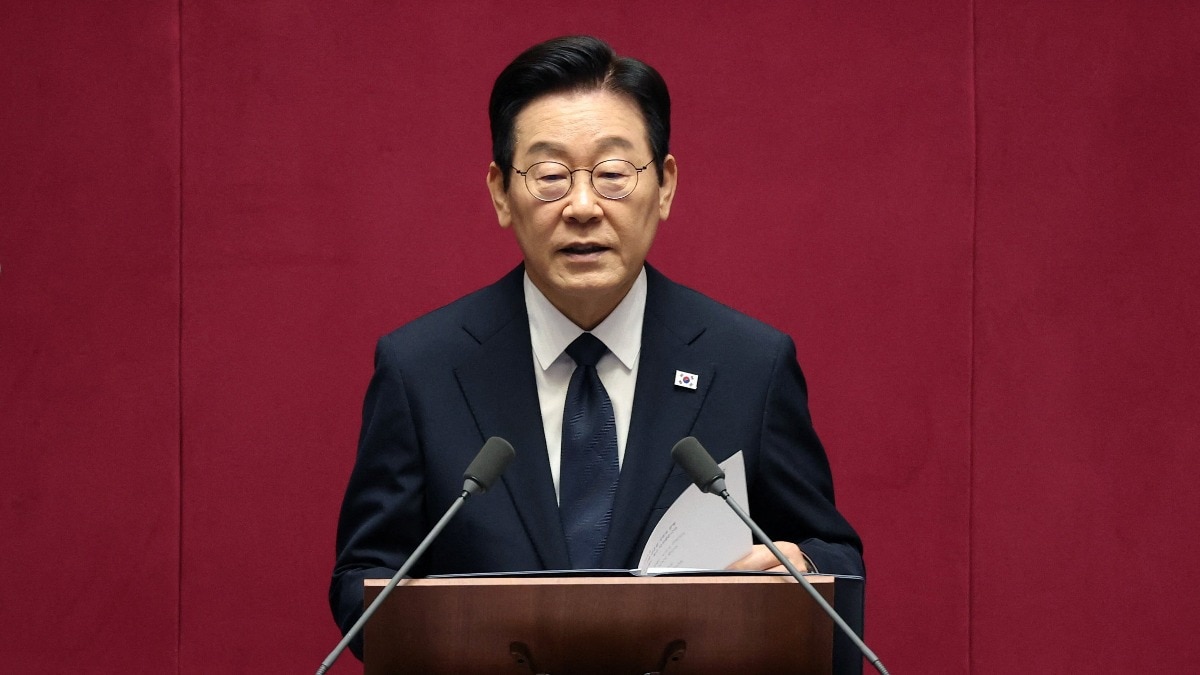
President Lee Jae Myung has urged North Korea to engage in dialogue to replace the existing armistice with a permanent peace regime to ensure coexistence.
Key Takeaways
- President Lee Jae Myung calls for replacing the armistice with a formal 'peace regime'.
- Emphasis on dialogue to curb North Korea's nuclear capabilities.
- Strategic move to reduce escalating tensions on the Korean Peninsula.
- Call for improved relations with Japan through historical reconciliation.
South Korean President Lee Jae Myung has formally called for high-level talks with North Korea, aiming to foster peaceful coexistence. Speaking on the anniversary of Korea's liberation from Japanese colonial rule, Lee emphasized the urgent need to transition from a mere ceasefire to a comprehensive 'peace regime' to ensure long-term stability on the peninsula.
The President's proposal focuses on establishing layered safeguards to prevent accidental conflicts. He noted that dialogue could serve as a dual-purpose mechanism: facilitating peaceful coexistence while simultaneously exploring ways to mitigate Pyongyang's nuclear capabilities. Lee reiterated his commitment to respecting North Korea's system while seeking a path toward de-escalation.
Why This Matters
BozokMedia analysis shows that this diplomatic overture comes at a period of extreme volatility. Relations between the two Koreas are currently at a historic low. Following Kim Jong Un's recent abandonment of reunification policies and his designation of the South as a 'hostile state,' the peninsula is on the brink of heightened military tension. Lee's approach seeks to break this cycle of provocation.
Transitioning from an armistice to a peace treaty is the only way to move beyond the technical state of war that has persisted since 1953.
Despite the call for peace, the path forward remains obstructed. North Korea has consistently rebuffed engagement offers from Seoul, frequently denouncing joint US-South Korean military drills and South Korea's naval advancements as direct provocations. The geopolitical standoff remains a primary concern for global security.
Historical Background
The Korean War (1950-1953) never concluded with a formal peace treaty. Instead, it ended in an armistice agreement, meaning the two nations have technically remained in a state of war for over seven decades. This lack of a permanent peace settlement is the root of the ongoing security dilemma.
Frequently Asked Questions
1. What is a 'peace regime' in this context?
It refers to a formal legal framework that replaces the temporary armistice with a permanent treaty to officially end the state of war.
2. Has North Korea responded to President Lee's call?
No, North Korea has historically rejected Seoul's engagement offers and continues to view joint military exercises as threats.