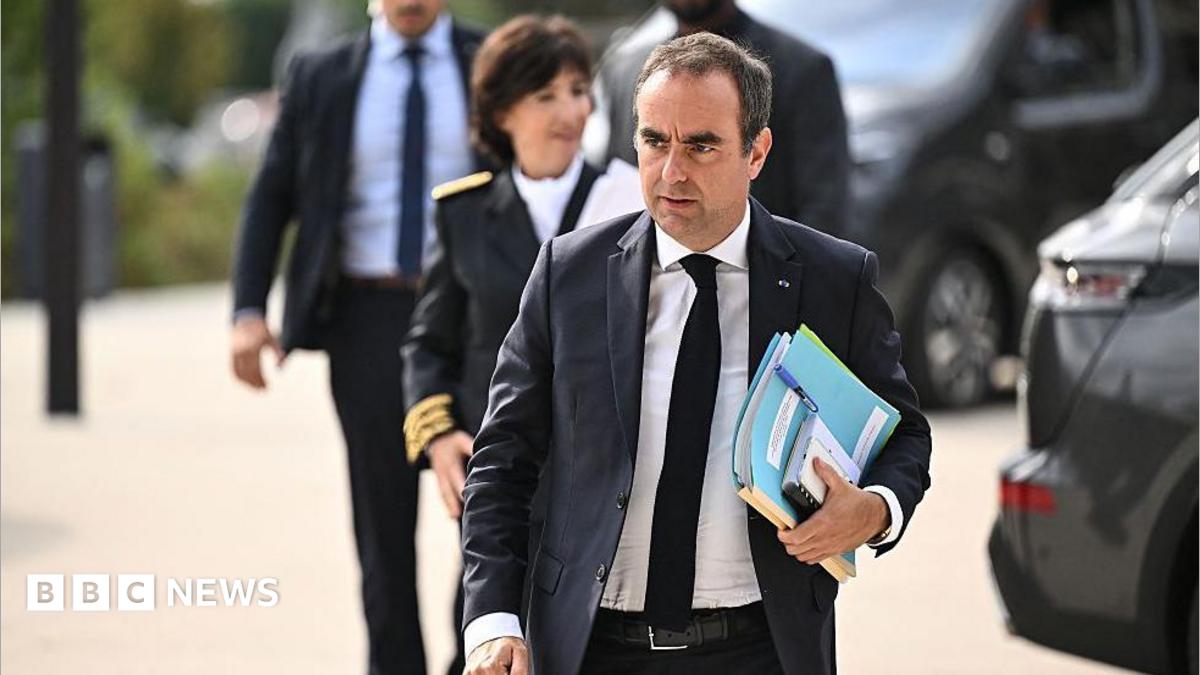
French Prime Minister Sébastien Lecornu faced intense public backlash during a visit to fire-ravaged regions. As wildfires claim lives across Greece, Spain, and Croatia, France has pledged €12m in emergency aid.
- PM Sébastien Lecornu announced €12m aid for Gironde and Landes regions.
- Massive wildfires reported across Belgium, Greece, Spain, and Croatia.
- Residents in Le Porge accuse the French government of lack of transparency in fire management.
French Prime Minister Sébastien Lecornu was met with boos and heckling during a visit to the areas most severely impacted by devastating wildfires. In the town of Le Porge, south-western France, where 183 homes were incinerated, approximately 200 residents gathered to express their anger. Organizers of the affected residents' group accused the Prime Minister of avoiding direct engagement, while the PM's office maintains there is "nothing to hide" regarding the operations.
To mitigate the damage, Lecornu announced a financial aid package of €12 million (£10.3m), with €10m allocated to the Gironde region and €2m to Landes. The Prime Minister promised that building permits for the equivalent reconstruction of destroyed homes would be issued within a month, aiming to accelerate the recovery plan for devastated families.
Why This Matters
BozokMedia analysis shows that the friction between the French administration and its citizens highlights a growing gap in crisis communication. The deployment of riot police to block residents from meeting their leader suggests a government on the defensive. Furthermore, the systemic nature of these blazes across multiple EU borders indicates that national strategies are no longer sufficient; a unified European climate defense mechanism is urgently required.
"The convergence of record-breaking heatwaves and prolonged drought has created a 'tinderbox' effect across the Mediterranean and Western Europe."
The crisis extends far beyond France. Belgium is battling the largest wildfire in its recent history in the Hautes Fagnes nature reserve, necessitating air support from the Netherlands, Germany, Norway, and Sweden. In Greece, 41 forest fires erupted in a single 24-hour window, with two deaths reported on the island of Salamina.
Spain's Aragón region suffered the loss of a soldier and the destruction of nearly 16,000 hectares of land, prompting France to send 104 firefighters to assist. Meanwhile, in Croatia, the situation took a criminal turn as police arrested four individuals suspected of deliberately starting fires in 10 different locations in Zadar.
| Country | Impact/Loss | Primary Response |
|---|---|---|
| France | 183+ homes destroyed | €12m aid package |
| Belgium | Largest nature reserve hit | Multi-national air support |
| Greece | 2 deaths, 41 fires | 200 firefighters on Salamina |
| Spain | 1 soldier dead, 16k hectares burnt | French firefighting reinforcement |
The Copernicus climate monitoring service has confirmed that Western Europe experienced its hottest June-to-July period on record, providing the atmospheric fuel for these catastrophic events.
Frequently Asked Questions
1. Why were French residents protesting against the Prime Minister?
Residents are demanding transparency regarding why certain areas were prioritized over others during firefighting operations and are outraged by the use of riot police during the PM's visit.
2. Is the fire in Europe purely a natural disaster?
While extreme heat and drought (confirmed by Copernicus) are primary drivers, some cases, such as those in Zadar, Croatia, involve suspected arson.