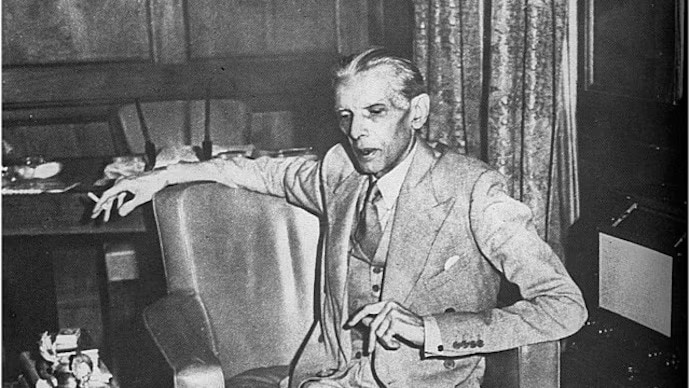
Pakistan has approved the 'Nishan-e-Imtiaz' for two Parsi doctors from Bombay who kept Muhammad Ali Jinnah's terminal tuberculosis a secret during the 1947 partition, a move that potentially altered South Asian history.
- Pakistan to award 'Nishan-e-Imtiaz' to Dr. Jal Ratanji Patel and Dr. Jal Dhaybo-Koo.
- The doctors maintained strict confidentiality regarding Jinnah's advanced TB in 1947.
- Historians suggest that public knowledge of Jinnah's health could have delayed or prevented Partition.
In a surprising diplomatic and historical gesture, Pakistan has approved the conferment of its highest civilian award, the 'Nishan-e-Imtiaz', upon two Indian Parsi doctors from Bombay (now Mumbai). These physicians were instrumental in maintaining the utmost secrecy regarding the deteriorating health of Pakistan's founder, Muhammad Ali Jinnah, during the critical days leading up to the 1947 Partition.
The announcement was made by Ahsan Iqbal, Pakistan's Minister for Planning, Development, and Special Initiatives, who also chairs the award committee. Dr. Jal Ratanji Patel, a physician, and Dr. Jal Dhaybo-Koo, a radiologist, have been nominated for their "quiet but extraordinary service" in ensuring that Jinnah's terminal illness remained known only to a tiny inner circle.
Historical Context: Jinnah's Battle with TB
Muhammad Ali Jinnah had been battling tuberculosis since the 1930s, but the condition was kept hidden to protect his political image. Jinnah was a heavy smoker, reportedly consuming up to 50 cigarettes and Cuban cigars daily, which exacerbated his lung condition. In 1946, when Dr. Patel and Dr. Dhaybo-Koo analyzed his X-rays, they discovered the disease had reached a critical stage, estimating he had only one to two years to live.
BozokMedia analysis shows that this award is not merely for medical expertise, but for the strategic silence maintained by the doctors. Had political giants like Lord Mountbatten, Jawaharlal Nehru, or Mahatma Gandhi known that Jinnah was dying, the leverage in partition negotiations would have shifted dramatically. The secrecy allowed Jinnah to project strength and resolve during the final negotiations for the creation of Pakistan.
"If I had known then, I would have delayed the decision to grant independence by a few months. Pakistan might never have been created." - Lord Mountbatten (as cited in 'Freedom at Midnight').
Jinnah passed away on September 11, 1948, just over a year after Pakistan's independence. The decision to honor the doctors 78 years later underscores the lasting impact of their professional discretion. The formal ceremony is scheduled to take place in March 2027.
Frequently Asked Questions
1. What is the Nishan-e-Imtiaz?
It is one of Pakistan's highest civilian honors, awarded for distinguished services to the state in fields such as medicine, science, or public service.
2. Why is this honor being given after nearly 80 years?
The Pakistani government believes that the doctors' adherence to their professional oath of secrecy played an inadvertent but vital role in the successful establishment of the nation.