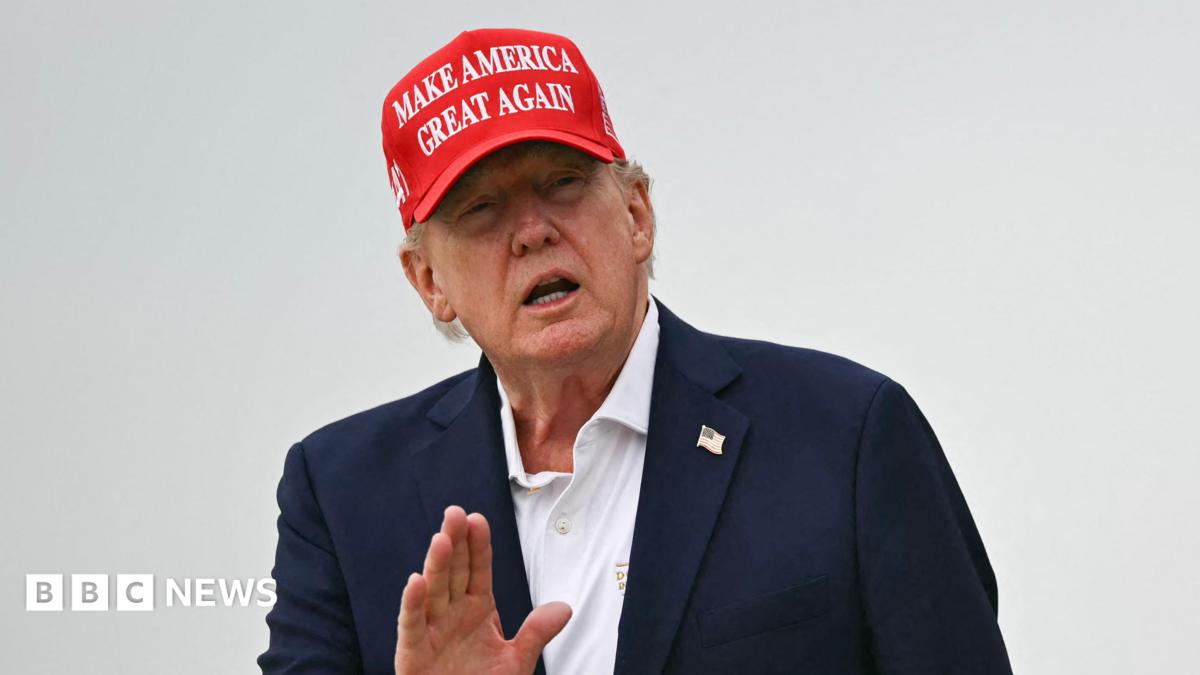
In a surprising geopolitical turn, President Donald Trump has endorsed a mutual defence pact between Saudi Arabia, Turkiye, and Pakistan, signalling a shift toward regional self-reliance.
- Saudi Arabia, Turkiye, and Pakistan signed a mutual defence agreement in Mecca.
- President Donald Trump expressed strong support, encouraging regional allies to defend themselves.
- The pact reflects a growing distrust in the US security umbrella following regional conflicts.
Ten days ago, a seismic shift occurred in Middle Eastern geopolitics when Saudi Arabia, Turkiye, and Pakistan signed a mutual defence pact in Mecca. While some analysts viewed this as a snub to Washington, US President Donald Trump has responded with unexpected enthusiasm, suggesting that the era of total reliance on the US military is evolving.
Taking to Truth Social, Trump stated that he was "very happy" to see the Mecca Joint Defence Agreement, noting that it demonstrates how Middle Eastern countries are finally coming together to defend themselves in a more meaningful way. This sentiment was quickly echoed by Pakistan's Prime Minister Shehbaz Sharif, who credited Trump's leadership for maintaining stability in South Asia.
Historical Background: The Push for Burden-Sharing
Trump's reaction is deeply rooted in his "America First" doctrine. For years, he has criticized NATO and other bilateral allies for failing to meet defence spending targets. This pressure culminated in the June 2025 NATO summit in The Hague, where member states agreed to increase their defence spending from 2% to 5% of GDP by 2035. The Mecca pact aligns perfectly with Trump's desire to see allies shoulder their own security burdens.
Why This Matters
BozokMedia analysis shows that this pact is a direct consequence of the perceived erosion of US credibility. The US-Israel military actions against Iran—conducted without consulting key Gulf allies—left a security vacuum. The Mecca pact is not just a military agreement; it is a strategic hedge. By diversifying their security linkages, Riyadh, Ankara, and Islamabad are ensuring that their national survival is not tied to the whims of a single foreign capital.
"The Arab Gulf states lost their deterrence since February 28, and they have to re-establish their deterrence without relying on the US." - Betul Dogan-Akkas, Ankara University.
While some argue that the US is not retreating but rather redefining its presence, others suggest a "graduated retrenchment." The US may remain in the region, but as a facilitator rather than the sole protector, forcing local partners to align more closely and invest more heavily in their own capabilities.
| Feature | Traditional US Security Model | Mecca Defence Pact Model |
|---|---|---|
| Dependence | Uni-polar (US Centric) | Multi-polar (Regional Cooperation) |
| Funding | Heavy US taxpayer burden | Shared regional resources |
| Decision Making | Washington-led | Consensus-based regional interests |
Frequently Asked Questions
1. What is the purpose of the Mecca Pact?
The pact aims to establish a mutual defence framework between Saudi Arabia, Turkiye, and Pakistan to ensure regional stability without total reliance on external powers.
2. Does this mean the US is leaving the Middle East?
Not necessarily. It indicates a shift from a US-led security umbrella to a model where the US supports, but does not solely provide, regional security.