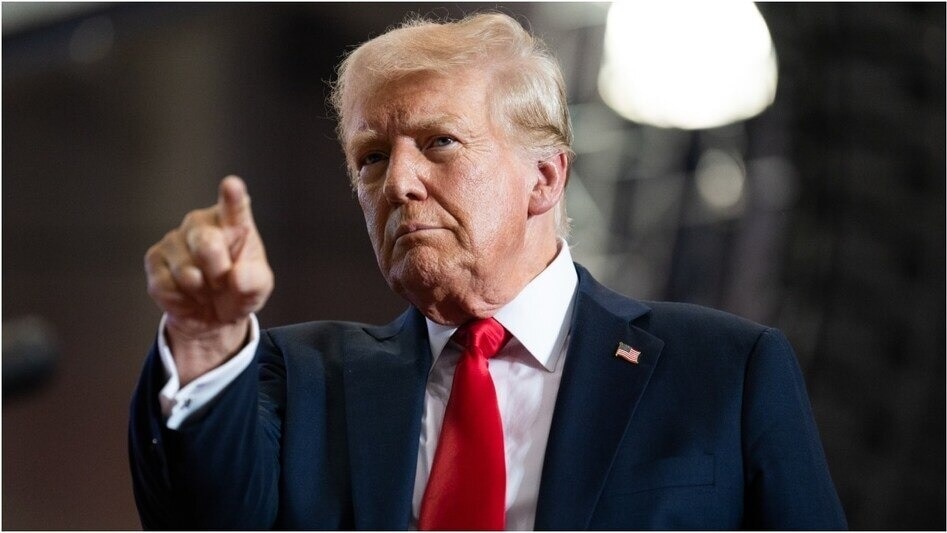
In a move that has sparked widespread security concerns, Donald Trump has reduced the scale of joint military exercises with South Korea, attributing the decision to his positive rapport with North Korean leader Kim Jong Un.
- Trump reduced joint war games with South Korea to maintain diplomatic momentum with Pyongyang.
- Allies express deep concern over the reliability of the U.S. security umbrella.
- North Korea had previously threatened strong responses to these military drills.
Former U.S. President Donald Trump has made a strategic pivot by scaling back the joint military exercises conducted with South Korea. The decision stems from Trump's assertion of maintaining 'good ties' with North Korean supreme leader Kim Jong Un, suggesting that a personal relationship can achieve more than traditional military deterrence.
This decision has sent shockwaves through the defense establishment in both Washington and Seoul. For decades, these war games served as a critical signal of readiness and a deterrent against potential aggression from the North. By reducing their scale, critics argue that the U.S. is effectively handing a strategic victory to Pyongyang without securing tangible denuclearization commitments.
Why This Matters
BozokMedia analysis shows that this shift represents a fundamental departure from established U.S. foreign policy. By prioritizing personal chemistry over institutional security frameworks, the U.S. risks alienating its closest allies. This creates a power vacuum in East Asia that could embolden other regional actors to challenge the existing status quo.
"Trading military readiness for diplomatic gestures is a precarious strategy in a nuclear-armed region."
Historically, the U.S.-South Korea alliance has been the bedrock of stability on the peninsula. However, the friction intensified when Trump demanded that South Korea pay a larger share of the cost for U.S. troop presence, framing security as a financial transaction rather than a strategic obligation.
| Feature | Traditional Approach | Trump Approach |
|---|---|---|
| Military Drills | Regular and Comprehensive | Limited and Conditional |
| Strategy | Containment/Deterrence | Personal Diplomacy |
| Priority | Regional Stability | Bilateral Rapport |
Frequently Asked Questions
1. Will this move lead to permanent peace on the peninsula?
While it may reduce immediate tensions, most analysts believe permanent peace requires a formal treaty and complete denuclearization.
2. How does this affect other U.S. allies?
Allies like Japan and NATO may perceive this as a sign that U.S. commitments can be altered based on the president's personal preferences.