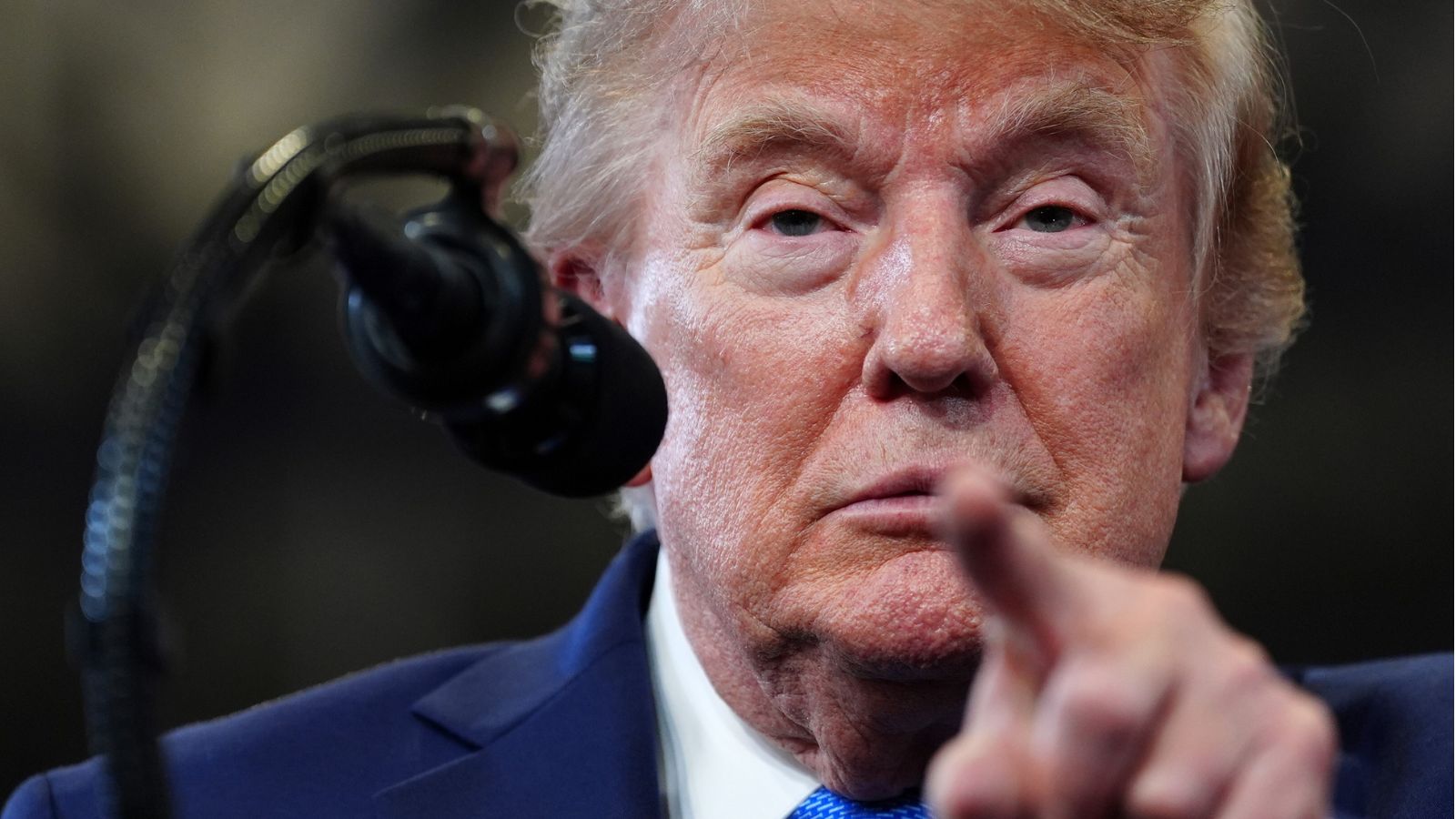
President Donald Trump's latest executive order targeting 'birth tourism' faces severe legal hurdles. Following a previous Supreme Court defeat, legal experts argue this new attempt to restrict birthright citizenship is highly unlikely to survive constitutional scrutiny.
- President Trump has issued a new executive order aiming to curb 'birth tourism' and limit birthright citizenship.
- Legal experts express strong skepticism, citing the 14th Amendment of the US Constitution which guarantees citizenship to those born on US soil.
- This action follows a prior Supreme Court ruling that rejected a similar attempt to restrict citizenship rights.
Donald Trump's administration has launched another controversial legal battle by signing an executive order aimed at restricting birthright citizenship, specifically targeting what his administration terms "birth tourism." However, constitutional scholars and legal experts are highly skeptical of the order's viability, predicting it will face immediate and fatal challenges in federal courts.
This is not Trump's first attempt to alter the long-standing interpretation of the 14th Amendment. During his previous tenure and subsequent campaigns, Trump repeatedly asserted his authority to end birthright citizenship via executive decree. However, his previous efforts were met with significant judicial resistance, culminating in a Supreme Court defeat that reinforced the constitutional consensus.
At the heart of the debate is the Citizenship Clause of the Fourteenth Amendment, ratified in 1868. It states: "All persons born or naturalized in the United States, and subject to the jurisdiction thereof, are citizens of the United States." For over a century, this has been interpreted as granting automatic citizenship to almost anyone born on U.S. soil, regardless of their parents' immigration status.
Why This Matters
A BozokMedia analysis shows that the debate over birthright citizenship is not merely a legal technicality but a deeply polarizing political issue. If implemented, such a restriction would fundamentally reshape American demography, immigration enforcement, and the global perception of civil liberties in the United States. It signals a broader, more aggressive push toward nationalism and restrictive immigration policies that could trigger a constitutional crisis.
"An executive order cannot override the plain text of the Fourteenth Amendment. The Supreme Court has repeatedly affirmed that birth on U.S. soil confers citizenship, making this executive action more of a political statement than a viable legal policy," noted a prominent constitutional law expert.
Critics argue that the executive order is timed to rally his political base rather than enact enforceable policy. Because executive orders are subject to judicial review, federal judges are expected to issue temporary injunctions almost immediately, halting the order's implementation before it can take effect.
| Aspect | Trump Administration's View | Legal Experts' Consensus |
|---|---|---|
| Constitutional Basis | Argues "subject to the jurisdiction" excludes temporary visitors/undocumented immigrants. | The 14th Amendment applies to all born on US soil (except foreign diplomats/invading armies). |
| Executive Authority | Claims the President can redefine citizenship terms via executive order. | Only a Constitutional Amendment or Supreme Court reinterpretation can alter this. |
| Legal Outcome | Expects a favorable ruling from a conservative-leaning Supreme Court. | Predicts immediate federal injunctions and ultimate defeat in court. |
Frequently Asked Questions
Can a US President end birthright citizenship alone?
No, legal experts agree that the President cannot unilaterally end birthright citizenship through an executive order, as it is anchored in the 14th Amendment of the US Constitution.
What is "birth tourism"?
Birth tourism refers to the practice of traveling to a country with birthright citizenship laws specifically to give birth there, ensuring the child obtains citizenship in that country.