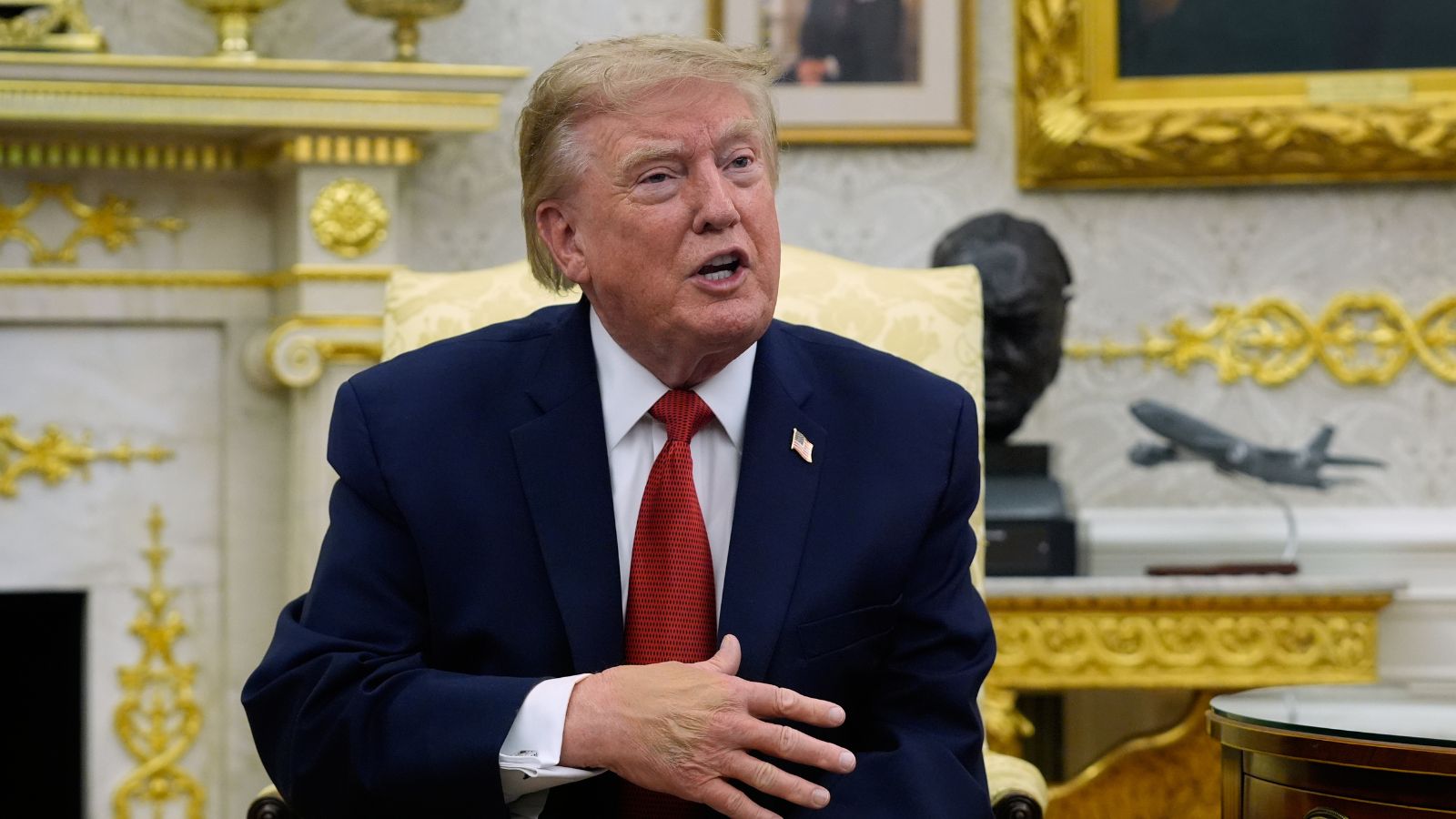
President Donald Trump has signaled a breakdown in negotiations with Iran after a 60-day deadline expired without a breakthrough. The US President emphasized that Iran cannot possess nuclear weapons and asserted total US control over the strategic Strait of Hormuz.
- The 60-day negotiating window established in June has officially expired without a deal.
- President Trump explicitly stated that Iran is unlikely to accept the stringent terms he deems necessary.
- The US has asserted its dominance and control over the strategic Strait of Hormuz.
The geopolitical tension between Washington and Tehran has reached a critical juncture. On Monday, President Donald Trump announced that the 60-day window for negotiations, which was intended to resolve long-standing disputes over Iran's nuclear ambitions, has lapsed without a successful agreement. The President's tone remained firm, stating that the current trajectory of talks does not align with the security requirements of the United States.
Central to the dispute is the non-proliferation of nuclear weapons. Trump reiterated his administration's red line: Iran cannot have a nuclear weapon. According to the US President, the Iranian leadership is unwilling to make the concessions necessary to reach a comprehensive agreement that would satisfy US security concerns and international safety standards.
Why This Matters
BozokMedia analysis shows that this failure to reach an agreement signals a shift toward a more aggressive 'maximum pressure' campaign. The expiration of the deadline removes the diplomatic buffer, potentially paving the way for increased sanctions or direct military posturing. The stability of global energy markets depends heavily on the predictability of US-Iran relations.
Adding to the volatility, President Trump made provocative comments regarding the Strait of Hormuz, one of the world's most vital oil transit chokepoints. He expressed a preference for declaring the strait a territory under US influence, claiming that the United States maintains total control over the waterway. This assertion comes at a time when the strait remains restricted, further complicating international shipping and trade.
The failure of this 60-day window suggests that the gap between Trump's 'necessary deal' and Tehran's minimum requirements is currently unbridgeable.
Historically, the US-Iran relationship has been defined by a cycle of sanctions and tentative agreements, most notably the JCPOA (Joint Comprehensive Plan of Action). Trump's departure from that framework in favor of a more restrictive deal has created a persistent diplomatic vacuum that now appears to be widening.
Frequently Asked Questions
Q1: What was the purpose of the 60-day deadline?
The deadline was set under a June agreement to facilitate substantive negotiations on Iran's nuclear program and the lifting of certain restrictions.
Q2: Why is the Strait of Hormuz significant in this conflict?
It is a strategic waterway; any US-Iran conflict there could lead to a global energy crisis by blocking oil exports from the Persian Gulf.