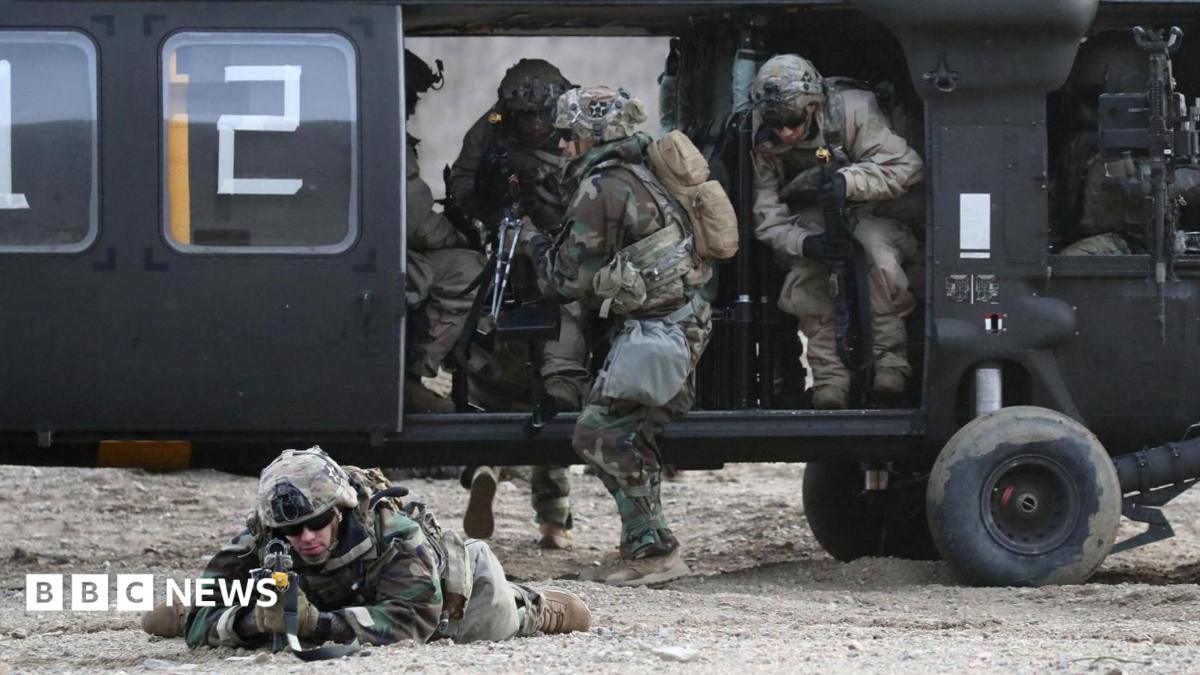
In a major shift in regional security, South Korea has announced it will curtail the 2026 Ulchi Freedom Shield exercises following a request from Washington. The decision follows President Trump's recent comments regarding his relationship with North Korea.
- The 2026 Ulchi Freedom Shield exercise will conclude six days earlier than planned.
- The decision follows President Trump's desire to engage with Kim Jong Un.
- South Korea was reportedly not informed of these plans in advance.
- The scale of field training exercises will also be partially reduced.
South Korea's defense ministry has officially announced that the annual joint military drills with the United States will be shortened by six days. The 2026 Ulchi Freedom Shield exercise, which was originally scheduled to conclude on August 27, will now wrap up on August 21. Seoul stated that the adjustments to the "period and scale" of the drills were made following a formal proposal from the US side.
This sudden pivot comes on the heels of Donald Trump expressing intentions to limit joint exercises, citing his "very good" relationship with North Korean leader Kim Jong Un. On Truth Social, Trump criticized the drills, labeling them as "costly" and sending a "hostile" signal. He further linked the reduction in military cooperation to South Korea's refusal to assist the US in operations regarding the denuclearization of Iran.
Why This Matters
BozokMedia analysis shows that this development represents a significant departure from traditional US-ROK security protocols. By tying military exercises to personal diplomatic relationships and specific geopolitical cooperation (such as the Iran issue), the Trump administration is redefining the concept of bilateral alliances. This shift could fundamentally alter the security architecture of the Asia-Pacific region.
The reduction in scale signals a move toward transactional diplomacy, where military cooperation is directly linked to broader political concessions.
South Korean Foreign Minister Cho Hyun informed a parliamentary hearing that neither South Korean nor US officials were aware of Trump's specific plans ahead of time. Furthermore, reports suggest that Trump is actively pushing aides for a potential in-person meeting with Kim Jong Un, possibly during the APEC summit in China this November.
Historical Background
For decades, the US-South Korea alliance has been anchored by large-scale joint military exercises designed to deter North Korean aggression. These drills have historically been a cornerstone of regional stability. However, the recent inclusion of North Korean troops aiding Russia in the Ukraine conflict has added a new layer of complexity to these security arrangements.
| Feature | Original Plan | Revised Plan |
|---|---|---|
| End Date | August 27 | August 21 |
| Scale | Full Scale | Partially Reduced |
| Primary Driver | Regional Deterrence | Diplomatic Engagement |
Frequently Asked Questions (FAQ)
1. Why is the US reducing the scale of the drills?
President Trump cited the high costs of the exercises and his desire to pursue direct diplomacy with North Korea's Kim Jong Un.
2. Does this impact the overall alliance?
While the drills are being scaled back, the core alliance remains, though the nature of cooperation is shifting toward a more transactional model.