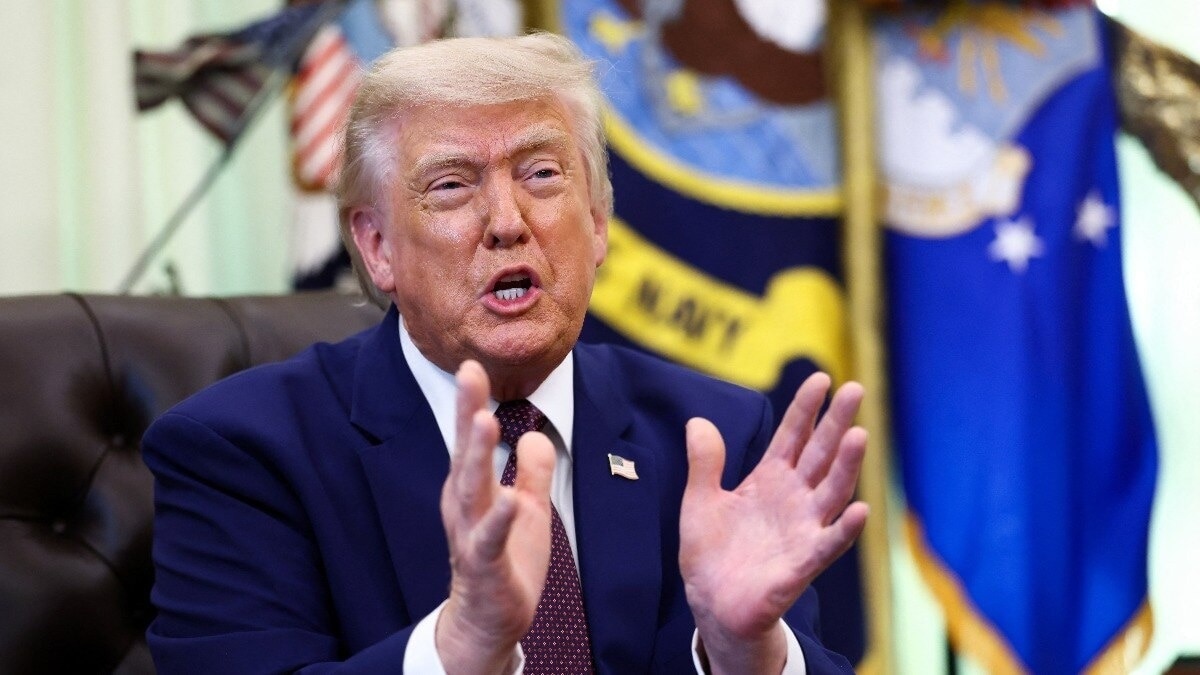
US President Donald Trump has asserted that the Strait of Hormuz remains open and that the US naval blockade against Iran is proving highly effective. Recent military actions have forced dozens of commercial vessels to reroute.
- President Trump confirmed that the Strait of Hormuz is open and vessels are moving through it.
- The US naval blockade has been described as 'highly effective' against Iranian influence.
- US Central Command reported that 65 commercial ships were forced to change course.
- Trump reiterated that Iran will be prevented from acquiring nuclear weapons.
Amidst escalating tensions between the United States and Iran, President Donald Trump has made a significant claim regarding the status of the Strait of Hormuz. Asserting that the vital maritime corridor remains open, Trump stated that a large number of vessels are successfully navigating the route, highlighting the effectiveness of the ongoing US naval blockade.
In a recent statement, Trump dismissed reports of total maritime paralysis, suggesting that the media has failed to provide accurate information regarding the flow of traffic. He emphasized that the US naval presence has maintained control over the region. Furthermore, while expressing a possibility of renewed formal talks with Iran in the future, Trump remained firm on his stance regarding Iran's nuclear ambitions, stating categorically that Iran will never possess nuclear weapons.
Why This Matters
BozokMedia analysis shows that the Strait of Hormuz is a critical chokepoint for global energy security. Any disruption in this narrow waterway can trigger a massive surge in global oil prices and destabilize international markets. Trump's assertion of control is a strategic message to both Tehran and global markets that the US maintains command over this essential economic artery.
The US naval blockade in the Strait of Hormuz serves as a powerful tool of economic and strategic deterrence against Iranian aggression.
The US Central Command (CENTCOM) provided specific operational details, noting that as of August 19, US forces have compelled 65 commercial vessels to divert their routes. Additionally, three vessels were neutralized, and US forces boarded two other ships to conduct thorough inspections. These operations are part of the broader enforcement of the blockade aimed at countering Iranian activities.
Historical Background
The current surge in US-Iran friction dates back to February 28, when President Trump announced a major military operation against Iran. This led to coordinated strikes by the US and Israel on Iranian military, government, and infrastructure sites. Despite attempts at peace negotiations in June, the cycle of drone attacks and military skirmishes has continued, making the Strait of Hormuz the epicenter of the conflict.
Frequently Asked Questions
1. What was Trump's main claim regarding the Strait?
Trump claimed the strait is open, ships are passing through, and the US naval blockade is working effectively.
2. How many ships were affected by US military actions?
According to CENTCOM, 65 commercial ships were forced to reroute due to US naval operations.