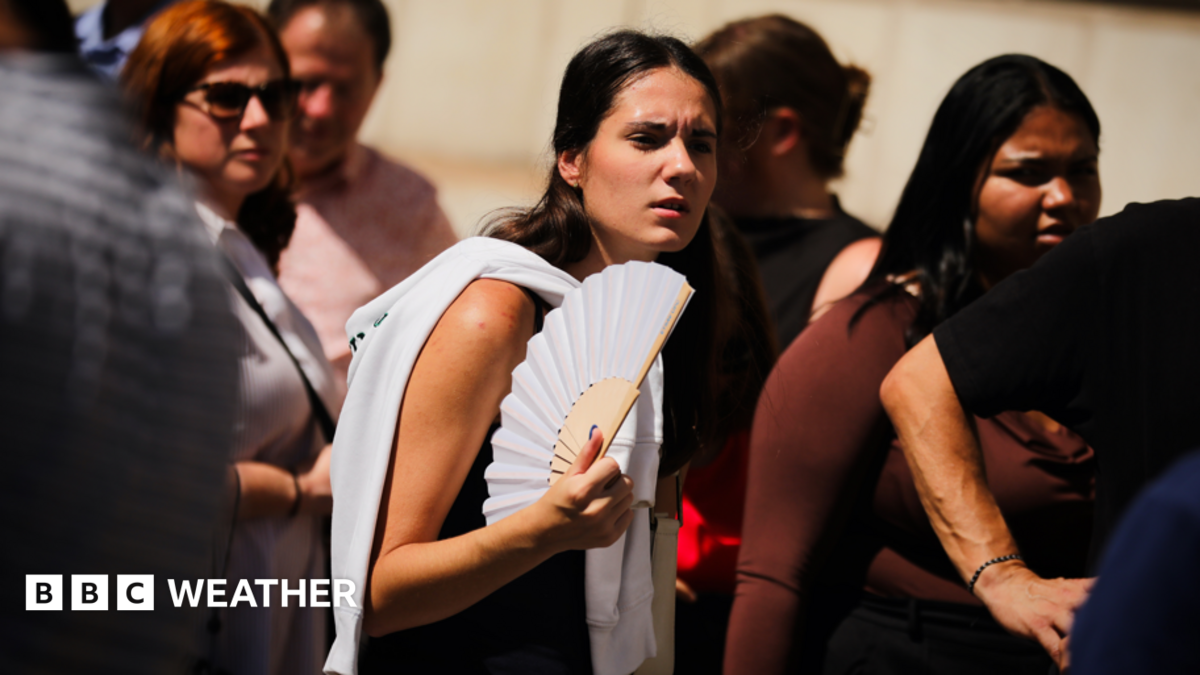
The United Kingdom has recorded its hottest day of the year so far, with temperatures reaching a provisional 38.1C (100F) at Kew Gardens. An amber extreme heat warning is in place across vast swathes of the country as health officials warn of severe risks, particularly to vulnerable populations.
- The UK recorded its hottest day of 2026 with temperatures hitting a provisional 38.1°C (100°F) at Kew Gardens.
- An amber extreme heat warning is active across London, the Midlands, and southern England, alongside urgent health alerts.
- Summer 2026 is on track to officially become the warmest summer in British history, overtaking the previous record set in 2025.
The United Kingdom has experienced its hottest day of the year so far on Thursday, with a provisional temperature of 38.1°C (100°F) officially recorded at Kew Gardens in London. This marks the second time the UK has breached the 38°C threshold in 2026—the first occurrence being at Lingwood, Norfolk, on June 26. Climatologists note that the only other time in recorded history that temperatures of this magnitude were registered twice in a single calendar year was during the historic heatwave of 2022.
The extreme heat comes as a rare amber weather warning issued by the Met Office remains in effect across a massive portion of the UK, marking the peak of the country's fifth consecutive heatwave this season. The warning covers Eastern England, London and the South-East, the Midlands, the North-West, the South-West, and parts of Yorkshire and Humber. Alongside this, the UK Health Security Agency (UKHSA) has issued amber heat health alerts across the entirety of England, warning of severe strains on the NHS and social care systems.
Why This Matters
BozokMedia analysis shows that the escalating frequency of these extreme heat events in the UK is a symptom of systemic shifts in Western European climate dynamics. Historically accustomed to temperate maritime weather, the UK's infrastructure—ranging from railway tracks to residential housing—is underprepared for sustained near-40°C temperatures. The compounding effect of these heatwaves threatens public health, water security, and agricultural outputs on an unprecedented scale.
"The frequency with which the UK is now breaching the 38°C threshold is a stark indicator of a shifting climate baseline, transforming what were once once-in-a-generation anomalies into recurring seasonal realities."
Adding to the physiological dangers of the heatwave, meteorologists have warned of impending "tropical nights," where overnight temperatures fail to drop below 20°C (68°F). When high day temperatures are followed by humid, stifling nights, the human body is deprived of the opportunity to cool down and recover. This cumulative stress significantly escalates the risk of heatstroke and cardiovascular issues, particularly among those aged 65 and over or individuals with pre-existing health conditions.
Thursday's peak heat has shattered several other long-standing meteorological milestones. Temperatures exceeded 37°C in multiple locations across the country, setting a provisional record for the highest number of days in a calendar year reaching this extreme level. It has only happened nine times since records began, and three of those instances have occurred in 2026 alone. Furthermore, Thursday marked the 38th day this year where temperatures somewhere in the UK exceeded 30°C, comfortably beating the previous record of 34 days.
| Temperature Metric | Previous Record | 2026 Record (Provisional) |
|---|---|---|
| Days exceeding 30°C | 34 days | 38 days |
| Days exceeding 37°C | Occurred only 9 times in history | 3 times in 2026 alone |
| Hottest June Temperature | Previous historical records | 38.0°C (Lingwood, June 26) |
Frequently Asked Questions
What is an amber extreme heat warning?
An amber extreme heat warning is issued by the UK Met Office when high temperatures are expected to cause widespread impacts on people, infrastructure, and transport systems, requiring precautionary actions to stay safe.
Is Summer 2026 on track to be the hottest on record?
Yes. If average temperatures for the remainder of August hold steady or remain above average, Summer 2026 will officially displace Summer 2025 as the warmest on record in the United Kingdom.