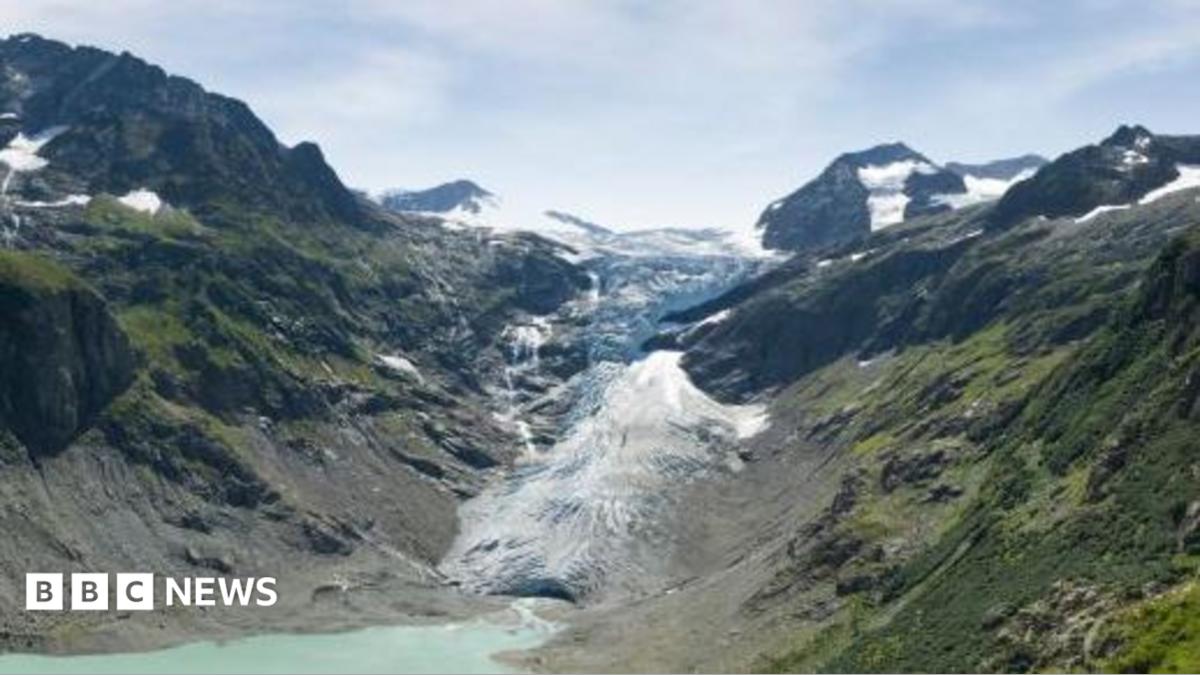
The remains of two Belgian mountaineers, missing for over three decades, have been uncovered by the receding Trift Glacier in the Swiss Alps. Scientists warn this is a stark symptom of rapid climate change.
- Two Belgian hikers missing since 1992 have been found in the Swiss Alps.
- The bodies were exposed by the rapid melting of the Trift Glacier.
- DNA testing confirmed the identity of the mountaineers near Weissmies mountain.
- Glacier shrinkage in Switzerland has reached critical levels due to climate change.
In a chilling intersection of history and environmental crisis, the bodies of two Belgian men who vanished in the Swiss Alps in 1992 have been discovered. The remains were exposed by the receding Trift Glacier, located south of the city of Lucerne, following a discovery by a hiker on July 26.
Authorities confirmed that DNA analysis successfully identified the remains as those of two mountaineers who went missing 34 years ago in the vicinity of the Weissmies mountain. At the time of their disappearance, the men were aged 39 and 41. Police in the Valais region conducted a recovery operation and transferred the remains to a hospital in Sion for formal identification.
Why This Matters
BozokMedia analysis shows that this discovery is more than just a cold case resolution; it is a grim visual indicator of the accelerating climate crisis. The melting of glaciers is not merely a geographical change but a phenomenon that is unearthing the past in unsettling ways. According to Glacier Monitoring in Switzerland (Glamos), glaciers have shrunk by a quarter in the decade leading up to 2025.
The rapid retreat of these icy giants is attributed by scientists to global warming. The European Commission's monitoring body, Copernicus, has noted that the rate of glacier shrinkage has increased significantly since the 1990s, with an even more aggressive acceleration observed since the year 2000.
The melting of glaciers acts as a double-edged sword, revealing long-lost human histories while simultaneously signaling the collapse of vital ecological systems.
This is not an isolated incident. In 2023, human remains found near the iconic Matterhorn were identified as a German climber missing since 1986. Regional officials maintain a comprehensive database of missing persons dating back to 1925, noting that many disappearances occur in high-altitude mountain regions or deep waters.
Glacial Decline Overview
| Metric/Era | Impact/Observation |
|---|---|
| Post-1990s Trend | Increased global shrinkage rate |
| Shrinkage by 2025 | 25% reduction in Swiss glaciers |
| Recent Annual Loss | 3% reduction reported in 2025 |
Frequently Asked Questions
Question 1: When did the hikers originally go missing?
Answer: The two Belgian mountaineers went missing in 1992.
Question 2: What is causing the Swiss glaciers to melt so quickly?
Answer: Scientists point to climate change and rising global average temperatures as the primary drivers.