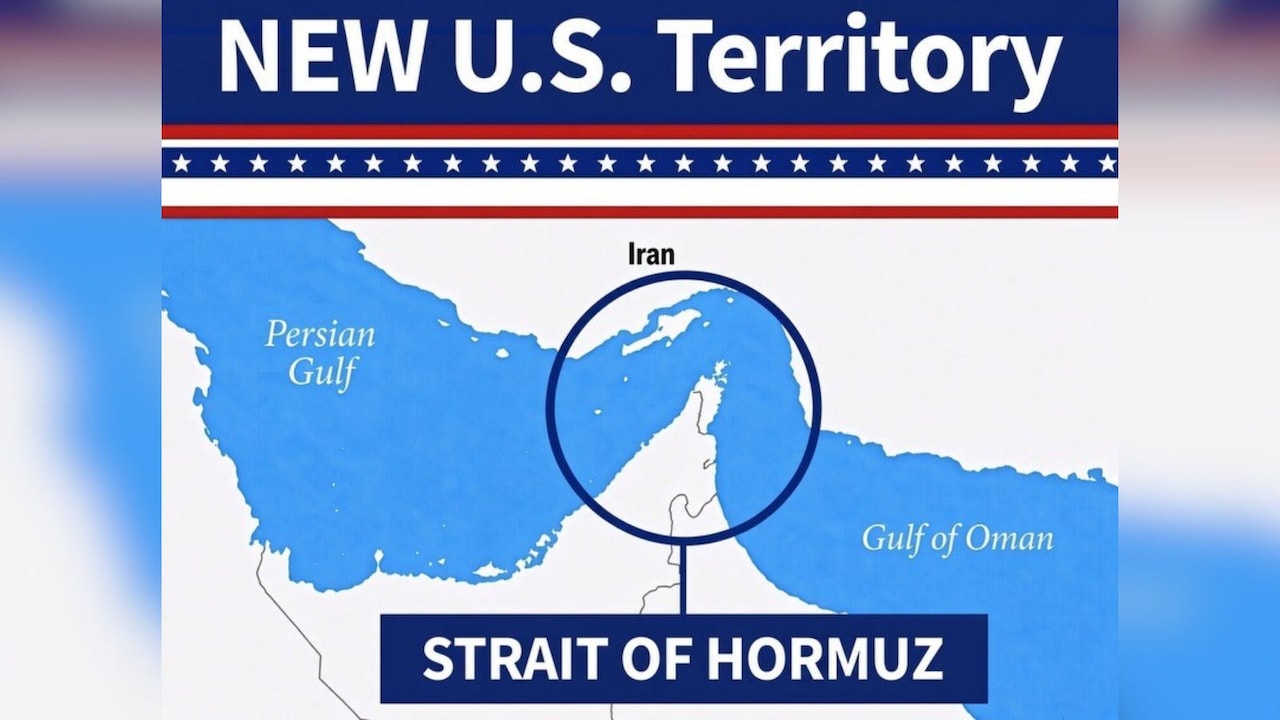
Donald Trump has reignited geopolitical tensions by sharing a map that labels the strategic Strait of Hormuz as a 'New US Territory.' This comes amid Iran's assertions of control over the vital waterway.
- Donald Trump shared a map designating the Strait of Hormuz as a 'New US Territory.'
- The waterway is critical, handling nearly 20% of global oil and LNG exports.
- Iran has recently asserted control over this strategic maritime choke point.
In a move that has sent ripples through international diplomatic circles, former US President Donald Trump has once again posted a map depicting the Strait of Hormuz as a "New US Territory." This is not the first time; Trump had previously shared a similar provocative image on August 18, signaling a recurring theme in his rhetoric regarding maritime dominance and energy security.
A Choke Point of Global Energy
The Strait of Hormuz is arguably the most critical maritime choke point in the world. Before the onset of recent conflicts, approximately one-fifth of the world's total oil and Liquefied Natural Gas (LNG) exports passed through this narrow passage. Any disruption in this corridor has the potential to trigger a massive spike in global energy prices and economic instability.
Why This Matters
BozokMedia analysis shows that Trump's assertion is more than just social media rhetoric; it touches upon the core of US foreign policy and the struggle for hegemony in the Middle East. By labeling this territory as American, Trump is potentially signaling a hardline stance against Iran, which has already asserted control over the region.
Control over the Strait of Hormuz is synonymous with control over the global economic pulse.
The geopolitical stakes are heightened by Iran's recent claims of dominance in the area. As the US and Iran continue to engage in a high-stakes shadow war, such statements from a potential future president could drastically alter the landscape of international maritime law and military posturing.
Historical Background
The Strait of Hormuz has been a flashpoint for decades. Since the Tanker War of the 1980s, the United States has maintained a significant naval presence in the Persian Gulf to ensure the "freedom of navigation." The tension between Western interests and Iranian territorial claims remains one of the most volatile dynamics in modern history.
Frequently Asked Questions
Question 1: Why is the Strait of Hormuz so vital to the world economy?
Answer: It is the primary transit point for a massive portion of the world's oil and LNG supplies.
Question 2: How does Trump's statement affect Iran?
Answer: It increases diplomatic tension and suggests a more aggressive US stance toward Iranian maritime claims.