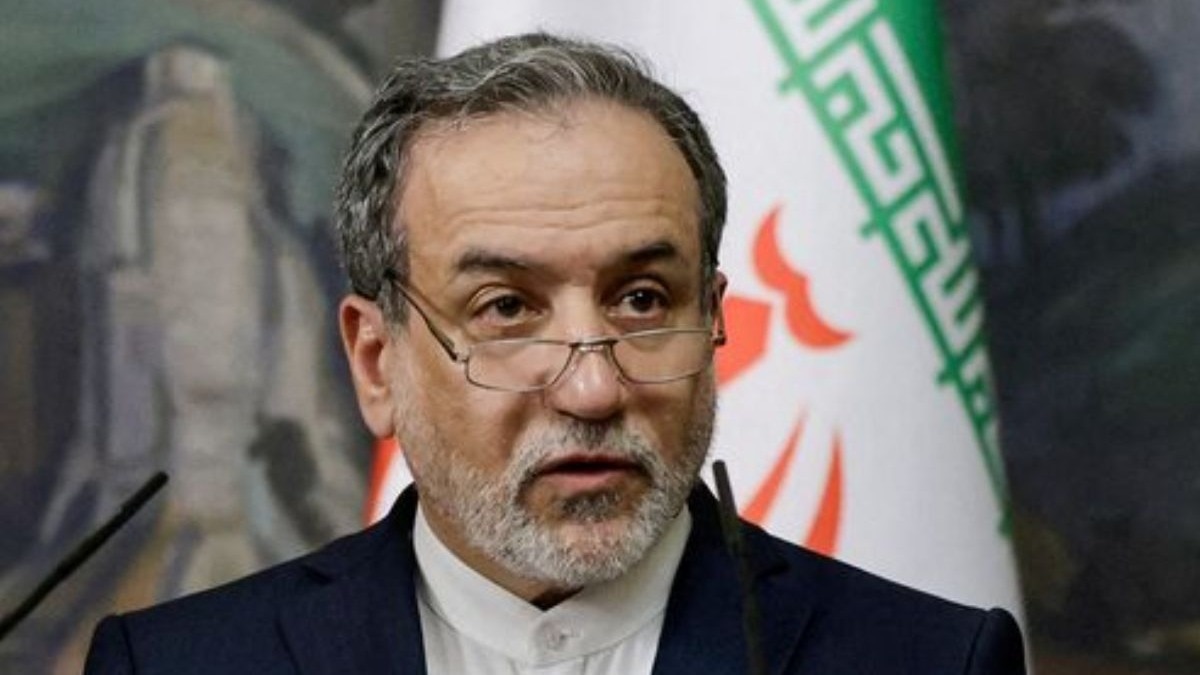
Iranian Foreign Minister Abbas Araqchi has dismissed the US threat of 'the toughest sanctions in history,' labeling the move as a desperate attempt by Washington.
- Iran dismissed US Treasury Secretary Scott Bessent's threat of unprecedented sanctions.
- FM Abbas Araqchi claimed US military campaigns failed to achieve their objectives.
- Donald Trump warned of 'Economic Warfare' against any entity aiding Iran.
- China has rejected the use of sanctions as a diplomatic solution.
In a escalating diplomatic standoff, Iran has openly mocked the United States' recent threats to impose what is being described as "the toughest sanctions in history." Iranian Foreign Minister Abbas Araqchi characterized the renewed pressure from Washington as a sign of desperation following the failure of recent military efforts to achieve strategic objectives against Tehran.
Speaking via a video message, Araqchi suggested that the US is reverting to old tactics because kinetic military operations have not yielded the desired results. "The fact that they have moved from military operations back to these repetitive scenarios shows they are desperate," Araqchi stated, adding that Iran remains unbowed by decades of blockades and economic pressure.
Why This Matters
BozokMedia analysis shows that this confrontation transcends bilateral tensions; it directly threatens the stability of global energy markets. With the Strait of Hormuz serving as a critical artery for global oil supply, any escalation in economic warfare could trigger a massive spike in energy prices worldwide.
"The shift from military kinetic action to extreme economic warfare indicates a high-stakes gamble by Washington to bypass direct conflict while aiming for regime collapse."
The threat was initially articulated by US Treasury Secretary Scott Bessent, who described a "one-two punch" strategy involving both a naval blockade and unprecedented economic measures. Bessent emphasized that the goal is to exert maximum pressure to potentially collapse the current Iranian regime without necessitating a large-scale military restart.
Adding to the pressure, former President Donald Trump has issued stern warnings to third-party nations. Trump declared that any country or business providing a "lifeline" to Iran's economy would face "tremendous economic consequences," warning of economic warfare on an unprecedented scale.
| Entity | Stance on Sanctions/Conflict | Primary Goal |
|---|---|---|
| USA | Pro-Sanctions / Maximum Pressure | Regime Collapse / Economic Neutralization |
| Iran | Defiant / Resistant | Sovereignty / Survival |
| China | Opposed to Sanctions | Diplomatic Resolution / Trade Stability |
Historical Background
The geopolitical landscape has been volatile since the US and Israel launched military campaigns against the Islamic Republic in late February. Despite two attempted ceasefires in April and June, tensions remain high. Iran's economy has been under heavy strain for years, and the conflict has already significantly disrupted shipping and energy markets in the Middle East.
Frequently Asked Questions
1. What is the 'one-two punch' strategy mentioned by the US?
It refers to the combination of a naval blockade and the imposition of the most severe economic sanctions in history.
2. How has China responded to the US pressure?
China has officially rejected sanctions, calling for political and diplomatic solutions instead of economic coercion.