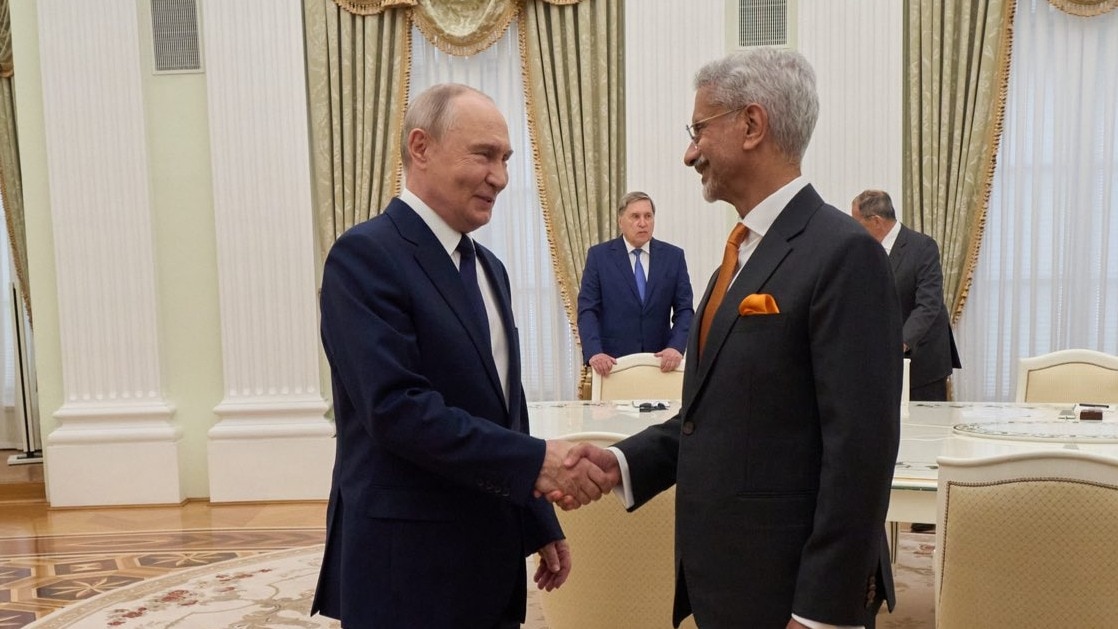
India's External Affairs Minister S. Jaishankar met President Vladimir Putin in Moscow, emphasizing expanded trade, energy, fertilizer and nuclear cooperation, and setting a $100 billion trade target for 2030 ahead of the SCO and BRICS summits.
- India‑Russia trade reaches $60 billion in FY 2025‑26
- New agreements on nuclear energy and fertilizer supplies
- Goal to hit $100 billion bilateral trade by 2030
External Affairs Minister S. Jaishankar held a two‑day visit to Moscow on 24 August, meeting President Vladimir Putin to discuss deepening cooperation in trade, energy, fertilizers and nuclear technology. The talks come as both leaders prepare for the upcoming SCO summit in Kyrgyzstan and the BRICS summit in New Delhi.
Putin highlighted that bilateral trade has risen this year after a slight dip last year, and reaffirmed Russia’s commitment to increase fertilizer shipments to India, aiming to support Indian farmers and the agricultural sector.
Jaishankar conveyed Prime Minister Narendra Modi’s greetings, noting Modi’s anticipation of meeting Putin at the SCO summit and later hosting him in India for the BRICS summit, underscoring a “very strong picture of cooperation.”
In a separate meeting with Russian First Deputy Prime Minister Dennis Manturov, Jaishankar highlighted that trade in goods surged from around $13 billion in FY 2021‑22 to nearly $60 billion in FY 2025‑26 – a four‑fold increase. However, the trade imbalance also widened sharply, from $6.6 billion to over $50 billion.
Addressing this imbalance, Jaishankar stressed the need to remove tariff and non‑tariff barriers, improve payment mechanisms, and boost B2B engagement, aiming for a shared target of $100 billion bilateral trade by 2030.
The partnership, he said, “has consistently demonstrated resilience and adaptability,” even amid a complex international landscape, reflecting mutual confidence and interest.
Jaishankar is also scheduled to meet Russian Foreign Minister Sergei Lavrov to discuss regional and global issues, including the Ukraine conflict and West Asia stability, building on their earlier dialogue in Manila.
Why This Matters
BozokMedia analysis shows that the accelerating India‑Russia economic partnership not only diversifies Delhi’s supply chains amid Western sanctions but also positions both nations as pivotal players in shaping the upcoming SCO and BRICS agendas.
"India‑Russia trade dynamics are reshaping the geopolitical balance in Eurasia," says Dr. Ananya Sharma, senior fellow at the Institute for Strategic Studies.
Frequently Asked Questions
Q1: When is the $100 billion trade target expected to be achieved?
A: Both sides have pledged to reach this milestone by 2030.
Q2: What specific nuclear projects are being discussed?
A: Plans include new reactor construction, fuel supply agreements, and joint safety technology initiatives.
