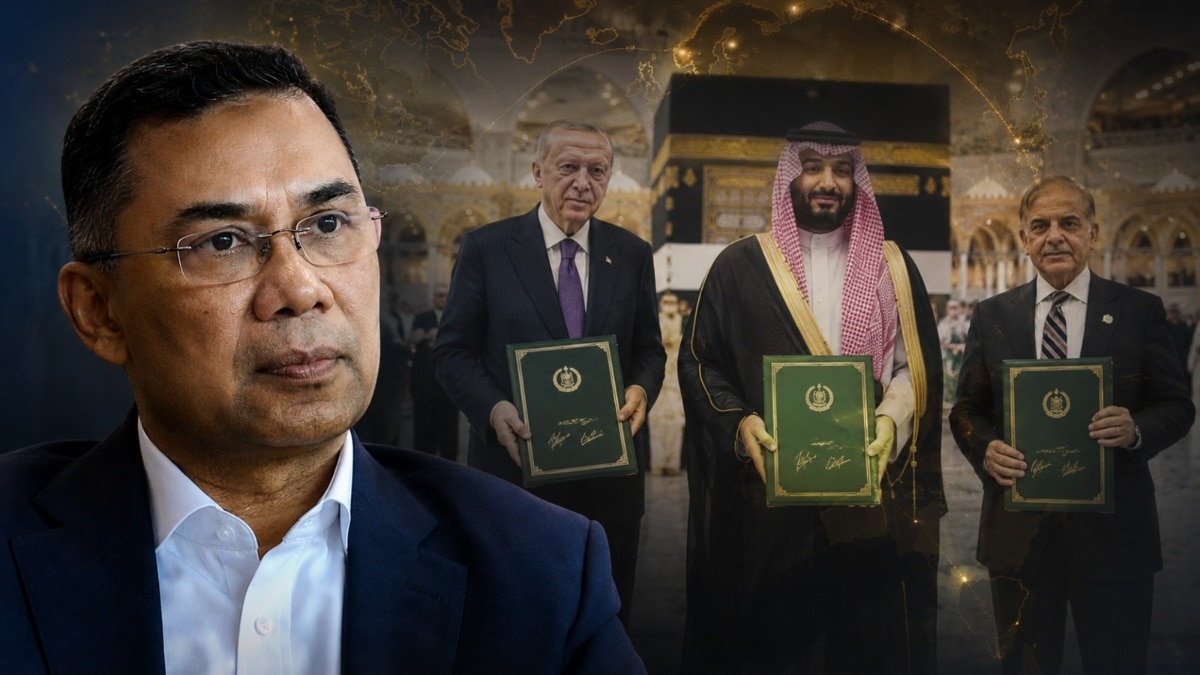
Bangladesh is weighing the strategic costs and benefits of joining the 'Mecca Pact,' a collective deterrence alliance between Saudi Arabia, Pakistan, and Turkey. This potential move could significantly shift the geopolitical balance on India's eastern border.
- Bangladesh is considering joining the Saudi-Pakistan-Turkey defence bloc, known as the Mecca Pact.
- The alliance operates on a 'collective deterrence' model, similar to NATO's Article 5.
- Dhaka's entry would extend the bloc's strategic reach to India's eastern flank.
- Decision depends on 'Bangladesh First' policy and offers from Riyadh, Ankara, and Islamabad.
The geopolitical landscape of South Asia is facing a potential seismic shift as Bangladesh signals openness to joining the Mecca Pact. This newly formed defence alliance, comprising Saudi Arabia, Pakistan, and Turkey, is being viewed by analysts as a nascent 'Islamic NATO.' The pact, signed on August 7 in Makkah, is built on the principle of collective deterrence—meaning an attack on one member is treated as an attack on all.
Under the leadership of Prime Minister Tarique Rahman, the Bangladeshi government has maintained a cautious yet positive stance. While two junior foreign-affairs ministers, Humayun Kobir and Shama Obaed Islam, have stated that any decision would be based on the 'national interest' and the protection of the Bangladeshi people, the signal is clear: Dhaka is not ruling out a strategic pivot toward this Muslim-majority bloc.
Why This Matters
BozokMedia analysis shows that Bangladesh's potential entry is not merely a diplomatic gesture but a strategic calculation. By joining, Bangladesh could secure significant economic and military backing from the Gulf and Turkey. However, this move would effectively encircle India with a hostile or indifferent defence axis. For New Delhi, the prospect of a security arrangement that links Pakistan—a long-term adversary—with a potentially radicalizing Bangladesh on its eastern flank is a strategic nightmare.
"Bangladesh joining would give the emerging Muslim defence axis a critical South Asian foothold right on India's eastern flank." - Ali K Chishti, Security Analyst.
The internal shift within Bangladesh's military has further fueled these concerns. Observers have noted a trend toward 'Pakistanisation,' highlighted by Army chief General Waker-Uz-Zaman's overt Islamic messaging and the renaming of military units after the first four Caliphs. This ideological shift suggests a deepening alignment with the values and strategic goals of the Mecca Pact members.
However, the 'price of entry' remains a point of negotiation. Bangladesh is not a passive actor; it offers the bloc a strategic vantage point in the Bay of Bengal. In return, Dhaka will likely seek substantial financial investment, energy security, and military modernization from Saudi Arabia and Turkey.
| Feature | NATO (Reference) | Mecca Pact (Proposed) |
|---|---|---|
| Core Principle | Collective Defence (Article 5) | Collective Deterrence |
| Primary Members | North American & European states | Saudi Arabia, Pakistan, Turkey |
| Strategic Goal | Containment of Soviet/Russian influence | Muslim-majority security autonomy |
Frequently Asked Questions
1. What is the Mecca Pact?
It is a defence agreement signed by Saudi Arabia, Pakistan, and Turkey aimed at collective deterrence and mutual security among Muslim-majority nations.
2. How does this affect India?
If Bangladesh joins, India would face a coordinated security bloc on both its western (Pakistan) and eastern (Bangladesh) borders, complicating its regional security strategy.