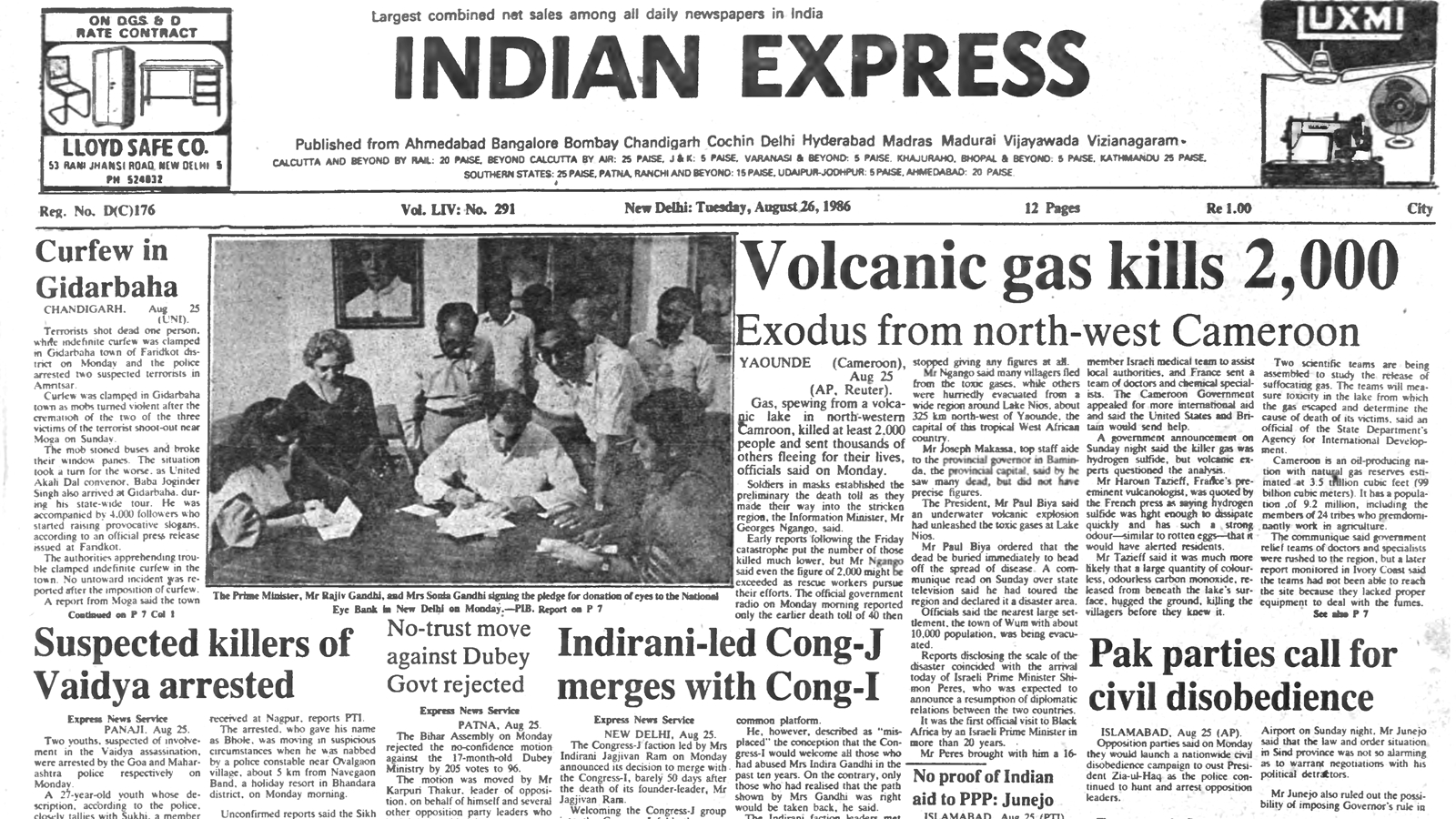
On August 26, 1986, a devastating release of toxic gas from a volcanic lake in northwestern Cameroon resulted in the deaths of at least 2,000 people. The event triggered mass panic and a massive humanitarian crisis.
- Toxic gas spewing from a volcanic lake in Cameroon killed at least 2,000 people.
- Thousands of survivors were forced to flee the region in terror.
- Information Minister Georges Ngango confirmed the preliminary death toll via masked military personnel.
The date August 26, 1986, remains etched in history as a day of unprecedented natural horror. In northwestern Cameroon, a volcanic lake released a massive cloud of toxic gas, sweeping through nearby settlements and claiming the lives of at least 2,000 individuals. The scale of the tragedy was immediate and catastrophic.
As the gas spread, local officials struggled to manage the chaos. Information Minister Georges Ngango reported that soldiers, equipped with protective masks, had to enter the stricken region to assess the damage and establish the death toll. The invisible killer left a trail of devastation, forcing thousands of survivors to flee for their lives in a desperate attempt to escape the suffocating atmosphere.
Why This Matters
BozokMedia analysis shows that this event serves as a critical case study for 'limnic eruptions'—a phenomenon where dissolved carbon dioxide suddenly erupts from deep lake waters. Understanding these geological triggers is essential for modern disaster mitigation and protecting vulnerable populations living near volcanic lakes.
Limnic eruptions are silent killers; the lack of scent or color in volcanic gases means victims often have no warning before catastrophe strikes.
The geopolitical and social impact of the disaster was profound, leaving the local community shattered and prompting international discussions on geological safety and volcanic monitoring in Africa.
Historical Background
The 1986 Cameroon disaster is often compared to the Lake Nyos event. These occurrences happen when CO2 accumulates at the bottom of a meromictic lake and is suddenly released due to a landslide or seismic activity, creating a lethal cloud that hugs the ground and suffocates everything in its path.
Frequently Asked Questions
Question 1: What caused the mass deaths in Cameroon in 1986?
Answer: The release of toxic volcanic gas from a lake in the northwestern region caused the deaths.
Question 2: How did authorities respond to the disaster?
Answer: Soldiers wearing masks were deployed to enter the affected zones and confirm the casualty figures.