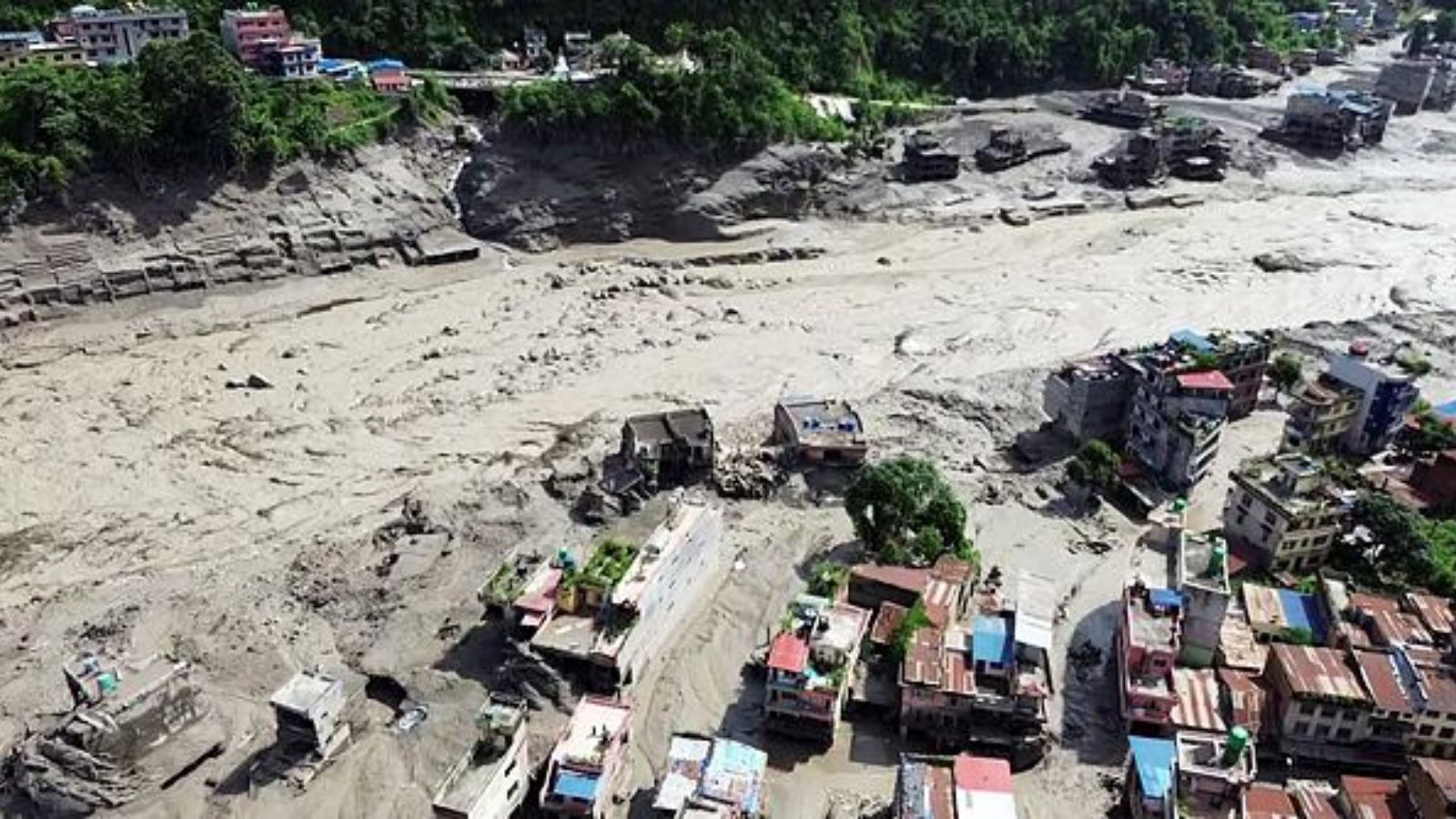
A devastating sequence of an earthquake, avalanche, and flash floods has struck the Nepal-Tibet border. Reports indicate hundreds are missing, including a significant number of foreign tourists.
- A powerful earthquake triggered an avalanche and subsequent flash floods along the Nepal-Tibet border.
- 291 foreign tourists are among the hundreds reported missing in the disaster.
- Infrastructure, including roads, bridges, and hydropower plants, has suffered extensive damage.
A catastrophic natural disaster has struck the sensitive border region between Nepal and Tibet. According to Nepal's Foreign Minister Shishir Khanal, an earthquake struck the area at approximately 08:37 local time, acting as the catalyst for a chain reaction of destruction. The seismic activity triggered massive avalanches, which subsequently evolved into violent flash floods that swept through the mountainous terrain.
The scale of the human tragedy is immense. Preliminary reports suggest that 291 foreign tourists are currently missing. The crisis has also heavily impacted Nepal's security forces; 26 police personnel, nine armed police, and 44 military members are unaccounted for. Furthermore, officials from customs and immigration departments are also missing, complicating the immediate response at the border crossings.
Why This Matters
BozokMedia analysis shows that the dual impact of seismic activity and rapid glacial/snow melt (via avalanches) creates a 'cascading disaster' scenario that is increasingly common in the warming Himalayan region, making traditional rescue operations extremely difficult.
The synchronization of seismic events with flash flooding represents the most complex humanitarian challenge for high-altitude rescue teams.
The physical landscape of the region has been fundamentally altered. The districts of Rasuwa and Nuwakot have been identified as the hardest-hit areas. Beyond the human toll, the destruction of critical infrastructure—including roads, bridges, telecommunications, and hydropower facilities—has effectively isolated several communities, hindering relief efforts.
Historical Background
The Himalayan range is one of the most tectonically active regions in the world. Historically, the intersection of the Indian and Eurasian plates has led to frequent, high-magnitude earthquakes. In recent years, the combination of geological instability and climate-induced weather patterns has increased the frequency of secondary disasters like landslides and flash floods.
Frequently Asked Questions
Question 1: What caused the flash floods in Nepal?
Answer: An earthquake triggered an avalanche, which in turn caused the devastating flash floods.
Question 2: Which areas are experiencing the most damage?
Answer: The districts of Rasuwa and Nuwakot in Nepal are reporting the most severe infrastructure and human losses.