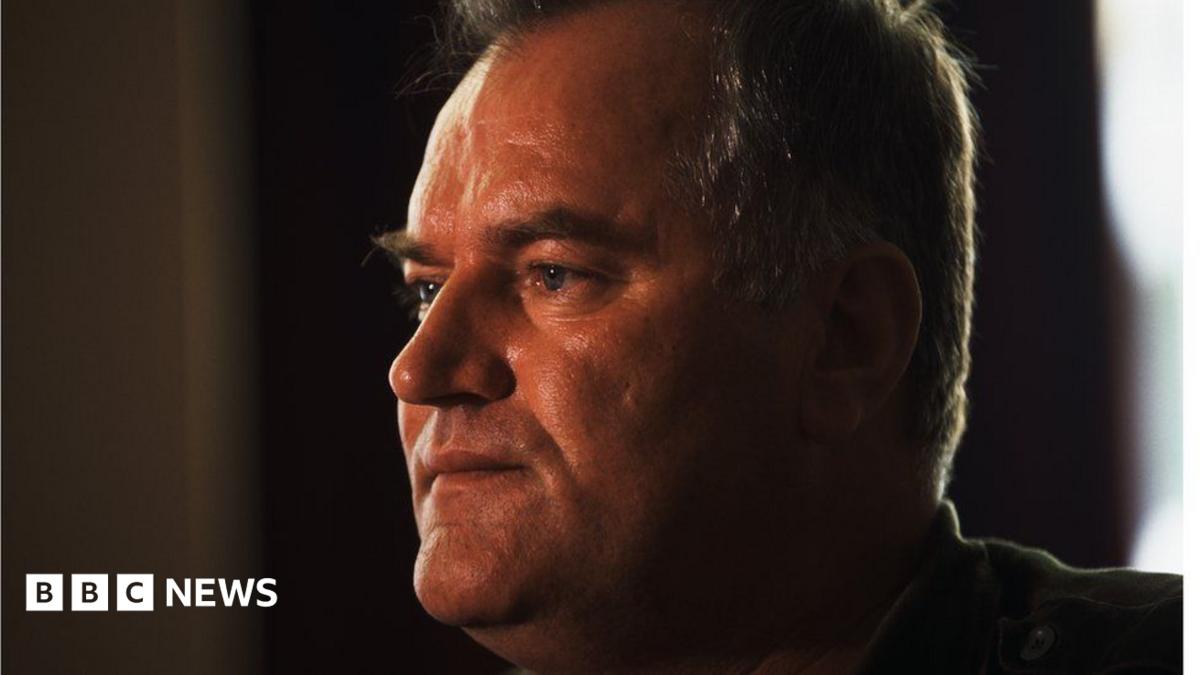
Former Bosnian Serb military leader Ratko Mladic, convicted of genocide and war crimes, has passed away in a UN prison hospital in The Hague.
- Ratko Mladic died in a UN prison hospital in The Hague, Netherlands.
- He was serving a life sentence for genocide and crimes against humanity.
- He was the mastermind behind the 1995 Srebrenica massacre.
Former Bosnian Serb military leader Ratko Mladic, who was serving a life sentence for genocide, war crimes, and crimes against humanity during the brutal 1992-1995 war in Bosnia and Herzegovina, has died. Reports from Serbian state RTS television and official Bosnian Serb television indicate that Mladic passed away at the age of 83 or 84.
A UN official confirmed the news to the Reuters news agency, stating that Mladic died while in custody at a UN prison hospital in The Hague, Netherlands. A family member, speaking to the Associated Press on condition of anonymity, also confirmed the reports, highlighting the sensitive nature of his passing.
Historical Background
Mladic, widely referred to as the "Butcher of Bosnia," was a central figure in the ethnic conflicts of the 1990s. In 2017, he was convicted of orchestrating the 1995 massacre of at least 8,000 Bosniak Muslims in the Srebrenica enclave, a UN-designated "safe area." This atrocity remains one of the worst instances of mass killing in Europe since World War II. The tribunal described his crimes as being "amongst the most heinous known to humankind."
Why This Matters
BozokMedia analysis shows that the death of Ratko Mladic marks the end of a significant era in international criminal law. His conviction was a landmark moment for the International Criminal Tribunal for the former Yugoslavia (ICTY), proving that even high-ranking military officials could be held accountable for systemic genocide and atrocities against civilian populations.
Former UN rights chief Zeid Ra’ad al Hussein once described him as "the epitome of evil."
The legal proceedings against Mladic spanned years, serving as a grim reminder of the devastation caused by ethnic nationalism in the Balkans. His death brings a complex closure to a period of history that continues to shape the political landscape of the region today.
Frequently Asked Questions
Question 1: What were Ratko Mladic's primary convictions?
Answer: He was convicted of genocide, war crimes, and crimes against humanity.
Question 2: Where did Ratko Mladic spend his final days?
Answer: He was serving his life sentence in a UN-managed prison facility in The Hague.