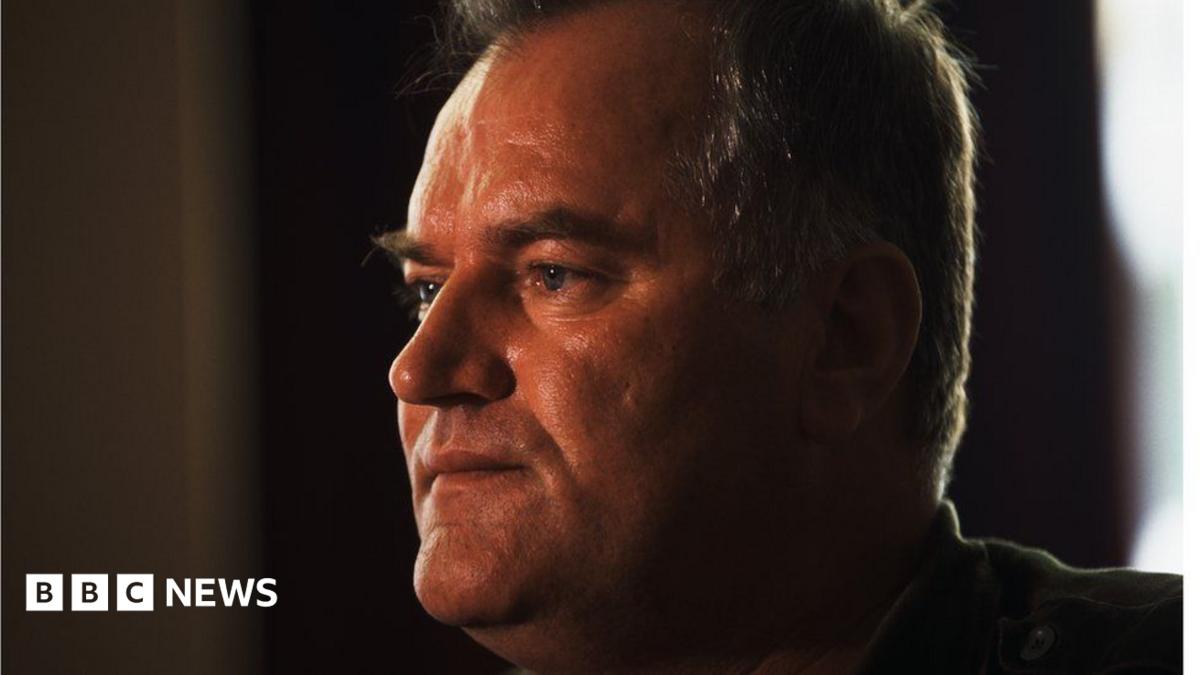
Ratko Mladic, the former Serbian military general convicted of genocide during the Bosnian War, has passed away. His death marks the end of a controversial era in international criminal justice.
- Ratko Mladic, convicted of genocide in Bosnia, has died.
- He was sentenced to life imprisonment by the ICTY for war crimes.
- His legacy continues to polarize the Balkan region.
Former Serbian military general Ratko Mladic, a central figure convicted of orchestrating genocide during the Bosnian War, has died. Mladic, widely known for his role in the atrocities committed in the 1990s, leaves behind a legacy defined by extreme violence and international legal battles.
Mladic was found guilty by the International Criminal Tribunal for the former Yugoslavia (ICTY) on multiple counts, including genocide, crimes against humanity, and violations of the laws or customs of war. His most notorious crime was the Srebrenica massacre, where thousands of Bosniak men and boys were systematically executed.
Why This Matters
BozokMedia analysis shows that the death of Mladic is not merely a biographical end but a geopolitical trigger. His conviction was a landmark moment for international law, yet his passing is expected to reignite deep-seated ethnic tensions across the Balkan Peninsula.
The passing of Mladic closes a grim chapter of the 20th century, yet the wounds of his crimes remain unhealed in the Balkans.
Historically, the Bosnian War (1992–1995) was one of the bloodiest conflicts in Europe since World War II. Mladic's leadership of the Army of Republika Srpska was characterized by ethnic cleansing and prolonged sieges, most notably the Siege of Sarajevo.
The international community's pursuit of Mladic lasted decades, highlighting the complexities of capturing high-profile war criminals and the slow wheels of justice. His eventual arrest and trial served as a precedent for modern international criminal proceedings.
As news of his death spreads, the reaction is likely to be split. For survivors and the international community, it is the end of a criminal's life; for certain nationalist factions, he may be viewed through a lens of martyrdom.
Frequently Asked Questions
1. What were Ratko Mladic's primary convictions?
He was convicted of genocide, specifically regarding the Srebrenica massacre, and crimes against humanity.
2. Where was Mladic convicted?
He was convicted by the International Criminal Tribunal for the former Yugoslavia (ICTY) in The Hague.