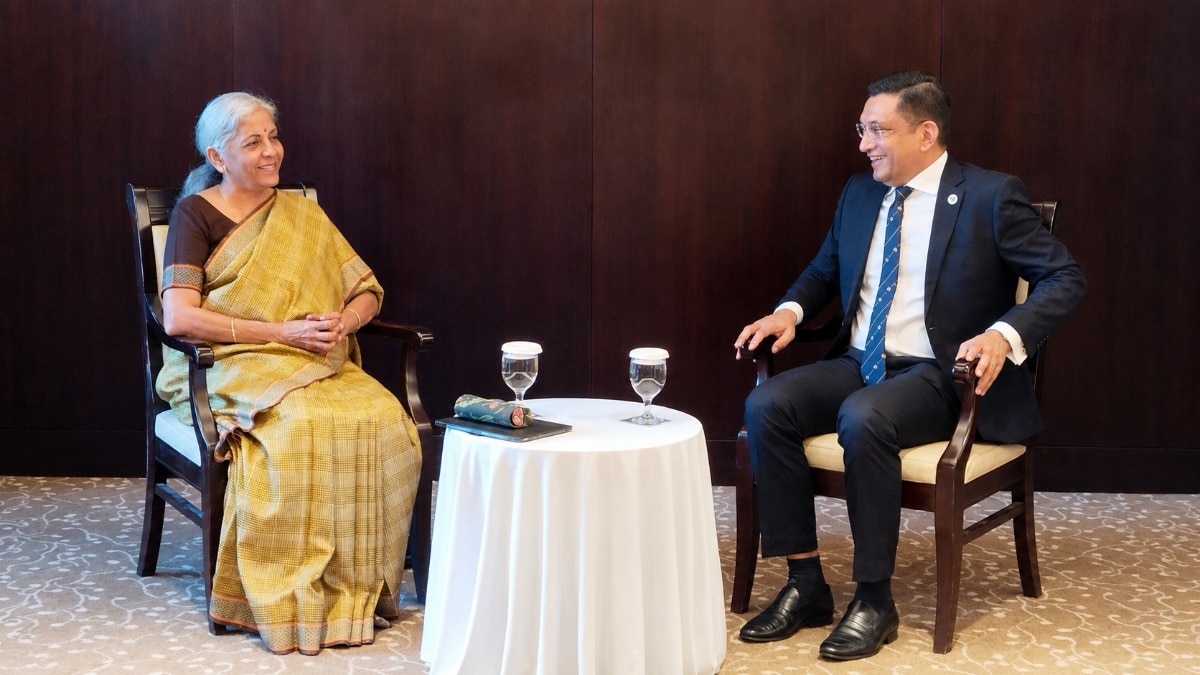
A former Sri Lankan minister has revealed how India's Finance Minister Nirmala Sitharaman played a pivotal role in influencing the IMF's stance during Sri Lanka's economic meltdown. India's strategic support provided a lifeline to the nation.
- Nirmala Sitharaman influenced the IMF's perspective regarding Sri Lanka's bailout.
- India provided extensive financial and humanitarian aid during the peak of the crisis.
- India's diplomatic intervention helped ease the pressure on the Sri Lankan economy.
In a significant revelation, a former minister from Sri Lanka has disclosed the behind-the-scenes diplomatic maneuvers that helped the nation navigate its worst economic crisis. The disclosure highlights the decisive role played by India's Finance Minister, Nirmala Sitharaman, in swaying the stance of the International Monetary Fund (IMF) towards more supportive measures for the island nation.
As Sri Lanka faced a catastrophic shortage of foreign exchange reserves and mounting debt, the path to international assistance seemed fraught with stringent conditions. However, India stepped in not just as a neighbor, but as a strategic partner. The former minister noted that Sitharaman's engagement with global financial institutions was instrumental in shifting the narrative from mere austerity to a more holistic support mechanism.
Why This Matters
BozokMedia analysis shows that this intervention marks a paradigm shift in regional geopolitics. By acting as a stabilizer, India has effectively countered other regional influences and solidified its position as the primary economic anchor in South Asia.
India's economic diplomacy has successfully demonstrated its ability to influence global financial architecture during times of crisis.
Historically, India has always maintained a 'Neighborhood First' policy, but the scale of assistance provided during the Sri Lankan crisis—ranging from fuel and medicine to direct credit lines—has set a new precedent. This proactive stance has bolstered India's reputation as a 'First Responder' in the region.
The implications of this are far-reaching. It suggests that India is no longer just a participant in global economic discussions but is increasingly becoming a driver of policy direction in the Global South. The synergy between India's domestic economic strength and its foreign policy has reached a new level of maturity.
Frequently Asked Questions
Question 1: How did Nirmala Sitharaman influence the IMF?
Answer: Through high-level diplomatic and economic dialogues, she helped present a more nuanced view of Sri Lanka's needs to the IMF.
Question 2: What was the nature of India's help to Sri Lanka?
Answer: India provided extensive humanitarian aid, including food, medicine, and fuel, along with significant financial credit lines.