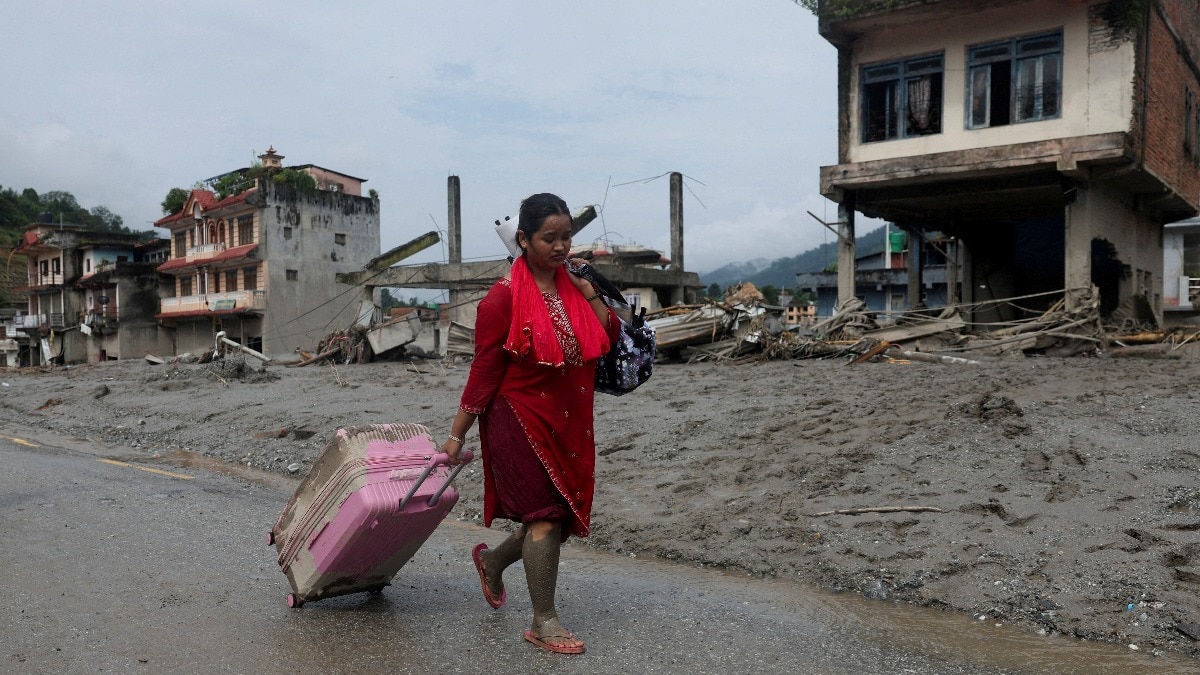
A massive glacial collapse near the Nepal-China border has triggered devastating flash floods, causing hundreds of deaths and massive infrastructure damage across Nepal, India, and China.
- Glacial collapse near Nepal-China border caused massive flash floods.
- 579 confirmed dead in Nepal; nearly 2,000 people missing.
- China's strategic Gyirong Port buried under debris and sediment.
- High alert in India's Bihar and Uttar Pradesh due to rising river levels.
On August 26, 2026, a catastrophic event unfolded near the Nepal-China border. What was initially perceived as a 4.4-magnitude earthquake was later confirmed by the United States Geological Survey (USGS) to be the seismic signature of a massive glacial slab collapsing. This collapse triggered devastating flash floods that have reshaped the landscape and claimed countless lives.
The scale of destruction in Nepal is unprecedented. Preliminary estimates indicate that 579 people have perished, with nearly 2,000 still missing. Entire communities have been swept away, and the nation's energy security has taken a massive hit, with 475 megawatts of hydropower capacity wiped off the grid. Vital bridges and communication links have been decimated, leaving much of the affected region isolated.
Why This Matters
BozokMedia analysis shows that this disaster serves as a grim reminder that the physical realities of geography and climate change are far more powerful than the political boundaries drawn by nation-states. The interconnectedness of the Himalayan river systems means that a disaster in one country inevitably becomes a crisis for its neighbors.
Nepal, India, and China must effectively address increasingly unpredictable cross-border natural phenomena through institutionalized cooperation.
In China, the impact has been equally severe. The Gyirong Port, a $175.8 million international-standard gateway between Nepal and Tibet, is now effectively buried under heavy sediment. Access roads and power supplies in the Tibet Autonomous Region have been severed, with fatalities reported in Gyirong County. Similarly, India faces significant downstream threats. The Ministry of External Affairs (MEA) has confirmed that Indian nationals, many of whom were pilgrims on the Kailash Mansarovar route, are missing.
In India, the floodwaters have reached the Gandak, Kosi, and Ganga rivers, placing Bihar and Uttar Pradesh on high alert. The National Disaster Response Force (NDRF) has been deployed to monitor embankments, and the Indian Air Force has already dispatched over 47.5 tonnes of emergency relief material to Nepal.
Historical Background
The Himalayan region has long been a hotspot for Glacial Lake Outburst Floods (GLOFs). As global temperatures rise, the stability of these glaciers diminishes, making the region increasingly susceptible to sudden, violent water releases that can devastate downstream populations across multiple borders.
Frequently Asked Questions
Question 1: Was the event an earthquake?
Answer: While it registered on seismographs, the USGS confirmed it was a glacial collapse and subsequent landslide rather than tectonic shifts.
Question 2: How is India responding?
Answer: India has activated its Humanitarian Assistance and Disaster Relief program, deploying the NDRF and sending significant air-dropped relief supplies to Nepal.