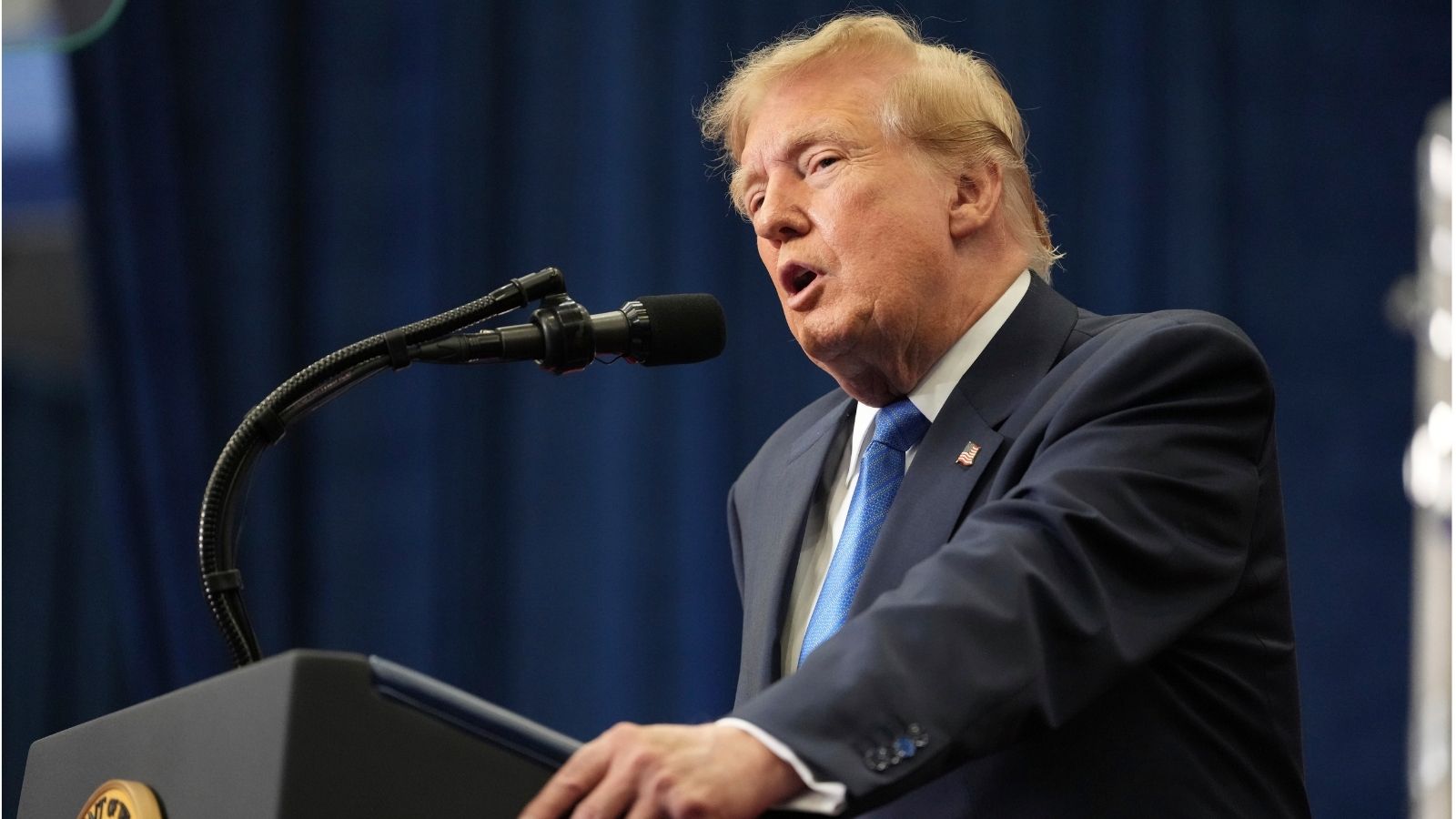
The Trump administration has proposed a massive $103,265 additional fee for every H-1B petition, a move that could disproportionately impact the 71% of visa holders who are from India.
- Trump administration proposes a new $103,265 fee per H-1B cap-subject petition.
- The fee applies to all petitions, including those with advanced-degree exemptions.
- Indian professionals, making up 71% of approved H-1B holders, face the highest risk.
United States President Donald Trump is once again pushing for significant financial hurdles for employers seeking to hire skilled foreign talent. The Trump administration has officially proposed an additional $103,265 fee on every H-1B cap-subject petition. This fee is intended to be paid by the employer at the time of filing and would be in addition to all existing H-1B processing fees.
This marks the administration's second major attempt to impose massive six-figure charges on the H-1B program. A previous attempt in September 2025, which sought a $100,000 payment for certain workers outside the US, was struck down by a federal judge in June. The current proposal is more strategically structured to cover cap-subject petitions, including those eligible for the 20,000 advanced-degree exemption, directly impacting international students transitioning from F-1 to H-1B status.
Why This Matters
BozokMedia analysis shows that this policy shift could fundamentally alter the landscape of the global tech talent pipeline. With more than half of H-1B workers employed in computer-related roles, the financial burden on Silicon Valley could be immense. Furthermore, because 71% of approved H-1B petitions in FY2024 were for individuals born in India, the economic and migratory implications for the Indian diaspora are profound.
The core issue is about labor market rules; by increasing costs, the administration is forcing companies to be more selective about which foreign talents they sponsor.
The debate surrounding H-1B visas is deeply polarized. While tech leaders like Elon Musk have historically advocated for the program to secure top-tier global talent, critics argue that the system is often exploited to replace American workers with cheaper foreign labor. The Department of Homeland Security (DHS) has cited instances where large corporations continued to receive thousands of H-1B approvals even while conducting massive domestic layoffs.
| Feature | Current/Previous Status | Proposed Trump Plan |
|---|---|---|
| Primary Fee Target | Standard processing fees | $103,265 additional fee |
| Impacted Group | General H-1B applicants | Cap-subject & Advanced degree applicants |
| Primary Payer | Employer | Employer |
Historical Context and Economic Impact
The H-1B program operates under an annual cap of 85,000 visas. In recent years, demand has vastly outstripped supply, with over 344,000 applications filed last year alone. This has turned the visa allocation into a highly competitive lottery system. Economists have also noted a wage gap, with research suggesting H-1B holders earn approximately 16% less than their US-born counterparts, a gap that widens significantly in software engineering.
Frequently Asked Questions
1. When will this new fee rule take effect?
The proposal is currently open for public comment until September 24. A final rule will only be issued after DHS reviews the feedback.
2. Does this affect all types of visas?
No, this specific proposal targets cap-subject H-1B petitions, which are the primary route for skilled professionals and international graduates.