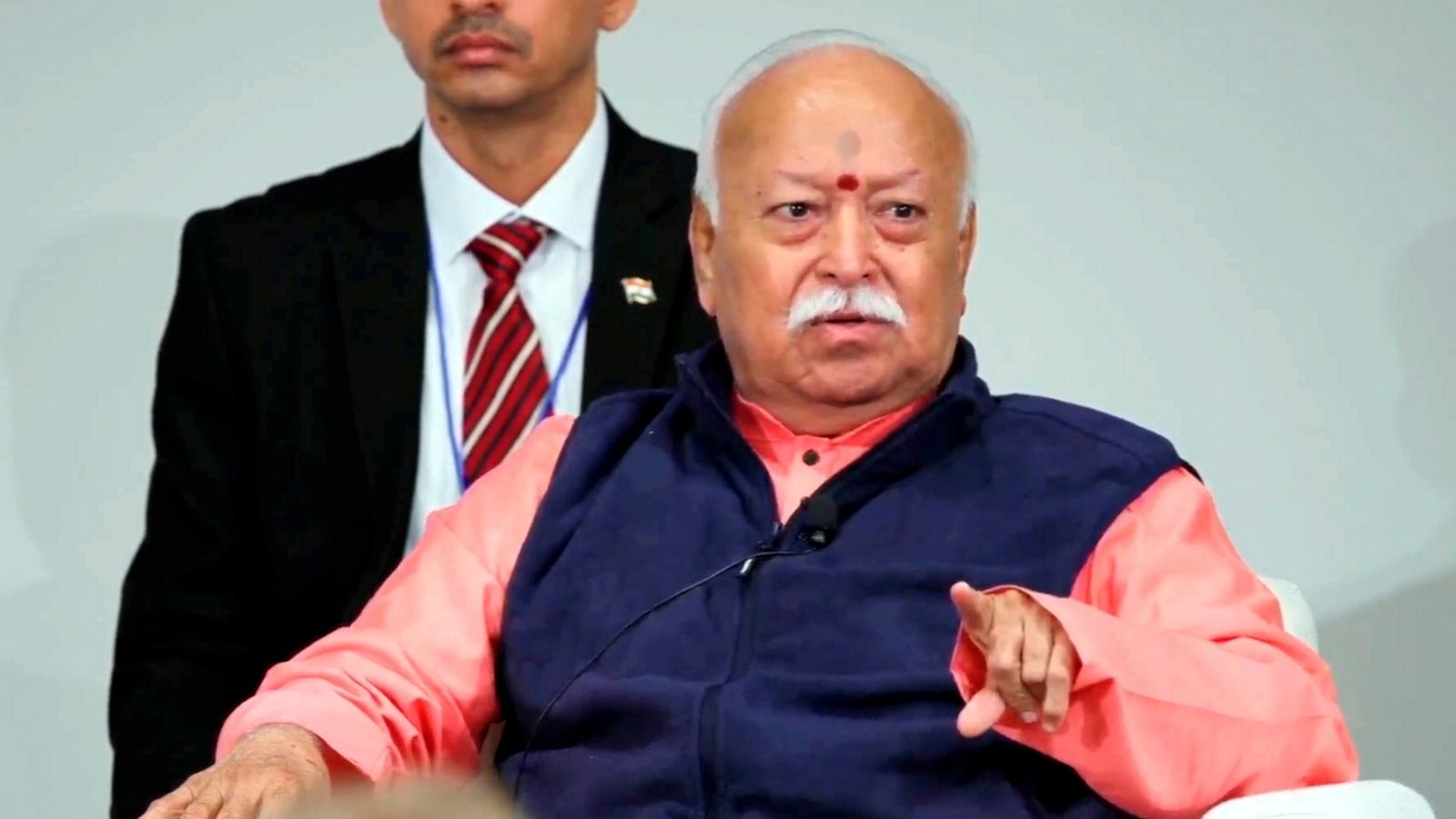
A powerful address in New York clarified that the concept of Hindu Rashtra does not imply the exclusion of Muslims, but rather celebrates diversity as a strength.
- Hindutva does not mean the exclusion of any religious community.
- Diversity is viewed as a decoration of unity rather than a cause for division.
- True social transformation stems from changes in human attitude, not just political power.
During a significant address in New York, a profound message regarding Hindu Rashtra and Hindutva was delivered, aiming to clarify misconceptions on a global stage. The speaker emphasized that the concept of Hindutva does not involve excluding Muslims or driving any community out of the country. Instead, it was framed as a philosophy of inclusion and spiritual depth.
The address highlighted that a true follower of Hindutva believes that all spiritual paths eventually converge toward the same ultimate truth. It asserted that every human being possesses inherent and equal dignity, regardless of their faith. Rather than seeing differences in nationality, language, or religion as points of contention, the speech described these diversities as the 'decoration' that enhances the underlying unity of the nation.
Why This Matters
BozokMedia analysis shows that this redefinition of Hindutva on an international platform is a strategic attempt to align cultural identity with universal humanitarian values. By shifting the focus from political dominance to civilizational ethos, it seeks to present a more nuanced image of Indian identity to the world.
Lasting social transformation is driven by public opinion and shifts in human attitudes rather than mere political power.
Furthermore, the speech underscored that real social change is an organic process driven by the evolution of human consciousness. Highlighting the civilizational values of oneness, it was noted that humanitarian relief efforts conducted by volunteers are inherently non-discriminatory, transcending the boundaries of faith and creed.
The diaspora was also given a specific directive: to remain loyal and dutiful to their respective countries of residence while simultaneously upholding the timeless values of universal harmony, togetherness, and respect for all faiths. This dual commitment aims to bridge the gap between cultural roots and global citizenship.
Historical Background
The concept of a unified cultural identity has been central to Indian civilization for millennia. While modern political discourse often focuses on institutional structures, the philosophical roots of India have always emphasized the coexistence of various traditions under a single civilizational umbrella.
Frequently Asked Questions
1. Does Hindu Rashtra exclude minority religions?
According to the address, no; it emphasizes that the concept is inclusive of all citizens regardless of faith.
2. What is the role of the diaspora in this vision?
The diaspora is encouraged to be loyal to their host nations while promoting universal harmony and Indian values globally.