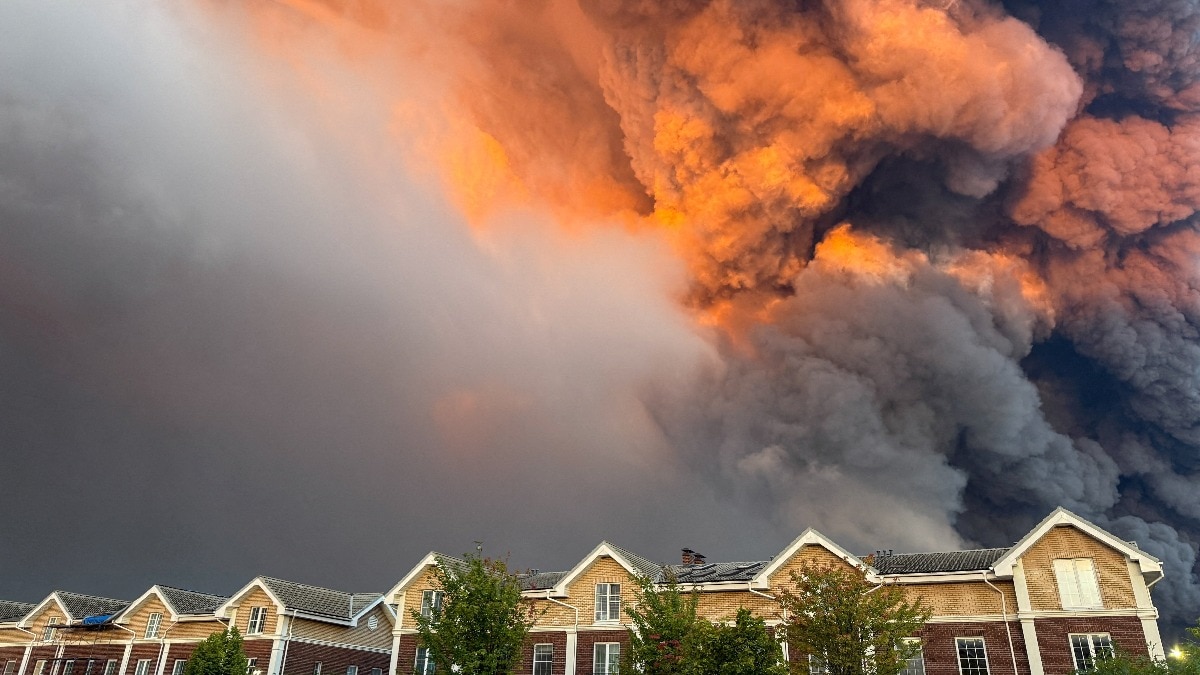
A devastating Russian strike on a warehouse near Kyiv has left 38 dead, while Moscow threatens massive retaliation against Ukraine's energy grid following Ukrainian drone attacks on the e-commerce giant Wildberries.
- 38 people killed and 4 missing following a massive Russian strike on a warehouse in the village of Myla, near Kyiv.
- Russia threatens 'large-scale attacks' on Ukraine's energy infrastructure in retaliation for strikes on Wildberries and oil refineries.
- Russian defense forces claim to have intercepted approximately 500 Ukrainian drones in a single night.
- Ukraine targets Wildberries, known as the 'Amazon of Russia,' alleging the company facilitates the Kremlin's war efforts.
The conflict between Russia and Ukraine has entered a volatile new phase of economic warfare. A catastrophic Russian missile strike on a warehouse west of Kyiv has resulted in at least 38 fatalities, with several individuals still missing. President Volodymyr Zelenskyy confirmed that the attack targeted a facility in the village of Myla, which Ukrainian officials describe as an ammunition depot. The resulting explosions triggered massive fires that decimated dozens of nearby residential homes and buildings.
In a strategic shift, Ukraine has begun targeting the civilian economic pillars of the Russian Federation. Specifically, Ukraine has launched a series of drone strikes against Wildberries, the largest online retailer in Russia, often dubbed the 'Amazon of Russia.' Kyiv justifies these attacks by claiming that Wildberries sells dual-use goods that directly support the Russian military's logistics and war machine.
Why This Matters
BozokMedia analysis shows that the targeting of e-commerce and energy infrastructure signifies a transition from purely military targets to 'economic attrition.' By hitting Wildberries and oil refineries like the Kirishi Petroleum Organic Synthesis plant, Ukraine aims to disrupt the internal Russian economy and create fuel shortages, thereby pressuring the Kremlin from within. Conversely, Russia's threat to dismantle Ukraine's energy grid ahead of the 2026 winter suggests a strategy of 'civilian exhaustion' to force a surrender.
The weaponization of commercial logistics and energy grids transforms the battlefield from physical trenches to the very survival of the civilian population.
The Russian Ministry of Defense has responded with a stern warning, stating that it is preparing 'large-scale attacks' on Ukraine's energy infrastructure. Kremlin spokesperson Dmitry Peskov described these measures as a 'just response' to Ukraine's attempts to destabilize the Russian civilian economy. This pattern of targeting power grids has been seen in previous winters, leaving millions of Ukrainians without heat or light during freezing temperatures.
On the defensive front, Russia claims to have neutralized nearly 500 Ukrainian drones in a recent overnight operation. Despite these claims, reports indicate that a major fire broke out at the Kirishi refinery, one of Russia's most critical fuel facilities in the northwest, following a drone incursion.
| Target Sector | Ukrainian Strategy | Russian Strategy |
|---|---|---|
| Energy | Striking oil refineries to cause fuel crises. | Destroying power grids to freeze cities. |
| Economy | Targeting e-commerce (Wildberries) & logistics. | Systematic strikes on military-linked warehouses. |
| Aerial Warfare | Massive drone swarms (500+ drones). | Heavy missile barrages and drone interception. |
Frequently Asked Questions
Why is Ukraine attacking Wildberries?
Ukraine alleges that Wildberries provides dual-use goods that assist the Russian military in its war efforts, making it a legitimate economic target.
What is the significance of the Kirishi refinery?
It is one of Russia's largest oil refineries and the only one of its kind in the northwest, making it vital for regional fuel supply.