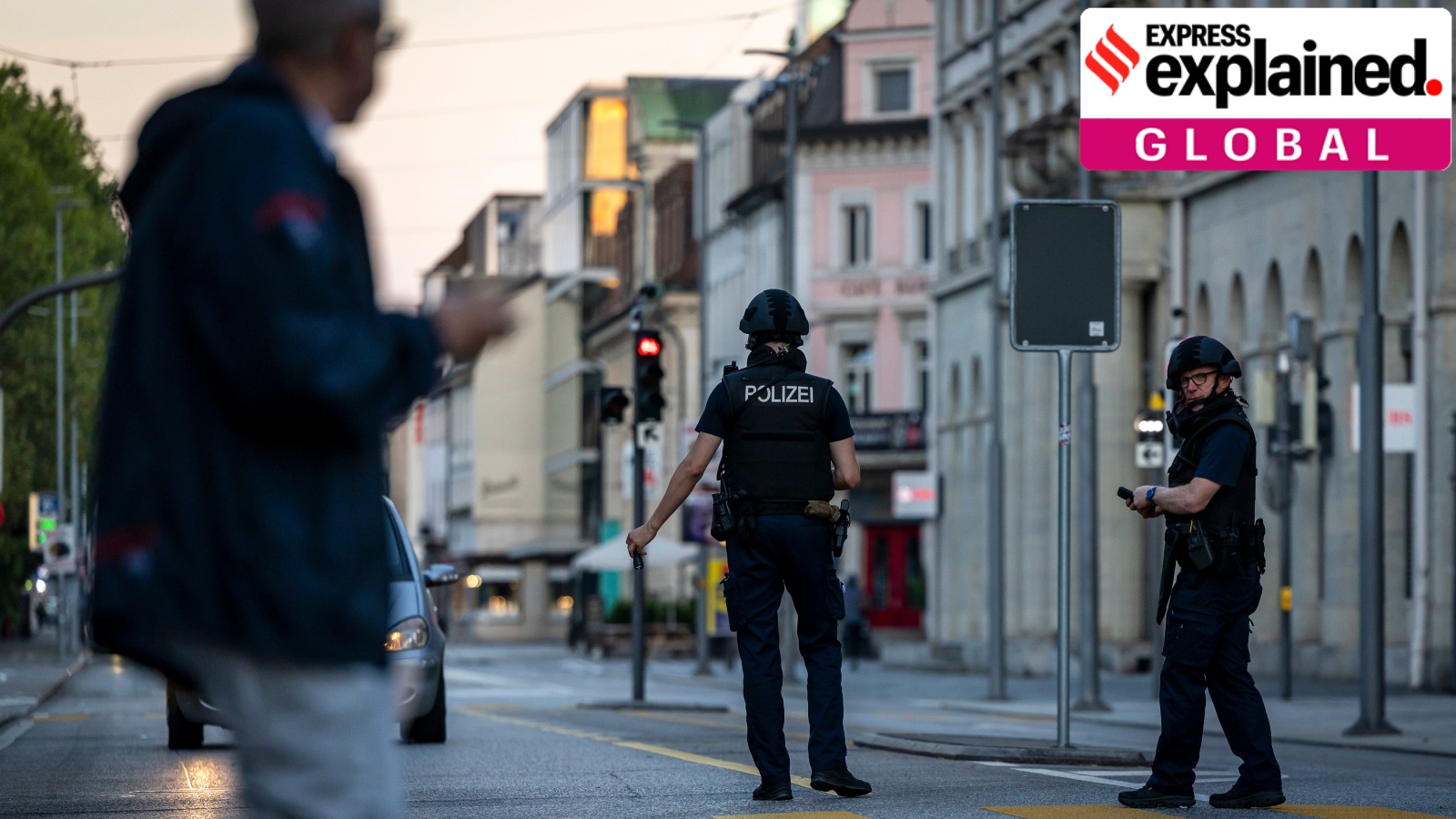
A tragic shooting at a music festival in Aarau has left one dead and five injured, raising critical questions about Switzerland's unique relationship with firearms. Despite high ownership rates linked to its militia system, the nation typically maintains exceptionally low gun violence.
- A shooting at an electronic music festival in Aarau, Switzerland, resulted in one fatality and five injuries.
- Switzerland has one of Europe's highest gun ownership rates (approx. 27.6 guns per 100 residents) due to its citizen-militia model.
- Strict regulations and background checks keep firearm-related homicides significantly lower than in countries like the US.
- The current investigation involves cross-border cooperation with Germany via the Schengen Information System.
The peaceful landscape of Northern Switzerland was shattered on August 30 during an annual electronic music festival in Aarau. The event, held at the Schachen horse racing track, turned into a scene of chaos when a shooter targeted attendees, killing a 22-year-old Italian national, Maria Spinelli, and injuring five others. The attack occurred late at night as the crowds were thinning, leaving investigators with a complex puzzle as the victims appeared to have no prior connection to one another.
This incident has sent shockwaves through the Swiss public, not because of the frequency of such events, but because of their extreme rarity. Switzerland presents a global paradox: it maintains one of the highest rates of civilian firearm ownership in Europe while simultaneously recording some of the lowest rates of gun-related violence. According to the Small Arms Survey, there are approximately 2.33 million civilian-held firearms in a population of 8.4 million.
Why This Matters
BozokMedia analysis shows that Switzerland's gun culture is fundamentally different from the individualistic 'right to bear arms' seen in the United States. In Switzerland, gun ownership is an extension of national duty. The citizen-militia framework requires able-bodied nationals to undergo mandatory conscription and keep service weapons at home for rapid mobilization. This transforms the firearm from a tool of personal defense into a symbol of collective national security.
The Swiss model proves that high firearm prevalence does not inevitably lead to high violence, provided there is a cultural emphasis on discipline and stringent state oversight.
To maintain this balance, Switzerland employs rigorous controls. Public carry is prohibited, and purchasing a weapon requires a 'shall-issue' permit following exhaustive criminal background checks. The state has historically reacted swiftly to threats; for instance, the 2007 ban on 'Taschenmunition' (pocket ammunition) was implemented specifically to prevent the misuse of service weapons in domestic homicides.
The investigation into the Aarau shooting is particularly challenging. Forensic evidence reveals that two different calibers of ammunition were used, suggesting the potential involvement of multiple shooters or a sophisticated perpetrator. The precision of the attack and the clandestine escape route suggest the possibility of organized criminal violence rather than a random act of madness.
The response has been massive, involving the Argus special intervention unit and the Swiss army's Super Puma helicopters for aerial reconnaissance. Due to Aarau's proximity to the border, authorities are collaborating with police from Freiburg, Germany, utilizing the Schengen Information System (SIS) to track potential suspects crossing international lines.
| Metric | Switzerland | United States |
|---|---|---|
| Guns per 100 Residents | ~27.6 | ~120.5 |
| Homicide Rate (per 100k) | ~0.2 | ~4.0 to 10.0 |
| Primary Ownership Driver | National Defense/Militia | Personal Freedom/Defense |
Frequently Asked Questions
Q: Why do Swiss citizens keep guns at home?
A: It is tied to the mandatory military service and the citizen-militia model, ensuring the country can mobilize quickly against foreign aggression.
Q: Was the Aarau shooting a terrorist attack?
A: Police are currently evaluating terrorism, organized crime, and targeted feuds as equally probable motives.