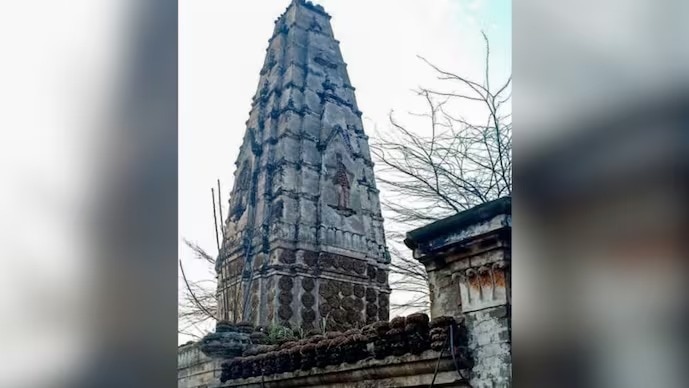
A major controversy has erupted in Pakistan's Narowal district following the demolition of a 125-year-old historic Hindu temple. While local minority groups allege that religious extremists demolished the structure to annex the land for a neighboring madrassa, government officials claim the temple collapsed due to heavy rainfall.
- A historic 125-year-old Hindu temple in Narowal, Pakistan, has been completely demolished.
- Minority groups claim local extremists destroyed the temple to illegally merge its land with a nearby madrassa.
- Government officials deny the claims, asserting that the structural collapse was caused by heavy monsoon rains.
A severe controversy has erupted in the Narowal district of Pakistan's Punjab province following the demolition of a historic Hindu temple, estimated to be between 100 and 125 years old. The temple, which occupied approximately 1,000 square meters of land in Siraj village, has become the center of a heated dispute between minority rights organizations and local government administrators.
According to local residents, minority advocates, and the Masih-a-Millat Party (PMMP), the temple was systematically demolished on August 21 by religious extremists. The groups allege that the demolition was orchestrated to illegally seize the valuable temple land and annex it into an adjacent madrassa (Islamic seminary). Adding to the outrage, reports indicate that the temple’s metallic dome fittings, ancient bricks, and other valuable structural materials were quickly cleared and removed from the site post-demolition.
Aslam Pervez Sahotra, Chairman of the PMMP, formally escalated the matter by meeting with Punjab's Additional Home Secretary to submit a written complaint demanding immediate action and the reconstruction of the historical shrine. Sahotra revealed that the land adjacent to the temple had previously been leased by the Evacuee Trust Property Board (ETPB) for the construction of a madrassa. However, due to non-payment of rent for several years and violation of lease terms, the lease was officially canceled. Despite the cancellation, local elements allegedly maintained illegal possession of the property.
Why This Matters
A BozokMedia analysis shows that the recurring desecration and structural neglect of minority religious sites in Pakistan continue to strain its international human rights standing. The incident highlights the systemic vulnerability of minority properties, where local administrative orders often fail to be enforced against powerful local groups, leaving historic landmarks exposed to encroachment and vandalism.
"The failure of local administrations to secure and protect centuries-old minority heritage sites not only violates constitutional guarantees but also fosters an environment of impunity for land grabbers operating under religious pretexts."
The Sialkot Deputy Administrator of the ETPB had reportedly issued an order on January 29, 2026, to cancel the madrassa's lease, evict the illegal occupants, and seal the property. However, minority leaders argue that this administrative directive was never executed on the ground, allowing members of the extremist group Tehreek-e-Labbaik Pakistan (TLP) to allegedly demolish the temple and merge the land.
In sharp contrast, government representatives have offered a natural-disaster narrative. Rana Iftikhar, a senior ETPB official, acknowledged the temple's historical significance but firmly maintained that the structure collapsed purely due to heavy monsoon rains. He further clarified that the temple land itself had never been leased to any external party. However, Hindu community leader Ratan Lal strongly condemned the destruction, stating that the local administration failed miserably to protect the shrine, and noted that local Hindus are now living in fear of visiting the site due to the heavy presence of the adjacent madrassa.
| Aspect | Minority & PMMP Claims | Government & ETPB Stance |
|---|---|---|
| Cause of Destruction | Deliberate demolition by extremists (allegedly TLP) on August 21. | Natural collapse due to heavy monsoon rains. |
| Land Status | Illegal encroachment and attempt to merge temple land with a madrassa. | The temple land was never leased; nearby lease was cancelled. |
| Safety & Recovery | Demands immediate reconstruction and safety guarantees for minorities. | Asserts no illegal activity occurred on the temple's actual site. |
Frequently Asked Questions
Q1: Where was the demolished Hindu temple located?
A1: The temple was located in Siraj village, Narowal district, in the Punjab province of Pakistan, covering about 1,000 square meters.
Q2: What action are minority organizations demanding?
A2: Minority groups, led by the Masih-a-Millat Party (PMMP) and Hindu leader Ratan Lal, are demanding a thorough investigation, the eviction of illegal encroachers, and the immediate reconstruction of the temple.