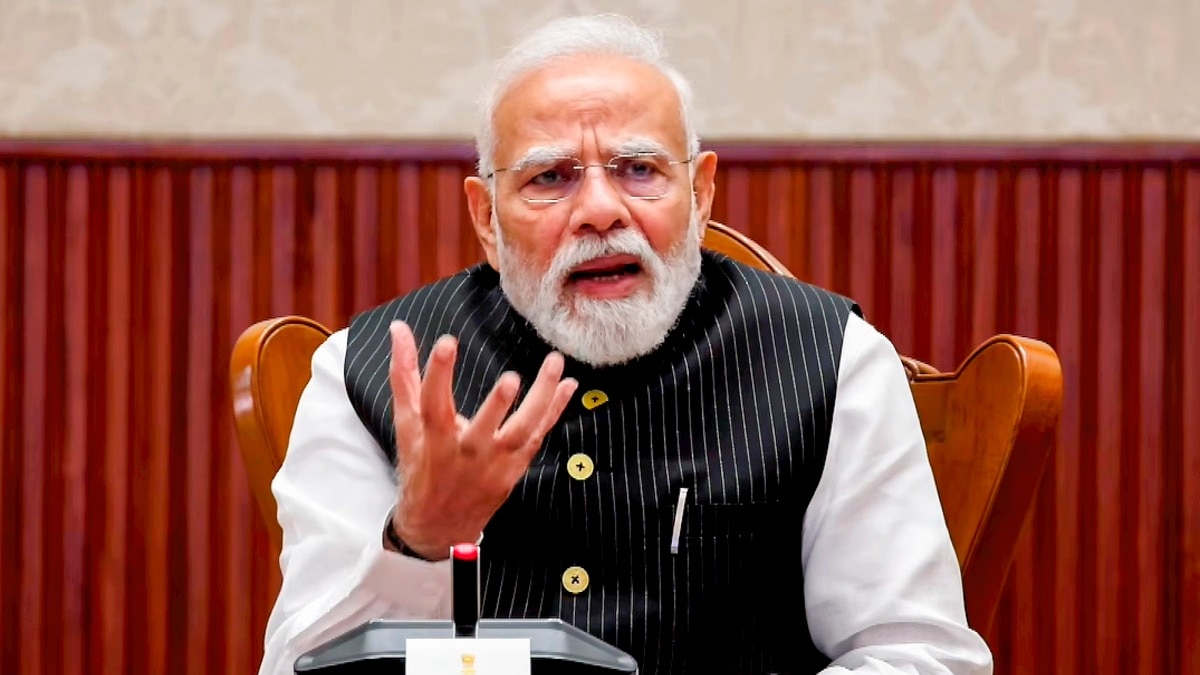
Prime Minister Narendra Modi has delivered a stern warning against state-sponsored terrorism at the 26th SCO Summit in Kyrgyzstan. While engaging with leaders from Russia and China, India emphasized regional connectivity and the complete dismantling of terror ecosystems.
- PM Modi condemned 'double standards' regarding terrorism, sending a clear message to state sponsors.
- High-level bilateral meetings were held with President Vladimir Putin and President Xi Jinping.
- India's strategic focus remains on energy security, regional connectivity, and counter-terrorism.
- The summit commemorates 25 years of the Shanghai Cooperation Organisation (SCO).
In a powerful display of strategic diplomacy, Prime Minister Narendra Modi participated in the 26th Shanghai Cooperation Organisation (SCO) Summit held in Bishkek, Kyrgyzstan. Addressing a gathering of Eurasian powerhouses, the Indian Prime Minister focused on the critical pillars of security, connectivity, and sustainable development. The summit, themed 'SCO at 25: Together towards Sustainable Peace, Development and Prosperity,' serves as a pivotal platform for India to assert its regional interests amidst complex global geopolitical shifts.
The highlight of the summit was PM Modi's uncompromising stance on global security. Without naming specific nations, he criticized the 'double standards' adopted by some countries regarding terrorism. He asserted that terrorism cannot be used as a tool of state policy or a strategic weapon, emphasizing that those providing sanctuary to terrorists must be held accountable.
Why This Matters
BozokMedia analysis shows that India is skillfully navigating a 'multi-aligned' foreign policy. By engaging simultaneously with Vladimir Putin and Xi Jinping, New Delhi is ensuring that its national security priorities—specifically the threat of cross-border terrorism—are integrated into the Eurasian security architecture without compromising its ties with Western partners.
Beyond the rhetoric on security, PM Modi held a significant bilateral meeting with Russian President Vladimir Putin. The two leaders reviewed the robust India-Russia partnership and discussed the urgent need for an end to ongoing global conflicts. PM Modi stressed that diplomacy is the only viable path toward humanity's survival and lasting peace.
The shift from merely reacting to terror attacks to demanding the dismantling of the entire 'terror ecosystem' marks a proactive evolution in India's diplomatic offensive.
The summit also witnessed a notable moment of protocol as PM Modi was seen shaking hands with Chinese President Xi Jinping. This interaction, while formal, indicates a pragmatic approach to managing the volatile India-China relationship within a multilateral framework. Additionally, the Prime Minister met with Iranian President Masoud Pezeshkian and leaders from Armenia and Kyrgyzstan to discuss trade and energy corridors.
India's participation extended beyond political meetings; PM Modi also attended the opening ceremony of the 6th World Nomad Games in Bishkek, highlighting the importance of cultural diplomacy in strengthening ties with Central Asian republics.
Frequently Asked Questions
What was India's primary objective at the 26th SCO Summit?
India's primary focus was on combating terrorism, enhancing regional connectivity, and ensuring energy security within the Eurasian region.
Which global leaders did PM Modi meet during the Bishkek visit?
PM Modi held bilateral discussions and interactions with President Vladimir Putin of Russia, President Xi Jinping of China, and President Masoud Pezeshkian of Iran.