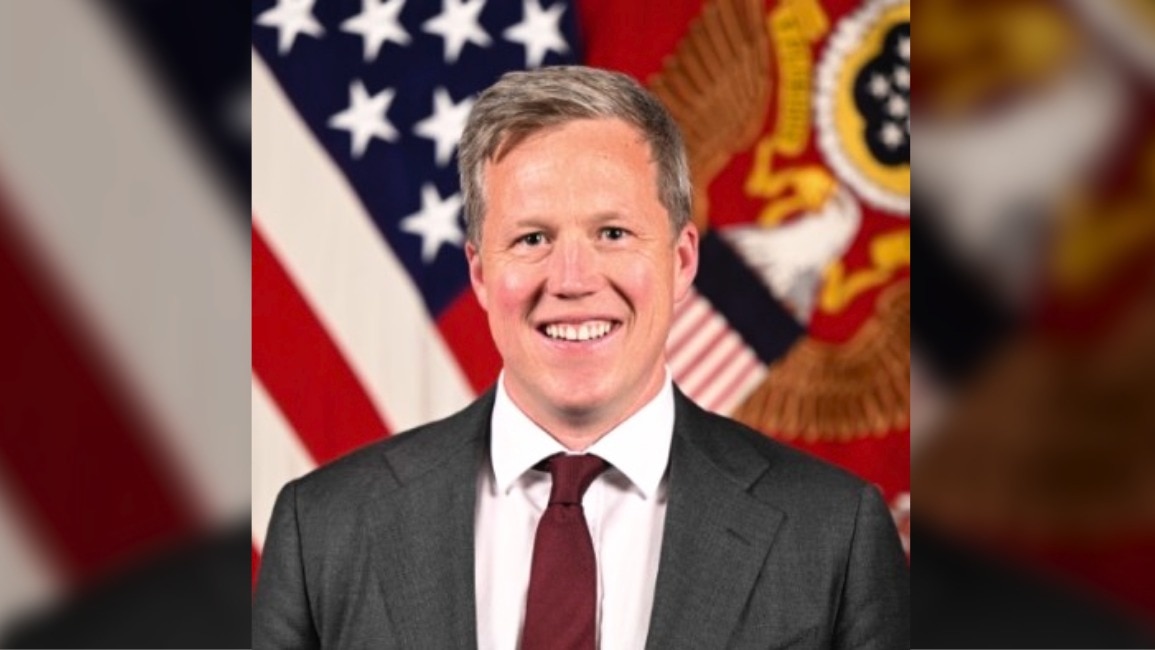
In a major shake-up within the Trump administration, Army Secretary Dan Driscoll has stepped down following reported friction with Defense Secretary Pete Hegseth. This marks the third high-profile departure from the US military leadership in recent months.
- Army Secretary Dan Driscoll resigned after 18 months in office following discussions with President Donald Trump.
- The resignation follows a period of intense tension between Driscoll and Defense Secretary Pete Hegseth.
- Driscoll's exit is the third major leadership change in the US Army, following the removals of General Randy George and General Christopher Donahue.
The White House has officially confirmed the resignation of US Army Secretary Dan Driscoll, who served in the role for approximately 18 months. While the official statement from the administration did not explicitly state the cause for his departure, the move comes amid widespread reports of a deepening rift between Driscoll and Defense Secretary Pete Hegseth.
According to internal sources, Driscoll held a final meeting with President Donald Trump to discuss the current state of the US Army before submitting his formal resignation. White House spokesperson Anna Kelly praised Driscoll's contributions, noting his pivotal role in advancing the administration's military agenda, enhancing combat readiness, and facilitating diplomatic efforts to resolve the Russia-Ukraine conflict.
Why This Matters
BozokMedia analysis shows that Driscoll's departure is not an isolated incident but part of a systematic overhaul of the military hierarchy. The removal of General Randy George in April and General Christopher Donahue in June suggests a strategic shift in how the Trump administration intends to manage national security and military operations. The friction between the Army Secretary and the Defense Secretary indicates a struggle over the direction of military modernization versus traditional infantry strength.
The rapid turnover in the top brass of the US Army suggests a volatile transition period where ideological alignment with the executive branch is being prioritized over institutional continuity.
A significant point of contention was the Drone Modernization Program. Driscoll was a staunch advocate for accelerating drone and anti-drone technology by easing regulations for military contractors. However, the administration recently pivoted, ordering a European Army unit to cease its drone production efforts and return to functioning as a traditional infantry battalion, a move that directly contradicted Driscoll's vision.
Dan Driscoll, a veteran of the Iraq War and a former advisor to Vice President JD Vance, was initially hailed by Trump as a "transformative leader." His background as a tech investor and Yale Law graduate made him a unique bridge between Silicon Valley innovation and military strategy, a bridge that now appears to have collapsed under political pressure.
| Official | Role | Status | Context |
|---|---|---|---|
| Dan Driscoll | Army Secretary | Resigned | Tension with Hegseth / Drone Program |
| Randy George | Top Army Official | Removed | Administrative overhaul |
| Christopher Donahue | EU/Africa Commander | Removed | Sudden leadership change |
Frequently Asked Questions
Q1: Why did Dan Driscoll resign?
While the White House gave no official reason, reports indicate severe tensions with Defense Secretary Pete Hegseth and disagreements over drone technology programs.
Q2: Who are the other major officials who left the US Army recently?
General Randy George and General Christopher Donahue were both removed from their positions shortly before Driscoll's resignation.