A catastrophic flash flood triggered by a glacial collapse has claimed over 1,100 lives in Nepal, with thousands more missing across the Nepal-Tibet border region.
- At least 1,114 deaths reported in Nepal; nearly 4,000 people missing.
- Tibetan side reports 16 deaths and over 500 missing persons.
- Disaster triggered by a massive glacial collapse in the Himalayas.
- Over 40 bridges destroyed, severely hindering rescue efforts.
A week after a catastrophic flash flood tore through the Nepal-Tibet border region, the scale of devastation is becoming increasingly clear. Rescuers are now transitioning from active rescue to recovery operations as the death toll in Nepal has climbed to at least 1,114, with nearly 4,000 individuals still unaccounted for, according to the national disaster agency.
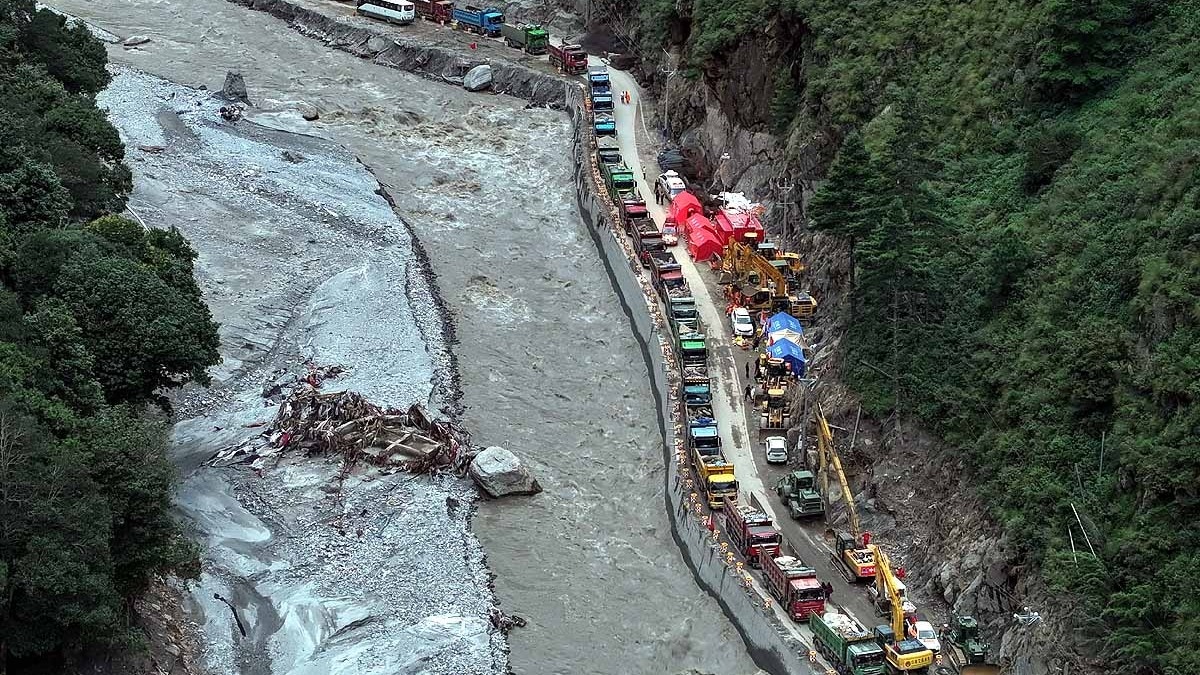
The disaster, believed to have been triggered by a massive glacial collapse last Wednesday, swept through Himalayan valleys, obliterating entire villages. In the Nuwakot and Rasuwa districts, nearly 3,500 people have been displaced, many currently seeking refuge in overcrowded schools that are serving as temporary shelters.
Why This Matters
BozokMedia analysis shows that this event highlights the extreme vulnerability of the Himalayan corridor to climate-induced disasters. The loss of life is compounded by a complete breakdown of logistics, as the destruction of more than 40 bridges has isolated remote communities, making them entirely dependent on military airlift operations for survival.
The scale of this disaster underscores the urgent need for better early warning systems in high-altitude glacial zones.
On the Tibetan side of the border, the situation remains shrouded in limited information. While Chinese state media has reported 16 deaths and over 500 missing, the region's tight control makes independent verification difficult. However, heavy machinery has successfully reopened the route to the Gyirong border crossing, providing a critical lifeline for search teams.
The humanitarian impact is global in scope. Among the thousands missing are several foreign nationals from India, the UK, Australia, the US, and Malaysia. The United Nations has launched a four-month humanitarian flash appeal to address the growing needs for food, clean water, and psychosocial support in the wake of this tragedy.
Historical Background
The Himalayan region is increasingly prone to Glacial Lake Outburst Floods (GLOFs). As global temperatures rise, the melting of glaciers creates unstable lakes that can burst without warning, sending torrents of water and debris downstream, a phenomenon that has become more frequent in the 21st century.
Frequently Asked Questions
1. What caused the floods in the Nepal-Tibet region?
Preliminary investigations suggest a massive glacial collapse triggered the sudden and violent flash floods.
2. How are remote villages receiving aid?
Due to destroyed bridges and blocked roads, many remote communities are relying exclusively on army helicopter flights for food and medical supplies.