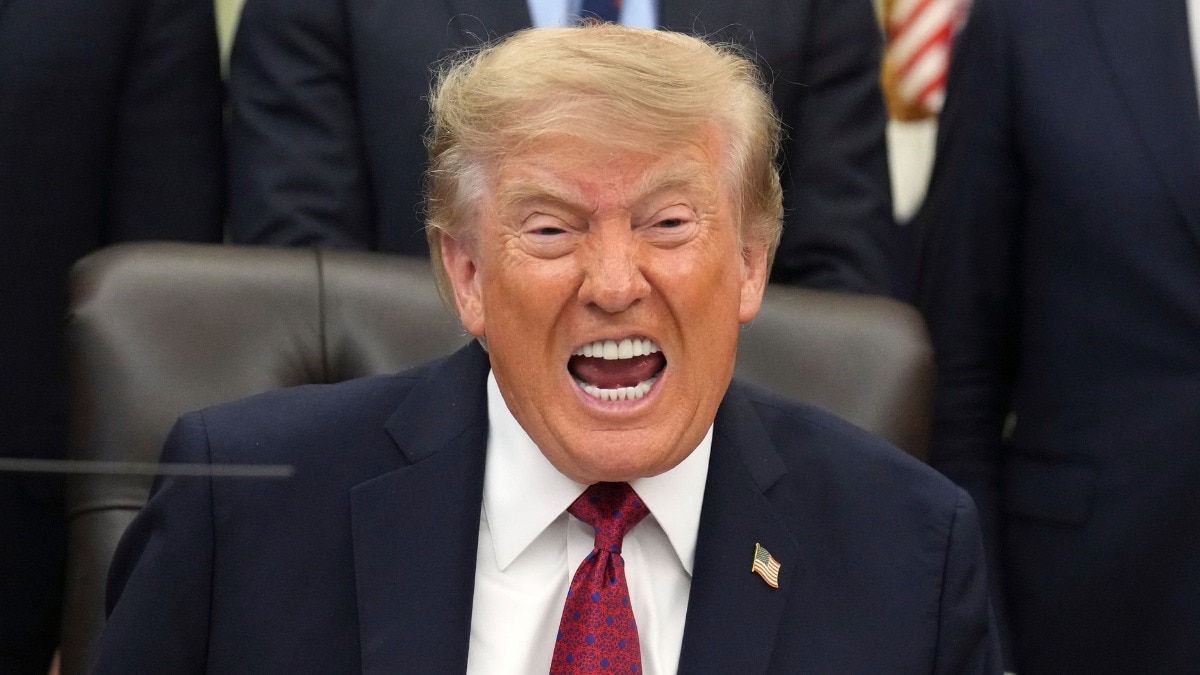
US President Donald Trump has asserted that the United States maintains near-total control over the Strait of Hormuz. As tensions boil over following US airstrikes and Iranian retaliatory attacks, Trump stated that Iran is merely delaying its inevitable defeat.
- Donald Trump claims near-total US dominance over the Strait of Hormuz.
- Tensions have escalated following US airstrikes on Iranian targets and retaliatory strikes on US bases in Jordan, Bahrain, and Iraq.
- The Iranian economy is reportedly on the brink of collapse.
- Trump has dismissed the possibility of any new ceasefire or diplomatic deal with Iran.
The geopolitical landscape of the Middle East has shifted drastically as tensions between the United States and Iran reach a fever pitch. US President Donald Trump has made a bold assertion, claiming that the US now holds near-total control over the strategic Strait of Hormuz, a move that could fundamentally alter global energy security.
The escalation comes on the heels of intense military exchanges. Following US airstrikes on Iranian positions, Iran retaliated by targeting US military installations located in Jordan, Bahrain, and Iraq. Trump, speaking via his Truth Social platform, debunked reports suggesting he is forcing Iran into negotiations, stating emphatically that any agreement would be "useless" at this stage.
Why This Matters
BozokMedia analysis shows that control over the Strait of Hormuz is not just a military victory but an economic stranglehold. As the world's most critical maritime chokepoint for oil, US dominance here directly undermines Iran's ability to fund its regional activities and provides Washington with unprecedented leverage over global energy markets.
Iran is not fighting for victory; it is merely attempting to delay its inevitable collapse.
Historically, the Strait of Hormuz has been a flashpoint for global instability. Iran has frequently used the threat of closing this waterway to exert pressure on the international community. However, the recent surge in hostilities—including attacks on oil tankers—has sent shockwaves through the markets, with crude oil prices jumping by $4 per barrel to a five-week high.
While the Iranian Revolutionary Guard Corps claims that these skirmishes will strengthen their grip on the waterway, the economic reality tells a different story. With the Iranian economy crumbling under the weight of sanctions and military pressure, the domestic stability of the regime remains highly questionable.
Frequently Asked Questions
1. Why is the Strait of Hormuz so important?
It is a vital maritime corridor through which a significant portion of the world's petroleum supplies are transported.
2. What are the recent military developments?
Following US airstrikes, Iran has targeted US bases in Jordan, Bahrain, and Iraq, leading to a cycle of direct military confrontation.