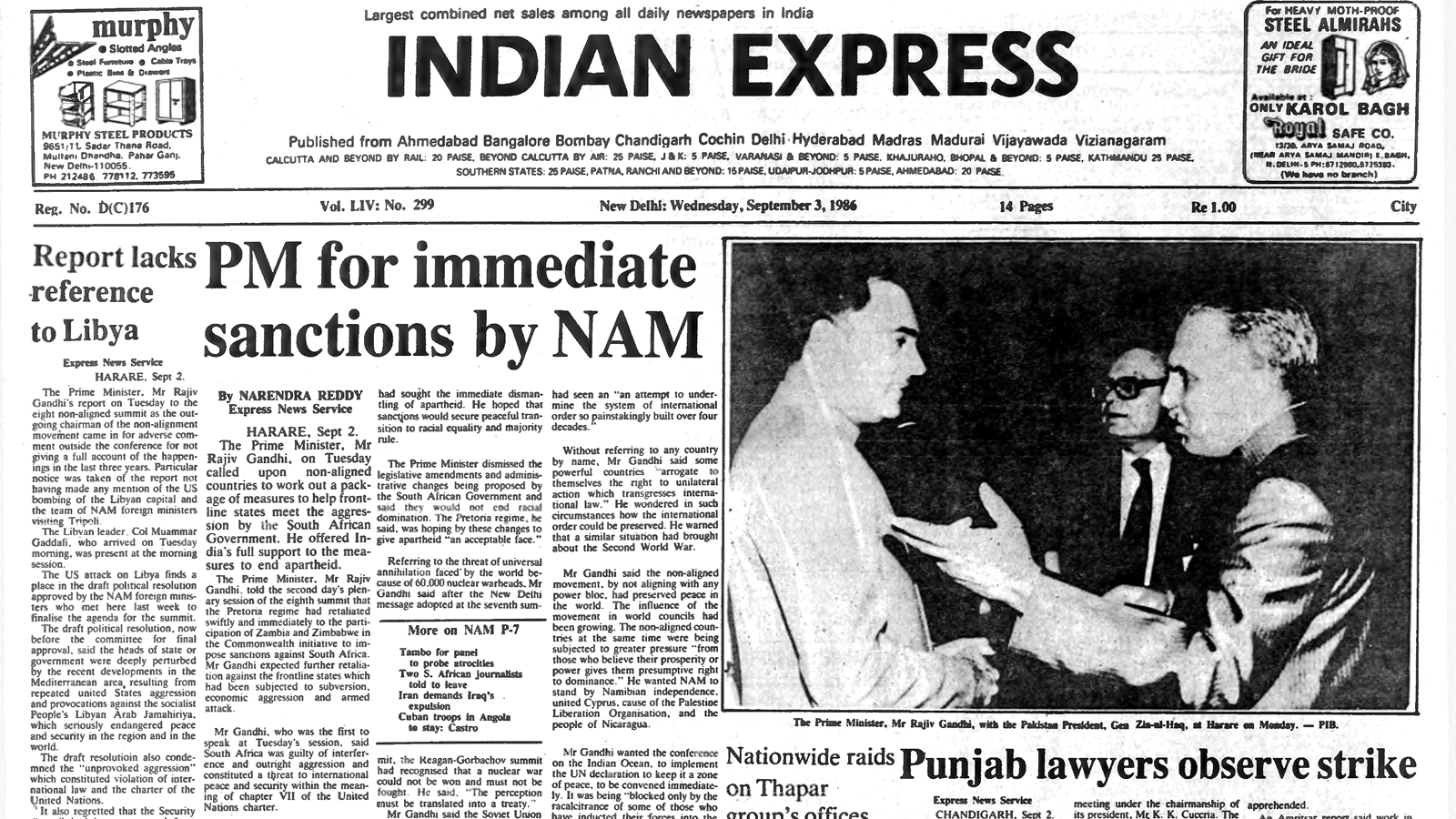
A deep dive into the historic headlines of September 3, 1986, featuring Rajiv Gandhi's stand against South African apartheid and the tragic Black Sea disaster.
- PM Rajiv Gandhi urged Non-Aligned Movement (NAM) nations to implement measures against South African aggression.
- The NAM summit criticized Rajiv Gandhi's report for omitting the US bombing of Tripoli, Libya.
- A massive maritime disaster in the Black Sea left nearly 400 passengers dead or missing.
- DTC scrapped its route rationalization scheme in Delhi following local resistance.
On September 3, 1986, the geopolitical landscape was shaped by the decisive leadership of Prime Minister Rajiv Gandhi. In a significant move for global human rights, the Prime Minister called upon the Non-Aligned Movement (NAM) countries to develop a comprehensive package of measures to support frontline states facing aggression from the South African government. India pledged its full support to end the systemic injustice of apartheid.
Controversy Surrounding the NAM Report
As the outgoing chairman of the Non-Aligned Movement, Rajiv Gandhi submitted a report to the summit that met with mixed reactions. Outside the conference, the report faced adverse comments for failing to provide an exhaustive account of the geopolitical shifts over the previous three years. Specifically, critics pointed out the omission of the United States' bombing of the Libyan capital, Tripoli, and the subsequent visit by the NAM foreign ministers' team to the region.
Why This Matters
BozokMedia analysis shows that this period marked a critical juncture in India's foreign policy, where the nation sought to balance its non-aligned identity with a proactive stance against racial oppression and superpower interventionism.
Rajiv Gandhi's stance on South Africa solidified India's role as a moral leader in the Global South.
Domestic affairs in India were also marked by tension. In Delhi, the Delhi Transport Corporation (DTC) was forced to abandon its controversial “route rationalisation” scheme in the trans-Jamuna colonies. This decision followed intense and violent resistance from local residents, eventually leading Transport Minister Rajesh Pilot to order the restoration of original bus routes.
On the international stage, a catastrophic maritime accident in the Black Sea sent shockwaves through the world. A Soviet government enquiry commission reported that 398 passengers were either dead or missing following the collision. While 79 bodies had been recovered, the fate of 319 passengers remained a tragic mystery.
Frequently Asked Questions
Question 1: What was Rajiv Gandhi's primary demand regarding South Africa?
Answer: He demanded that non-aligned countries work together to implement sanctions and measures to support frontline states against apartheid aggression.
Question 2: Why was the NAM report criticized?
Answer: It was criticized for not mentioning the US bombing of Tripoli, Libya, and the diplomatic visits to the area.