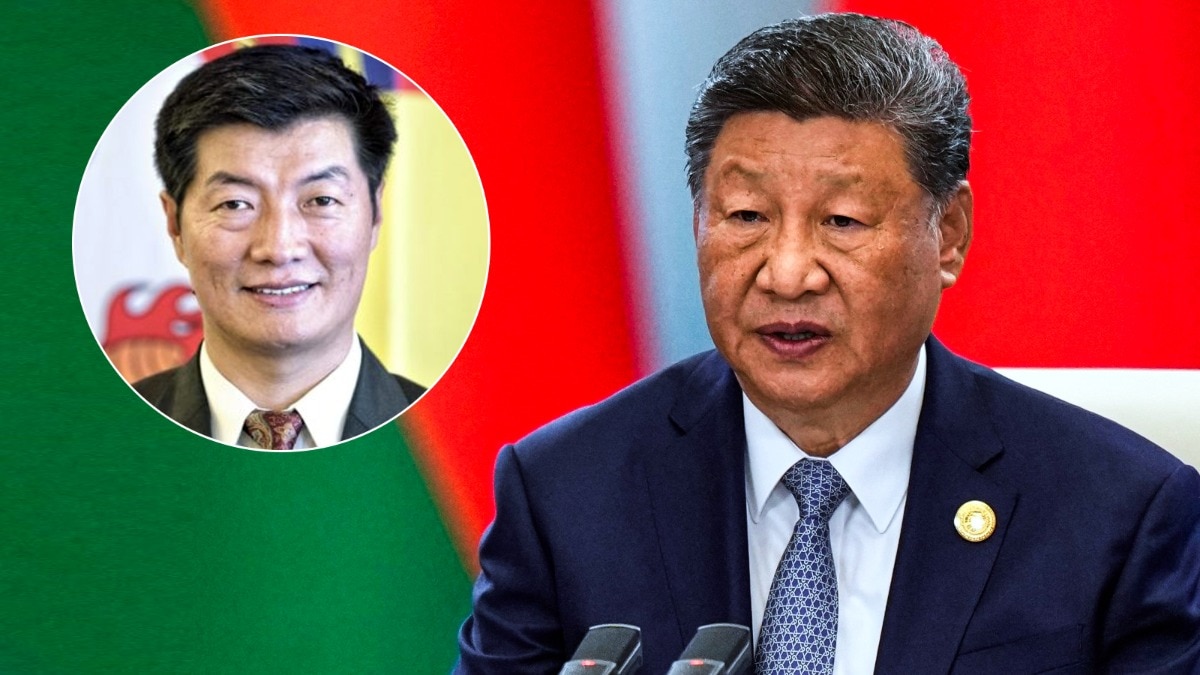
Former Tibetan Prime Minister Lobsang Sangay has claimed that Chinese President Xi Jinping has suffered at least two heart attacks. He warned that naming a successor could trigger a violent coup in China.
- Former Tibetan PM Lobsang Sangay claims Xi Jinping suffered at least two heart attacks.
- Physical signs of decline: Recent footage shows swelling, paleness, and instability.
- Succession Dilemma: Naming a successor could trigger a coup or civil war.
- Military instability: Sudden dismissal of high-ranking generals and missing officials.
The political stability of China is facing unprecedented scrutiny following alarming claims regarding the health of President Xi Jinping. Lobsang Sangay, the former Prime Minister of the Tibetan government-in-exile, has revealed that a senior Chinese official informed him that Xi has suffered at least two heart attacks. This revelation adds weight to growing international concerns about the leader's physical fitness.
Observations of Xi's recent movements have fueled these rumors. During his visit to Bishkek, Kyrgyzstan, in late August, footage emerged showing the President appearing physically frail. He was seen struggling to descend aircraft stairs, relying heavily on his wife, Peng Liyuan, for support. Observers noted a pale complexion and facial swelling, which many interpret as symptoms of underlying cardiovascular or neurological issues.
Why This Matters
BozokMedia analysis shows that the highly centralized nature of the Chinese Communist Party (CCP) means that any instability at the top creates a massive power vacuum. Unlike democratic systems, China lacks a transparent mechanism for leadership transition, making any health crisis a potential trigger for systemic collapse or internal conflict.
"If Xi Jinping announces a successor, it could trigger a coup; if he doesn't, the country could descend into chaos once he is gone." - Lobsang Sangay
Sangay highlighted what he calls the 'Emperor's Dilemma.' He explained that in Chinese history, designating a crown prince often leads to that successor attempting to seize power through assassination or coup. Conversely, failing to name a successor leaves the door open for a bloody struggle among various factions once the current leader is incapacitated, potentially leading to a civil war.
Furthermore, the report touches upon the erratic changes within the Chinese military hierarchy. Sangay suggested that 'mental fog' resulting from health issues might be driving Xi's recent decisions, including the sudden dismissal of top military generals. The disappearance of several high-ranking defense officials has raised further questions about internal purges and the actual control the central leadership maintains over the People's Liberation Army.
Frequently Asked Questions
1. What is the 'Emperor's Dilemma' mentioned in the report?
It refers to the political trap where naming a successor invites a coup, while not naming one invites a power struggle upon the leader's death.
2. How has Xi Jinping's health been visibly questioned?
Recent videos from his international trips show him appearing unsteady, pale, and requiring physical assistance to walk.