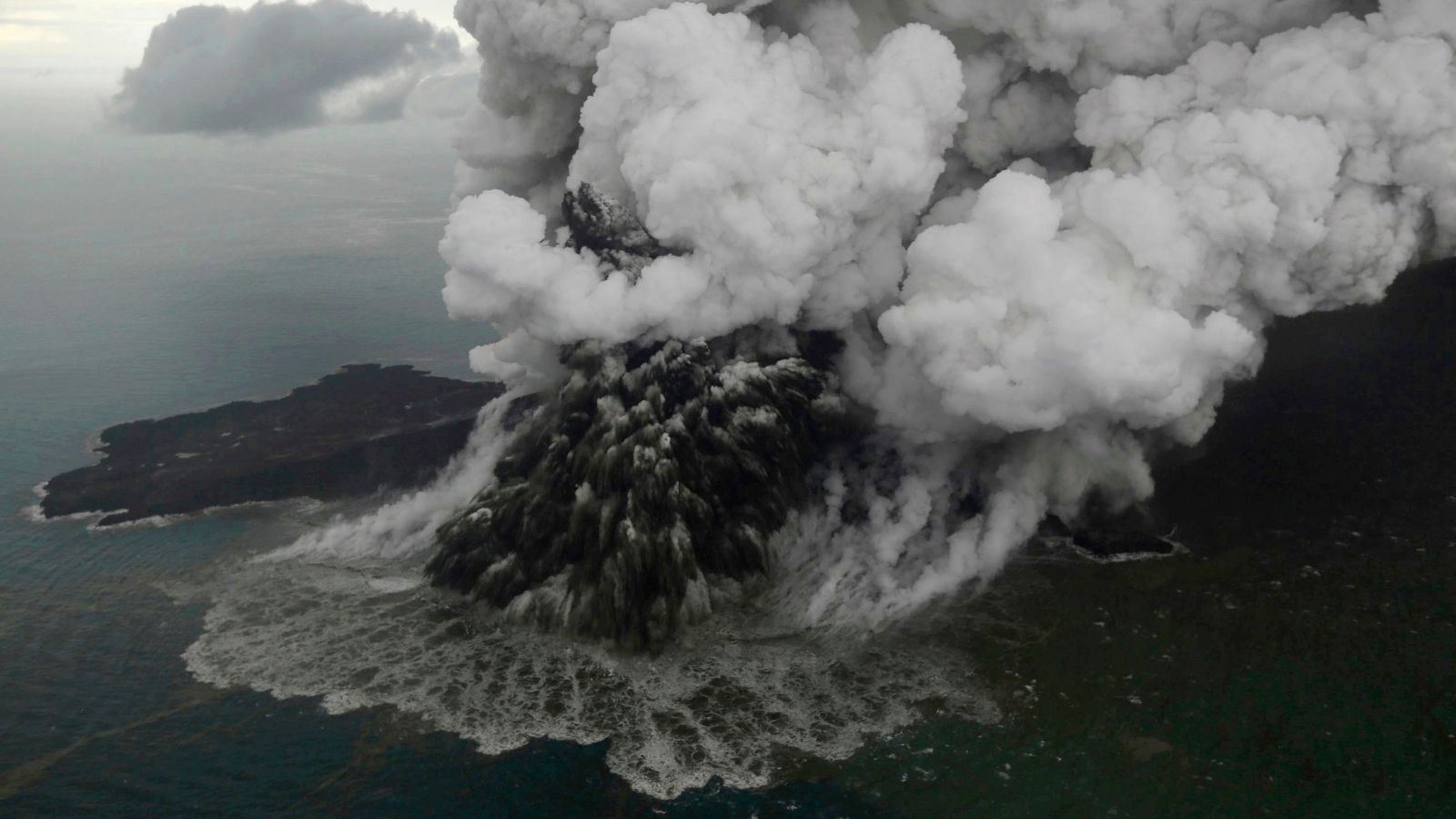
A massive eruption of the Anak Krakatau volcano in Indonesia has disrupted aviation and local life, with ash plumes reaching 50,000 feet. Hundreds of flights at Jakarta's main airport have been affected as authorities monitor the situation.
- Anak Krakatau volcano erupted, sending ash plumes up to 50,000 feet.
- Flight operations at Jakarta's Soekarno-Hatta International Airport were significantly disrupted.
- Over 200 flights, including international services, were impacted.
- Schools and fishing activities in affected areas have been suspended.
The eruption of Mount Anak Krakatau in the Sunda Strait early Sunday has sent shockwaves through western Indonesia. The volcanic activity forced the temporary suspension of flight operations at Jakarta’s Soekarno-Hatta International Airport and disrupted daily life, including school activities and local fishing industries.
According to the Indonesian transportation ministry, the disruption has affected approximately 209 flights. Passengers at the nation's busiest aviation hub faced significant delays and cancellations, with many seeking refunds as the ash cloud presence necessitated an extension of the airport's operational halt. The eruption, which began showing signs of increased activity late Friday, peaked in intensity during the early hours of Sunday.
Why This Matters
BozokMedia analysis shows that the scale of this eruption highlights the extreme vulnerability of Indonesia's transport infrastructure to geological events. The height of the ash plumes—reaching 50,000 feet—poses a severe risk to jet engines and regional airspace management, necessitating large-scale rerouting of global flight paths.
The unprecedented height of the ash plume necessitates immediate and widespread airspace restrictions to prevent catastrophic engine failure in commercial aircraft.
Satellite imagery from the Darwin Volcanic Ash Advisory Centre and Indonesia’s geological agency identified two distinct plumes. One plume rose to 20,000 feet, drifting toward Jakarta, Banten, and West Java, while a much larger plume reached 50,000 feet, spreading across parts of Lampung and Bengkulu, as well as the Indian Ocean.
Historical Background
Anak Krakatau, meaning "Child of Krakatau," emerged from the site of the legendary Krakatoa eruption of 1883, one of the deadliest volcanic events in recorded history that killed over 36,000 people. The volcano has a recurring history of danger; in December 2018, a partial collapse of Anak Krakatau triggered a devastating tsunami that claimed at least 430 lives.
Frequently Asked Questions
1. Is there an immediate tsunami threat?
As of the latest reports, there is no imminent tsunami risk, but authorities are monitoring the volcano's stability closely.
2. What safety measures should residents take?
Residents are advised to wear masks and eye protection, cover water sources, and stay at least 3 kilometers away from the active crater.