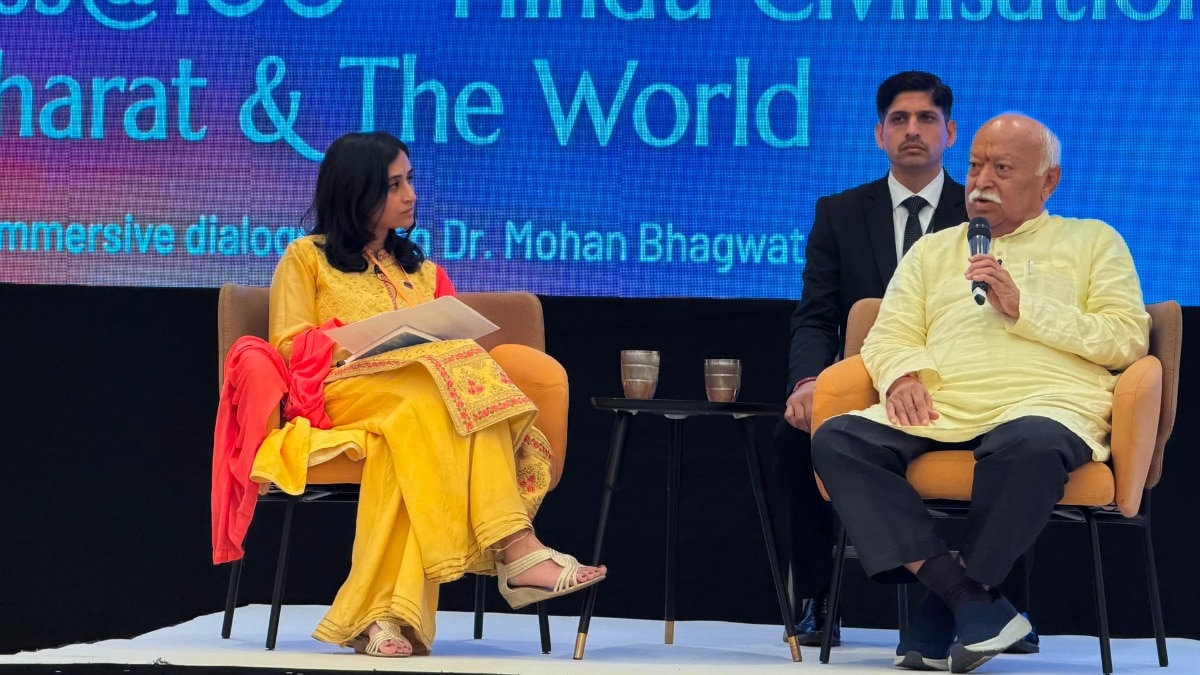
During the 'Celebration of Oneness' event in London, RSS chief Mohan Bhagwat emphasized that the essence of Hindutva lies in 'Sattvik love' and social cohesion rather than hatred, highlighting the interconnectedness of humanity and nature.
- The foundation of Hindutva is 'Sattvik love' and a sense of belonging, not hatred.
- Hindu thought integrates family, society, humanity, and nature as a single unit.
- India's progress should aim for global peace and prosperity, not just individual gain.
- NRIs were advised to remain loyal to their current 'Karmabhoomi' (place of work).
Mohan Bhagwat, the Sarsanghchalak of the Rashtriya Swayamsevak Sangh (RSS), is currently on a significant visit to the United Kingdom. Speaking at a special event titled 'Celebration of Oneness' in London on Sunday, he shared profound insights into Hindutva, the Hindu nation, the concept of service, and the future of society. He underscored that the core of the Sangh's ideology is not to spread animosity but to foster a sense of belonging among all sections of society.
Sattvik Love and Social Integration
In his address, Bhagwat stated that if one were to define the essence of the Sangh in a single word, it would be 'Apnapan' (a sense of belonging) rooted in pure, Sattvik love. He explained that Hindutva is not merely a religious identity but a way of life where the individual is inextricably linked to family, community, society, and humanity. A key component of this philosophy is the relationship with nature; a Hindu does not seek to conquer nature but to live in harmony with it as an integral part of the ecosystem.
Hindutva is not about conquering nature, but about realizing that humans are an inseparable part of it.
Nation vs. State: A Conceptual Distinction
Addressing queries regarding the 'Hindu Rashtra,' Bhagwat drew a sophisticated distinction between a modern 'Nation' (often tied to political administration and borders) and a 'Rashtra'. He explained that a Rashtra is driven by a shared consciousness and a higher purpose. He noted that despite various foreign rules and changing dynasties throughout history, India's fundamental social and national consciousness has remained unbroken, serving as a testament to its cultural resilience.
Why This Matters
BozokMedia analysis shows that Bhagwat's global outreach is a strategic effort to present a more inclusive and philosophical dimension of Hindutva to the international community. By shifting the discourse from ritualistic religion to universal values like nature conservation and social cohesion, the RSS aims to build cultural bridges globally.
Message to the Diaspora
Speaking to the Hindu community in Britain, Bhagwat emphasized the importance of 'Karmabhoomi'. He advised the diaspora to be loyal and honest citizens of the countries they reside in, such as the UK. He stated that there is no contradiction between maintaining a deep emotional connection with India and being a dedicated resident of one's current place of work, advocating for the principle of 'Think Globally, Act Locally.'
Service and the Role of Youth
Bhagwat redefined 'Seva' (service), stating that it should not be viewed as an act of charity or a favor, but as a privilege for the server. He emphasized that true service empowers the recipient to eventually become a helper to others. Looking toward the future, he expressed immense faith in the younger generation, suggesting that instead of imposing specific methods on them, society should provide them with meaningful goals and the freedom to find their own paths to achieve universal morality.
Frequently Asked Questions
1. What is the core principle of Hindutva according to Mohan Bhagwat?
According to Bhagwat, the core principle is 'Apnapan' or pure, Sattvik love for everyone, emphasizing connection over division.
2. How did he advise the Indian diaspora in the UK?
He advised them to remain loyal to their current 'Karmabhoomi' (place of work) while maintaining their cultural roots.