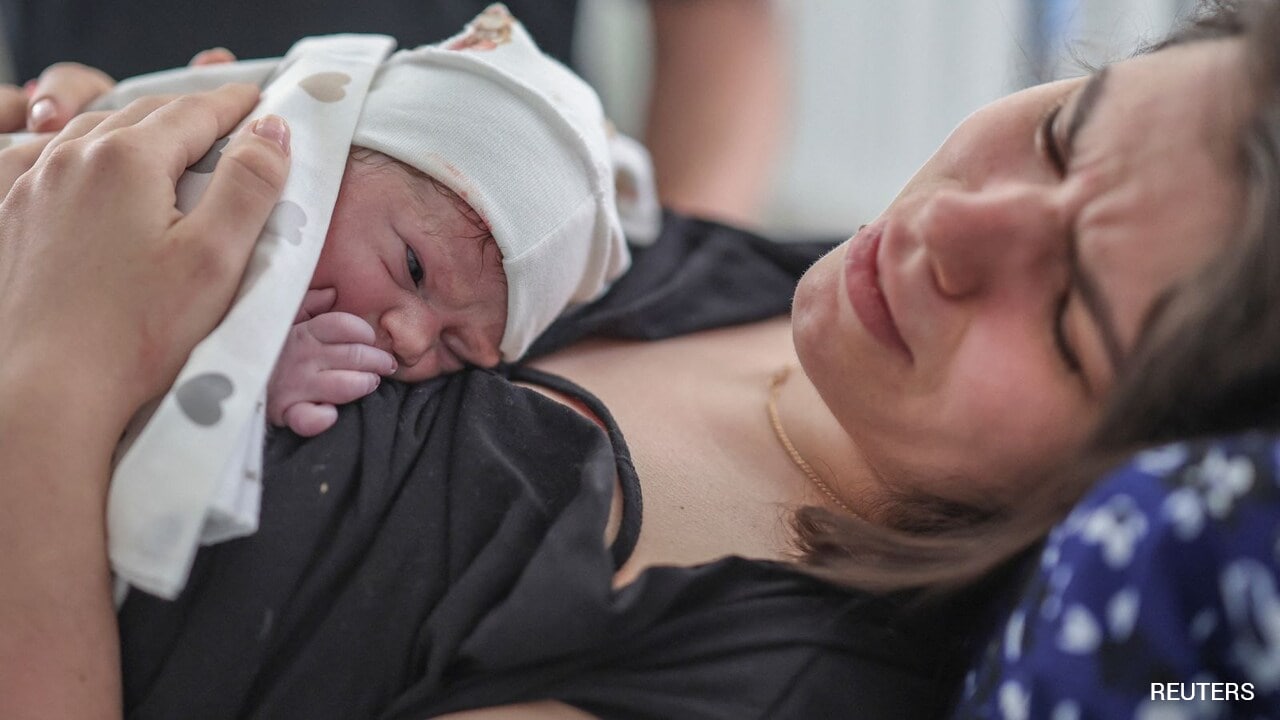
As Russia deploys advanced high-speed jet drones, 26-year-old Yuliia Ishchuk has given birth to her son Yaroslav amidst the chaos of air raid sirens in Kyiv.
- Russia has escalated its aerial campaign using destructive high-speed jet drones.
- Newborns are being delivered in Kyiv hospitals while air raid sirens wail.
- The conflict is increasingly targeting energy and logistical assets.
The escalating air war between Ukraine and Russia has reached a perilous new phase. Moscow has begun deploying swarms of high-speed jet drones, which military analysts suggest are significantly more destructive than previous models. These advanced drones are specifically designed to penetrate defenses and strike critical energy and logistical assets, aiming to cripple the Ukrainian infrastructure.
Amidst this technological escalation, a profound human story is unfolding in the maternity wards of Kyiv. Yuliia Ishchuk, 26, recently gave birth to her son, Yaroslav, in a setting defined by the terrifying wail of air raid sirens. For the medical staff and the families involved, the arrival of new life is occurring against a backdrop of constant existential threat.
Why This Matters
BozokMedia analysis shows that the shift toward high-speed drone swarms represents a strategic move to overwhelm air defense systems, making civilian areas increasingly vulnerable. The psychological toll on expectant mothers and healthcare workers cannot be overstated, as the most fundamental human experiences are now inextricably linked to military aggression.
The intersection of maternity and warfare creates a harrowing paradox where the beginning of life meets the machinery of death.
Historically, the targeting of civilian infrastructure and the disruption of medical services have been hallmarks of high-intensity modern conflicts. As Russia continues to refine its drone technology, the margin for error in protecting non-combatants grows thinner, turning hospitals into frontline zones of psychological and physical stress.
Frequently Asked Questions
Question 1: How do the new Russian drones differ from older ones?
Answer: The new jet drones are significantly faster and operate in swarms, designed to overwhelm existing air defense networks.
Question 2: Is it safe for civilians to stay in Kyiv?
Answer: While air defenses are active, the increasing sophistication of drone technology poses a continuous risk to civilian infrastructure and safety.


