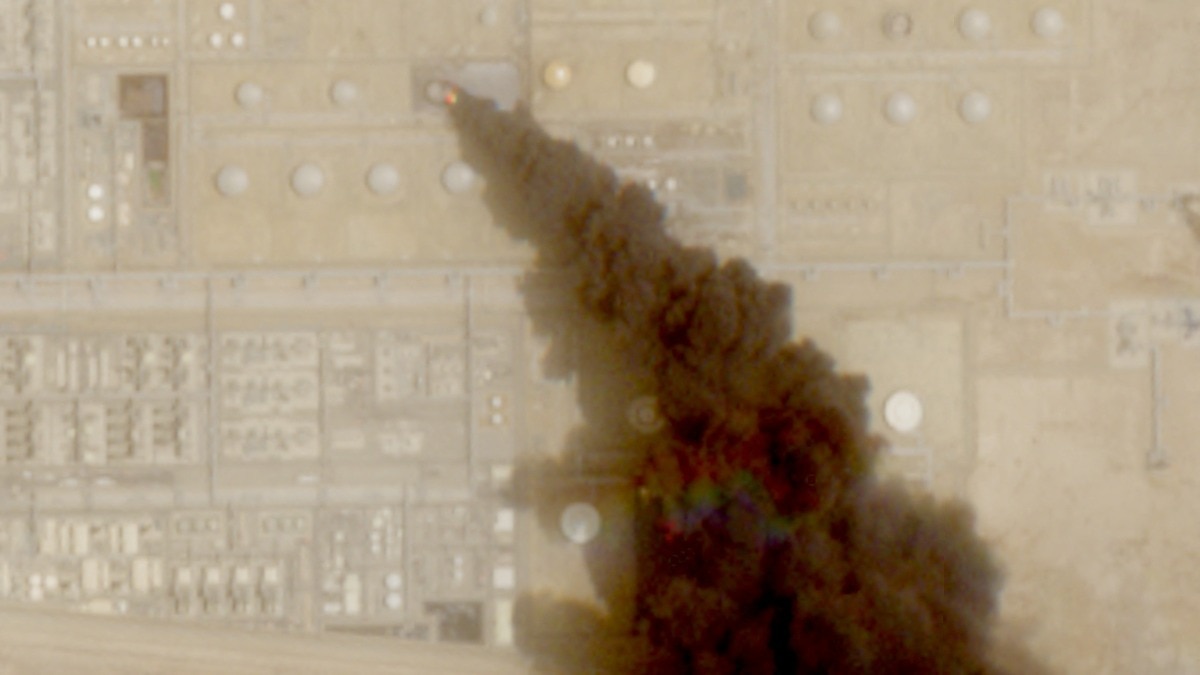
A fresh attack has hit Saudi Aramco's critical Jizan oil facilities, threatening regional energy stability and pushing global Brent crude prices toward the $100 mark.
- Saudi Aramco's Jizan refinery, capable of 400,000 barrels per day, was targeted in a fresh attack.
- The strike follows a pattern of escalating Houthi aggression and renewed US-Iran tensions.
- Global oil markets are reacting sharply, with Brent crude edging toward $97.40 per barrel.
- Shipping through the Strait of Hormuz and Bab al-Mandeb is facing severe disruptions.
In a significant escalation of regional instability, Saudi Aramco's strategic oil facilities in Jizan were struck by another attack on Monday. While the full extent of the damage is still being evaluated, the incident marks a worrying trend of repeated strikes on one of Saudi Arabia's most vital energy hubs. The Jizan complex is a cornerstone of the kingdom's refining capacity, featuring a 400,000-barrel-per-day refinery and essential processing plants.
The attack occurred just one month after a similar strike disrupted production in the same area. Jizan, located precariously near the border with Yemen, has long been a primary target for the Iran-backed Houthi rebels. Although the Houthis have not yet officially claimed responsibility for Monday's incident, the timing aligns with their recent declaration of a blockade on Saudi ports in the Red Sea.
Why This Matters
BozokMedia analysis shows that the targeting of Jizan is not merely a local skirmish but a calculated move to weaponize energy infrastructure. By disrupting Jizan, attackers are targeting a critical export hub that became essential when the Strait of Hormuz faced restrictions. The economic ripple effect is immediate: the lack of shipments from Jizan in August, as reported by Kpler, signals a dangerous vulnerability in the global supply chain.
"Commercial tankers are now being deliberately used as instruments of reciprocal economic pressure, substantially weakening the previous distinction between military confrontation and commercial shipping."
The geopolitical climate is further strained by a broader conflict involving the United States and Iran. Recent reports indicate US forces struck three Iranian tankers, while the IRGC targeted vessels in the Strait of Hormuz. This "tit-for-tat" maritime warfare has seen shipping volumes drop to their lowest levels since May, creating a high-risk environment for global trade.
Historically, Saudi Arabia's involvement in the Yemeni civil war since 2015 has created a cycle of violence. While a ceasefire in April 2022 provided a fragile peace, the current ground offensive by Houthi forces toward the Bab al-Mandeb Strait suggests a strategic attempt to control one of the world's most important maritime chokepoints.
| Metric | Current Status | Previous Peak/Average |
|---|---|---|
| Brent Crude Price | ~$97.40 / barrel | Below $90 (Pre-escalation) |
| Hormuz Daily Traffic | ~10 ships/day | Significantly Higher (May levels) |
| Jizan Export Volume | Zero (August) | High (Early US-Iran War) |
Frequently Asked Questions
1. How does the attack on Jizan affect global oil prices?
Attacks on critical infrastructure create supply uncertainty and risk premiums, leading to price hikes in Brent and WTI crude.
2. Who are the Houthis and why are they attacking?
The Houthis are an Iran-backed rebel group in Yemen fighting against the Saudi-led coalition that intervened in Yemen's civil war in 2015.