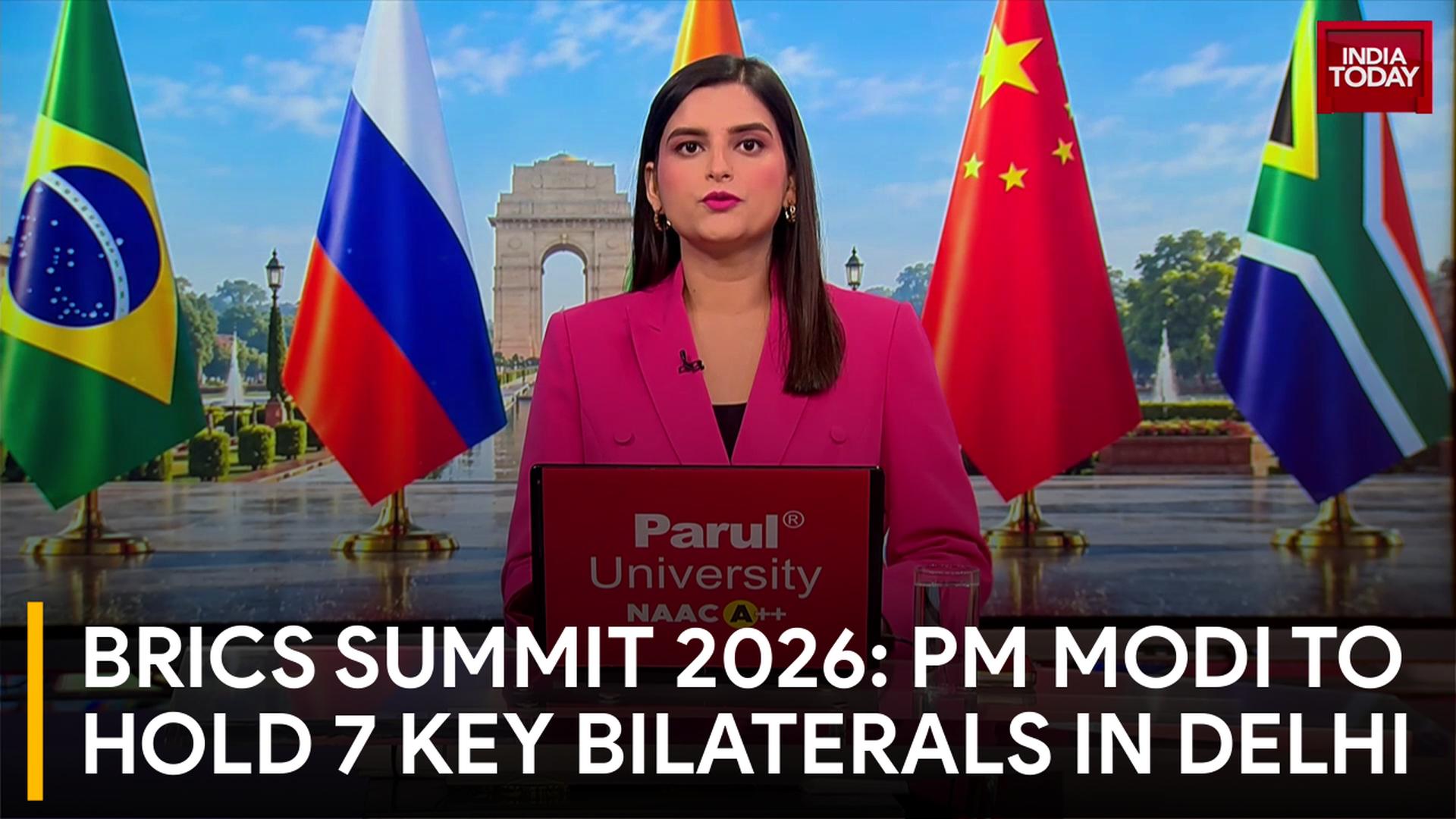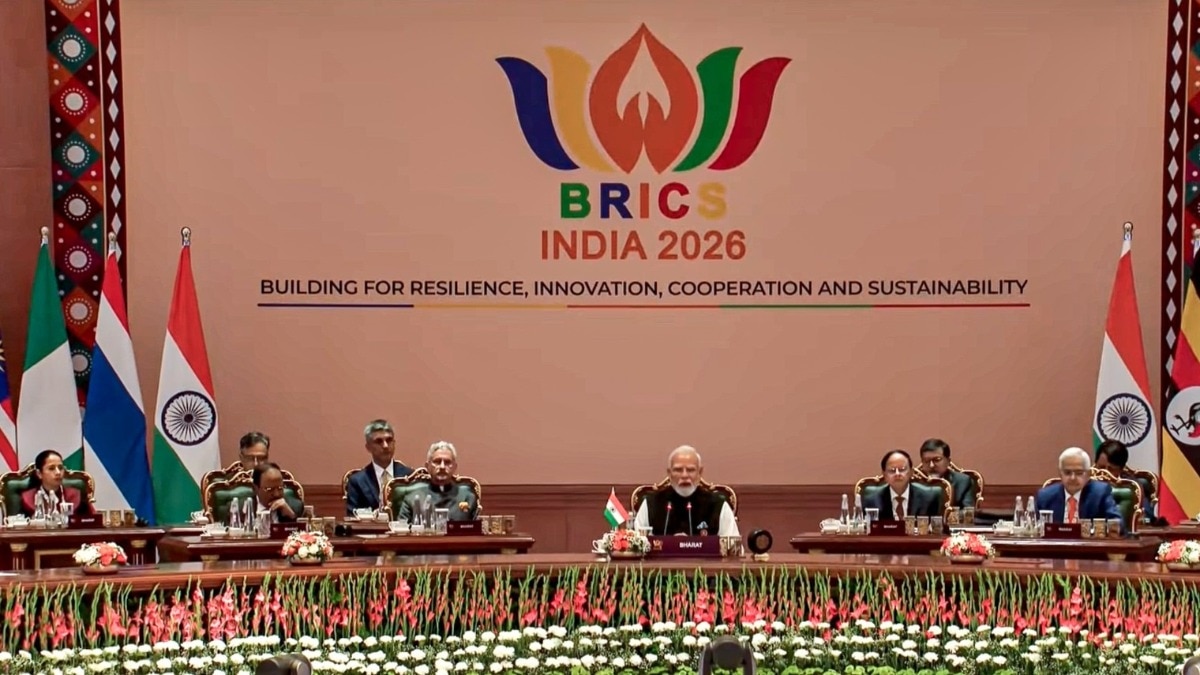
At the 18th BRICS Summit, leaders unanimously adopted the New Delhi Declaration 2026. The document addresses critical issues including unilateral warfare, maritime security, and the urgent need for UN Security Council reforms.
- BRICS leaders unanimously adopted the 'New Delhi Declaration 2026'.
- The document rejects unilateral acts of war and emphasizes maritime route protection.
- A strong call for structural reforms in the UN Security Council (UNSC) was made.
- The summit focused on 'Resilience, Innovation, Cooperation, and Sustainability'.
In a landmark moment at the 18th BRICS Summit in New Delhi, leaders of the bloc have officially adopted the New Delhi Declaration 2026. Announced by Prime Minister Narendra Modi, the consensus document was adopted on the very first day, highlighting India's significant diplomatic leverage and its ability to harmonize the interests of diverse BRICS nations.
The declaration takes a firm stance on international security, explicitly rejecting “unilateral acts of war.” Furthermore, amid rising tensions in the Middle East, the document calls for the urgent protection of seafarers and commercial shipping routes. This is a critical move to ensure the stability of global trade and prevent economic disruptions caused by maritime conflict.
Why This Matters
BozokMedia analysis shows that the New Delhi Declaration marks a shift from purely economic cooperation to a robust geopolitical agenda. By addressing security and governance, BRICS is positioning itself as a primary architect of a new, multipolar world order that challenges the existing status quo.
The New Delhi Declaration represents a decisive pivot toward a more representative and equitable global governance structure.
A central theme of the declaration is the reform of multilateral institutions. The leaders emphasized the need for a “structural update” of the United Nations Security Council (UNSC). The goal is to create an international system that is more agile, effective, and reflective of contemporary geopolitical realities, rather than the post-WWII landscape.
Under India's leadership, the 2026 summit operated under the theme: “Building for Resilience, Innovation, Cooperation and Sustainability.” The scale of engagement was unprecedented, with over 400 meetings held across 30 Indian cities involving ministers, parliamentarians, and business leaders, thereby deepening the strategic partnership across all levels of society.
Historical Background: As BRICS celebrates its 20th anniversary, the bloc is expanding its influence by integrating 'Partner countries' and focusing on Emerging Markets and Developing Countries (EMDCs). This expansion aims to amplify the voice of the Global South in international decision-making processes.
Frequently Asked Questions
1. What are the primary focus areas of the New Delhi Declaration?
The declaration focuses on political and security cooperation, economic and financial stability, and reforming global governance institutions.
2. How does the declaration address maritime security?
It specifically calls for the protection of commercial shipping routes and seafarers, particularly in light of ongoing Middle Eastern tensions.