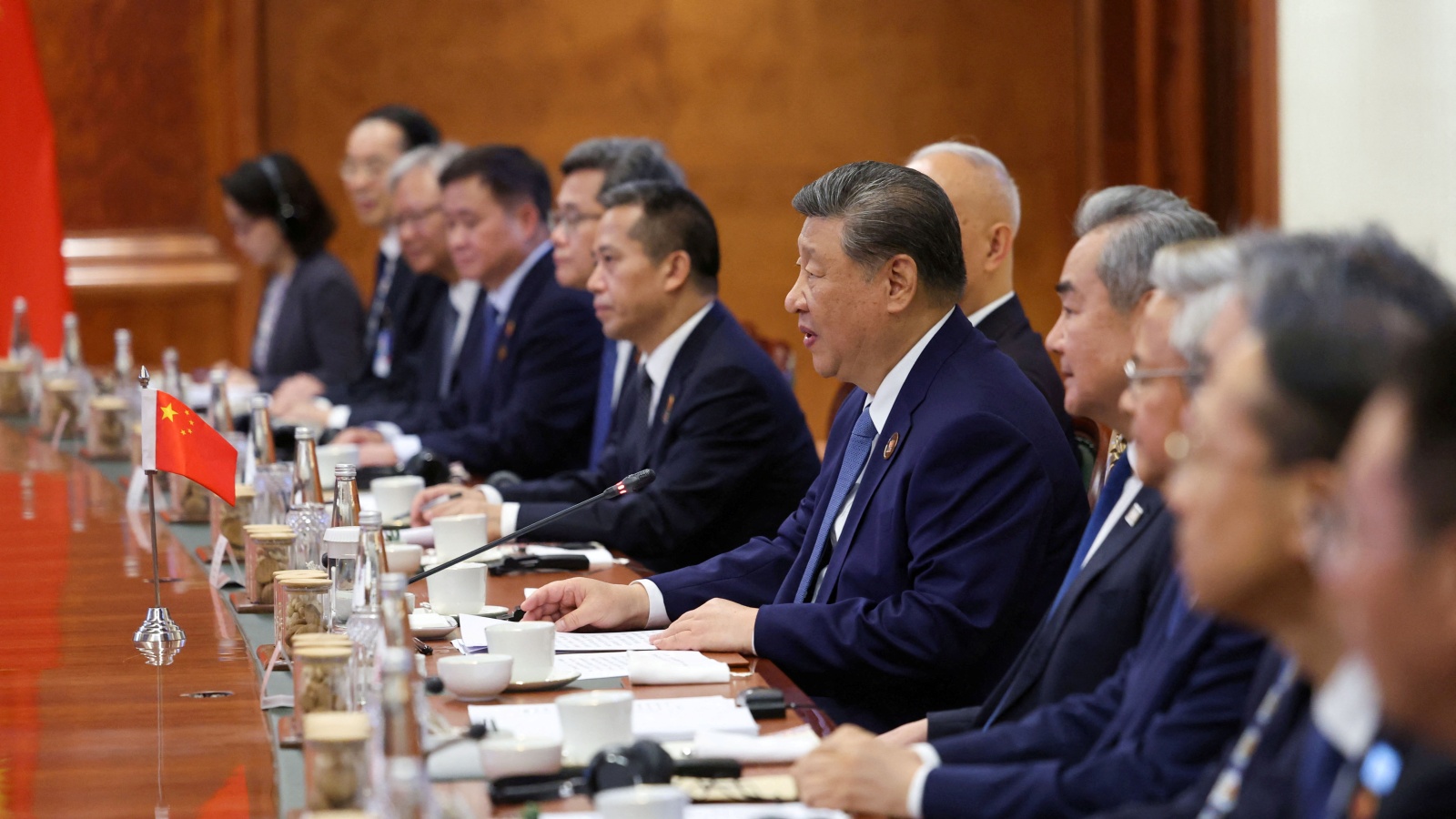
Chinese President Xi Jinping has urged BRICS nations to take a proactive stance in stabilizing West Asia and opposing unilateralism. He emphasized the need for a more just and equitable global order.
- Xi Jinping called on BRICS to play a pivotal role in resolving conflicts in West Asia.
- The Chinese leader opposed unilateralism and 'Cold War mentality' in global politics.
- BRICS is encouraged to lead in innovative development and global governance reform.
- Leaders from Russia and Iran echoed support for BRICS' growing global influence.
Chinese President Xi Jinping on Saturday asserted that BRICS nations must stand on the right side of history by playing their "due role" in restoring peace to West Asia. Highlighting the volatility in the Gulf region, Xi noted that the ongoing conflicts have caused immense suffering to local populations and run contrary to the collective interests of the international community.
During his address, Xi urged the grouping to become pioneers in maintaining stability and fostering mutual learning among civilizations. He emphasized that BRICS should steer the international order toward greater justice and equity, working collectively to build a "community with a shared future for humanity."
Why This Matters
BozokMedia analysis shows that Xi Jinping's rhetoric marks a strategic shift where BRICS is no longer just an economic bloc but an aspiring geopolitical stabilizer. As the Global South gains strength, the push for a multipolar world is directly challenging the existing Western-led security architecture, especially in volatile regions like West Asia.
The emergence of BRICS as a diplomatic force signifies a transition from a unipolar to a truly multipolar global governance model.
Reflecting on the group's journey, Xi noted that the past 20 years have been a period of self-reliance and strength for BRICS members. He highlighted how emerging markets have successfully explored development paths tailored to their unique national conditions, setting a global precedent for unity among developing nations.
The Chinese President also issued a veiled critique of the United States, pointing out that the surge in unilateralism and power politics is straining multilateralism and widening the deficits in global security and governance. He advocated for a vision of "comprehensive and sustainable security" that rejects interference in the internal affairs of sovereign states.
Supporting this sentiment, Russian President Vladimir Putin remarked that the partnership within BRICS is built on equality and respect for cultural diversity, which is steadily enhancing the bloc's global credibility. Similarly, Iranian President Masoud Pezeshkian emphasized that sustainable security requires absolute respect for national sovereignty and an end to the normalization of attacks on civilian infrastructure.
Frequently Asked Questions
1. What were Xi Jinping's four propositions for West Asia?
His propositions aim at de-escalation, ending hostilities, promoting peace, and pursuing a permanent ceasefire through political settlement.
2. How did Iran's President react to the BRICS discussions?
President Pezeshkian stressed that BRICS must stand against the misuse of territories to threaten neighbors and protect civilian infrastructure.